dailynewsnblog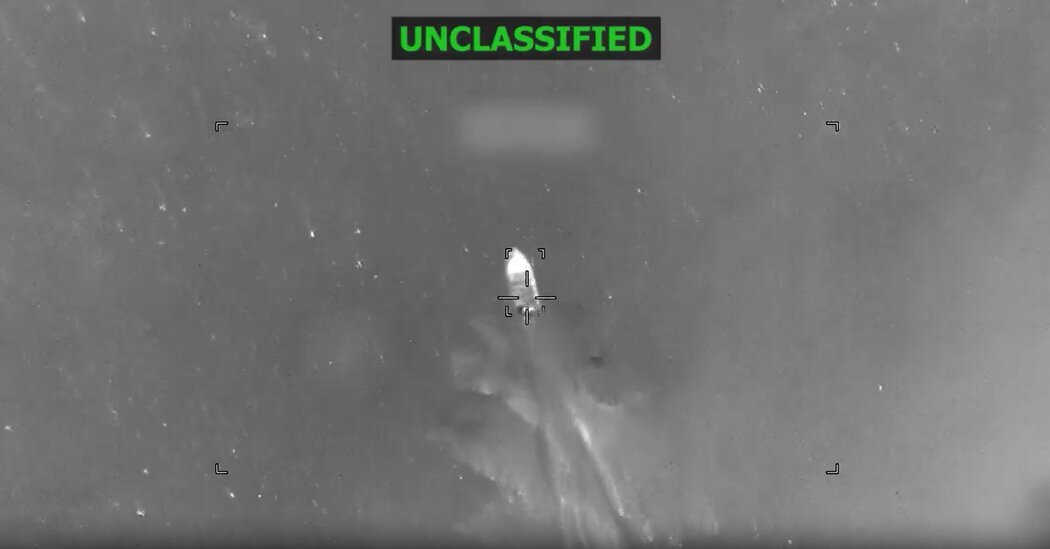
With deadly precision, the Trump administration has launched dozens of attacks on small boats in the waters off South America, killing nearly 200 people in a campaign U.S. officials say is meant to curb the flow of illicit drugs to the United States.
But almost nine months into the operation, epidemiologists, addiction scientists and public health experts say cocaine, by far the top drug smuggled out of South America, is as easy to get in much of the United States as it was before the strikes began.
The findings — based on evaluations of street prices, lethal overdoses, purity of samples and drug seizures at U.S. borders — raise questions about the effectiveness of the largest U.S. military deployment in Latin America in decades.
The costs of these military operations have already climbed to $4.7 billion, according to Brown University’s Costs of War project, including the deployment of AC-130J Ghostrider gunships, F-35 fighter jets and guided-missile destroyers, as well as about 15,000 U.S. military personnel.
The campaign has expanded from the Caribbean Sea to include strikes in the eastern Pacific, the capture of Venezuela’s former leader to face drug trafficking charges in the United States and ground strikes in Ecuador.
President Trump’s claim that he can lawfully order the military to summarily kill people accused of smuggling drugs has come under widespread criticism. Experts in laws governing the lethal use of force have denounced the strikes as illegal because the U.S. military is not allowed to intentionally target civilians who pose no threat of imminent violence even if they are committing a crime.
But to the dismay of many addiction specialists and experts on the drug trade, Trump administration officials have quietly ramped up attacks against small boats in recent weeks with secret fixed-wing attack aircraft and armed MQ-9 Reaper drones, placing the strikes at the core of a reframed war on drugs — one that has shifted from traditional interdiction to a strategy of direct military action.
“Cocaine remains highly available, highly prevalent and relatively inexpensive,” said Dr. Carl Latkin, a professor of public health at Johns Hopkins University who largely tracks cocaine use in Baltimore, traditionally a major entry point in the eastern United States for cocaine smuggled through the Caribbean.
Dr. Latkin is among the substance use experts in the United States who agree that the Trump administration’s campaign is both illegal and ineffective.
“In addition to being morally abhorrent, this method is as likely to succeed as much as would bombing a handful of McDonald’s in Dallas, Texas, and claiming that you’ve made America healthy again,” Dr. Latkin said.
Still, the Trump administration has insisted that the campaign is working. Lashing out at critics, Defense Secretary Pete Hegseth said on social media that the boat strikes were “highly effective” in stemming the flow of lethal drugs.
U.S. officials have said the strikes have disrupted some maritime smuggling routes and produced a surge in the U.S. Coast Guard’s seizures of cocaine, which reached 511,000 pounds in 2025, over three times the service’s annual average.
But while that is an enormous amount, it pales in comparison to the massive cocaine production boom in South America, particularly in Colombia, the world’s largest source of the drug. In Colombia alone, the United Nations estimates that annual cocaine production is around 5.7 million pounds, about 11 times the amount seized by the Coast Guard.
Signs are also emerging that traffickers are simply adopting other methods for smuggling cocaine, such as shifting to land routes through Central America or placing cocaine in container ships, while absorbing the occasional loss of shipments on small boats.
A large investigation this year in Ecuador found cocaine concealed within refrigerated fruit containers; another big cargo of cocaine was found in a container ship near the port of Santa Marta in Colombia.
If boat strikes were slowing the flow of cocaine to the United States, public health researchers say one consequence would be an increase in prices.
But street prices for cocaine remain between $60 to $100 per gram in many U.S. cities, about where they were before the boat strikes began, according to Nabarun Dasgupta, an addiction scientist at the University of North Carolina and a leading expert on the epidemiology of street drugs in the United States.
Similarly, epidemiologists say the purity of cocaine sold in the United States would be expected to drop if the maritime strikes were truly hurting drug cartels. Dealers seeking to stretch restricted supplies would likely dilute their product with more adulterants, such as levamisole, a medication used to treat parasitic worm infections that can physically resemble cocaine, or lidocaine, a local anesthetic.
And yet, the average number of such substances in cocaine samples ranges from 1.3 to 1.5 in 2026, after the boat strikes began, compared with a range of 1.4 to 1.6 for much of 2025, Mr. Dasgupta said.
That consistency suggests that the start of the boat strikes in September did not amount to an inflection point limiting cocaine supply in the United States, Mr. Dasgupta said
“It’s clearly not going in the expected direction,” Mr. Dasgupta said.
Similarly, large cocaine seizures at U.S. borders by U.S. Customs and Border Protection show traffickers are still finding ways to get the drug to the United States. While large seizures might initially look like a sign that law enforcement is successfully stopping the flow, researchers view seizures as a proxy for tracking the total volume of trafficking. If border agents were to find significantly less cocaine, that could imply less cocaine flowing to the United States.
But that isn’t happening. Instead, C.B.P. seized 47,808 pounds of cocaine in the eight months since the strikes began, more than the 43,227 pounds the agency seized in the eight-month period before the campaign, according to official data.
“They’re not moving the needle at all,” said Adam Isacson, director of defense oversight at the Washington Office on Latin America, a research group. “Is that worth killing all these people?”
Gen. Francis L. Donovan, who is overseeing the campaign as head of the military’s Southern Command, said the strikes had forced trafficking groups in Latin America to change their operational patterns.
But in recent testimony to the Senate Armed Services Committee, General Donovan also said the lethal attacks were not a long-term solution, and that he had started building a more comprehensive approach, working with regional allies like Ecuador.
“Boat strikes will be one of the main tools, and probably not the most effective,” General Donovan said.
So far, U.S. forces have carried out 59 boat strikes that have killed 196 people in the campaign, which has been characterized by mixed messaging and exaggerations. While officials have contended that the boats were carrying illicit drugs, they have not provided evidence to back up their claims.
At first, U.S. officials said the focus was on choking off drug smuggling from Venezuela to the United States, even though Venezuela is a marginal producer of drugs and is used by traffickers mostly as a transit hub to send drugs to Europe and Africa.
Mr. Trump also repeatedly claimed that each of the boats destroyed in the strikes was carrying enough fentanyl and other drugs to kill 25,000 Americans. But Venezuela and other South American countries do not produce fentanyl; Mexican cartels dominate that trade, producing the opioid largely with chemicals from Asia.
Even as the Trump administration was making such claims, the United States had already experienced a significant decline in overdose deaths. After peaking in 2022 at nearly 110,000, there were about 68,000 overdose deaths from November 2024 to November 2025, the latest available data show.
The vast majority of overdose deaths in the United States involve more than one drug, including opioids like fentanyl, and cocaine alone is considered to be less lethal, according to substance use experts. Only 6.3 percent of cocaine-involved deaths over a three-year period did not involve other drugs, a recent study from the Centers for Disease Control and Prevention found.
Addiction experts generally attribute the fall in lethal overdoses to various factors, including the increased availability of medication that rapidly reverses opioid overdoses and changes in the way some users consume opioids, moving from injection to smoking, which reduces fatal overdose risk.
But the rate of this overall decline is losing momentum, according to the C.D.C., and a contrast has emerged: Fentanyl overdose deaths have fallen faster than cocaine-only overdose deaths since the start of 2025.
Around the time the boat strikes began in September, the rate of decline in cocaine overdose deaths plateaued in the following months, according to the center.
Restricting the cocaine supply in the United States does have the potential to have a significant impact on overdose deaths from cocaine, said Lori Ann Post, the director of the Institute for Public Health and Medicine at Northwestern University.
But, she added, “I still do not see evidence of a cocaine supply shock reflected in overdose deaths.”