dailynewsnblog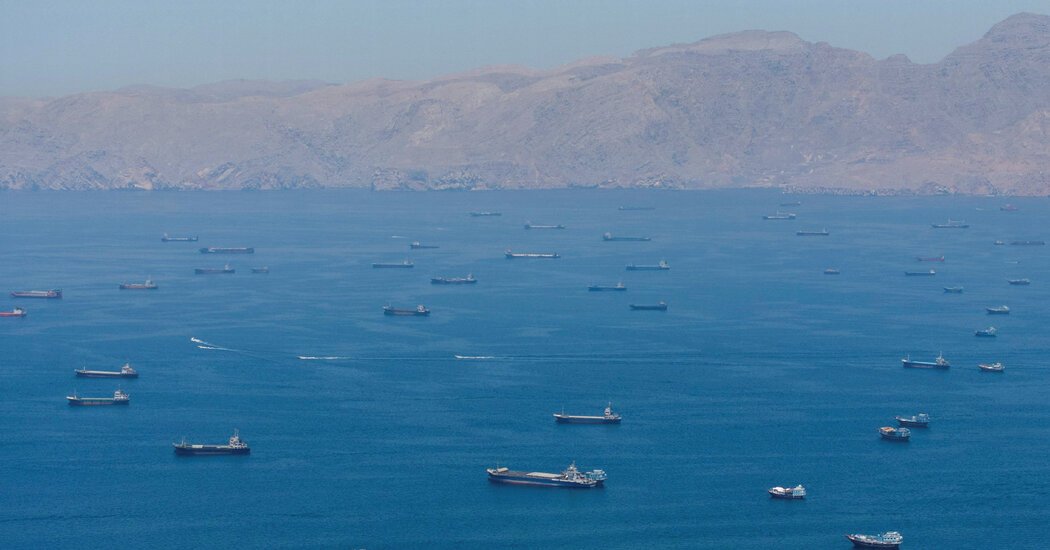
Naval blockades, military history has shown, require patience. That is not the leading attribute of the American commander in chief.
So when President Trump imposed a blockade of Iranian ports in April, the quick result he was looking for — a reopening of the Strait of Hormuz to commercial traffic — was not in the cards. Wearing down an enemy with a blockade can take months or years, military experts say, and certainly not weeks.
Iran, with thousands of miles of land borders with seven neighbors, and a trade lifeline to its ally Russia across the Caspian Sea, had alternatives. The standoff persisted.
“It’s difficult to rapidly bring an adversary to its knees with a blockade,” said Michael Connell, a specialist on the Iranian military at the Center for Naval Analyses in Virginia. “It’s the kind of thing that works well over time but it’s not a quick solution.”
Now, as the United States appears closer to a peace agreement with Iran, dropping the American blockade and reopening the strait are among the top priorities. If a deal can be reached, it would end one of the more unique naval standoffs in modern times: a tense stalemate that is neither peace nor raging conflict, between two mismatched adversaries who have exercised their leverage at sea.
It has featured an increasingly familiar pattern of conflict in an era of technological disruption — the ability of Iran’s speedboats, drones, mines and missiles to hold off America’s arsenal of nuclear-powered aircraft carriers with advanced fighter jets and populations the size of small towns.
The stalemate at sea has also underscored an old imperative of war. Swift victory without gaining and controlling territory on land is difficult to accomplish. A naval standoff is an attempt at economic and commercial strangulation on the water — seemingly bloodless but with hidden costs and risks for both sides.
Indeed, Adm. Brad Cooper, the leader of U.S. Central Command, which directs military operations in the Middle East, emphasized the value of economic pressure in testimony before the House Armed Services Committee last week. There had been “zero trade” in or out of Iranian ports, he said, “squeezing Iran economically and creating powerful leverage for the ongoing negotiations.”
Iran can also inflict economic pain. Because the world economy relies on a global supply chain, it means that Iran’s blocking of exports like fertilizer, helium and most importantly oil and gas has been felt worldwide.
“It has become a contest of wills, to see who blinks first,” Mr. Connell said.
A blockade is an act of war under international law; escalation, purposeful or not, is always a risk. That point was driven home on Wednesday when Iran launched four one-way attack drones over the Strait of Hormuz and the U.S. military conducted airstrikes against a drone ground-control station in the port city of Bandar Abbas. It was the second time in three days that American forces conducted strikes in southern Iran, including against Iranian boats trying to emplace mines.
The risks extend to other countries. More than 1.5 million people, for instance, are transiting the region for the Hajj pilgrimage in Saudi Arabia right now, and the potential for a miscue that could endanger innocent lives is real. Navy officers on warships have this kind of warning drummed into them in training, with a reminder of how, during the Iran-Iraq war in 1988, a series of errors led a U.S. Navy cruiser to mistake an Iranian commercial flight for a hostile fighter jet. It shot the plane down over the Strait of Hormuz, killing all 290 people on board.
The war at sea also imposes burdens. For Iran, the constriction of goods flowing in and out of the country puts enormous pressure on an economy that was reeling even before the war began — despite the alternative paths it has for trade.
For the United States, sending ships to patrol waters far from home not only is expensive, but also risks overtaxing the ships and the crews. The U.S.S. Gerald R. Ford aircraft carrier, for instance, limped home this month after a grueling 10 months in the North Atlantic, the Mediterranean, the Caribbean and the Red Sea — demonstrating how wear and tear can impose costs on a superpower overextending itself.
“The U.S. Navy can do some phenomenal things for a phenomenal amount of time,” said Mike Franken, a retired vice admiral who served as commodore of a destroyer squadron. “Around the edges things get tattered, and we’ve been at a very high op tempo.”
There are also strategic opportunities lost. The ships used to blockade Iran, and the sailors that operate them, cannot be used for other missions. President Trump’s recent trip to China served as a reminder that East Asia remains a region of strategic significance, with allies like South Korea, Japan and especially Taiwan relying at least to some extent on a U.S. naval deterrent.
Finally, having two adversaries in static tension creates the risk of accidental escalation, through a misreading of circumstances caused by anxiety, confusion or a lapse in concentration.
The U.S. Central Command said this week it had redirected 111 commercial vessels and disabled four ships bound for Iranian ports thus far. Iranian forces have attacked American guided-missile destroyers crossing the Strait of Hormuz with missiles, drones and small boats. Central Command said the American warships successfully fended off the attack. Iran has also fired on ships from other countries trying to pass through the strait, causing some damage.
The United States has some two dozen warships involved in the blockade, which includes two aircraft carriers, the U.S.S. George H.W. Bush and the U.S.S. Abraham Lincoln, as well as guided-missile destroyers, amphibious ships, littoral combat ships and minesweepers, and refueling and supply ships to keep them provisioned and combat ready.
One precedent for the current stalemate in the Strait of Hormuz is the so-called Tanker War of the 1980s, when the war between Iran and Iraq spilled into the Persian Gulf. Though the United States was not one of the combatants, it was drawn into the fray as it began to escort civilian oil tankers through the strait, leading to the tragedy with the Iranian passenger jet.
If the current standoff continues, the tactic has direct costs in terms of keeping ships in the region supplied with food, fuel and ammunition. There’s also the need to keep drones, helicopters, fighters and surveillance planes in the air. Sailors, Marines and airmen receive imminent danger pay.
For sailors, the combination of long stretches of dullness punctuated by moments of stress and tension can be a grind. “A blockade is a very boring thing to do,” said Andrew Lambert, professor of naval history in the department of war studies at King’s College. “You’re just hanging around waiting for something to happen.”
“There is a ripple effect from keeping large numbers of assets on station for protracted periods of time,” said James R. Holmes, chair of maritime strategy at the Naval War College.
He cited the U.S.S. Gerald R. Ford and its long deployment and posited that the carrier could encounter unexpected engineering problems when undergoing maintenance. While at sea, the ship endured mechanical problems with the gear that launches and recovers warplanes on the flight deck. A major fire destroyed the sleeping area for hundreds of sailors. There were also complaints about food shortages and delays in receiving mail that led to a decline in morale.
It will be difficult for the United States to reopen trade through the strait without coming to terms with Iran, Mr. Holmes said. “All Iran needs to keep its chokehold on the Strait is enough of its mosquito fleet, including shore-based missiles and drones, to keep shipping firms and insurers jittery,” he said. “And seldom if ever does a military campaign fully disarm an antagonist short of regime change.”
Mr. Lambert, the King’s College professor, said costs will mount as the standoff persists. “Because nothing particularly violent is happening on a large scale, the temptation to let it roll on is a real problem,” he said.