dailynewsnblog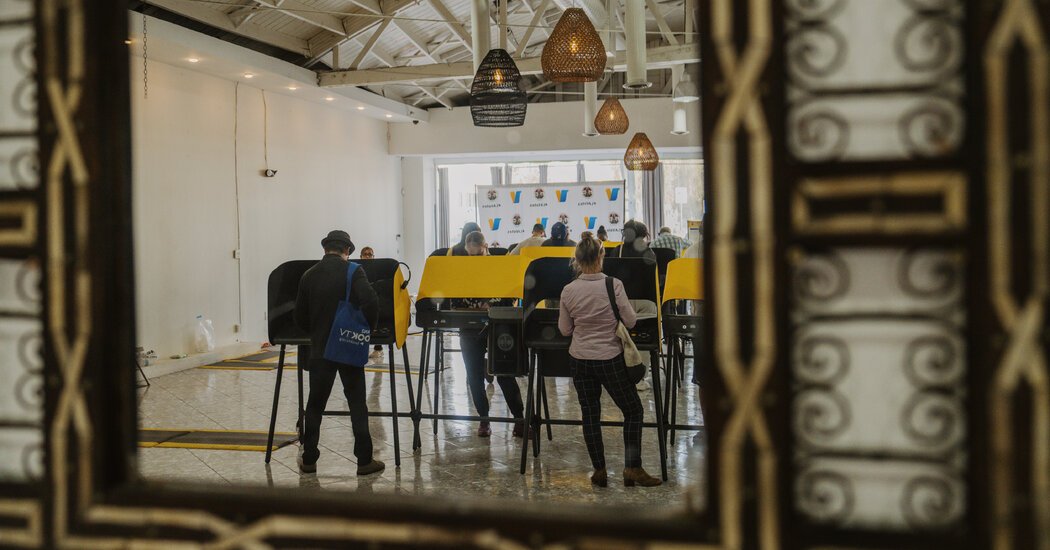
Six days before the California primary, Gov. Gavin Newsom signed legislation on Wednesday intended to safeguard elections after federal officials and local sheriffs took unusual steps in the last year to seize ballots from election offices.
The new law, which takes effect immediately, would not stop officials who have a warrant. But Mr. Newsom described it as a way “to address the legitimate anxiety” over election security amid attempts by the Trump administration and the president’s allies to tamper with results and sow doubt in the mechanics of democracy.
The governor, a Democrat whose popularity has soared as he’s taken a more combative stance against President Trump, listed various actions taken by Mr. Trump to explain the need for the bill.
Among them: Mr. Trump’s attempts to overturn his 2020 election loss, restrict mail balloting and gain access to voting rolls in Democratic-controlled states. Mr. Newsom also mentioned an F.B.I. raid of the election office in Fulton County, Ga., which includes Atlanta.
And he referred to an episode this year in which Chad Bianco, who is the sheriff of Riverside County, Calif., and a conservative candidate for governor, seized more than 650,000 ballots that voters had cast in last year’s election.
“This is happening,” Mr. Newsom said after signing the bill in his Sacramento office. “It’s happening every day. He’s attacking truth and trust.”
The law aims to strengthen California’s election procedures with numerous restrictions on who can gain access to ballots and the areas where they are processed. It limits the ability of law enforcement agencies to interfere with elections or disrupt election workers, prohibits officials from giving unauthorized access to voter rolls and creates penalties for people who take ballots from election officials.
The bill requires the state attorney general to issue guidance for county election officials about how to respond to law enforcement requests to have access to areas where ballots are cast or processed. It also prohibits election observers from challenging ballots when voters’ signatures on return envelopes do not match the signatures on their registration records.
State Senator Tony Strickland, a Southern California Republican, said he expected the legislation would face a legal challenge and eventually be struck down in court.
“This is a direct regulation of federal law enforcement, which violates the Supremacy Clause,” Mr. Strickland said during a floor debate at the Capitol on Tuesday. “It’s likely to be ruled unconstitutional.”
He compared it with a law Mr. Newsom signed last year that prohibited federal law enforcement agents from wearing masks while on duty in California. That measure was struck down by the Ninth Circuit.
State Senator Sabrina Cervantes, a Democrat who wrote the new legislation, said it would “ensure that ballots will be secured and that voters have confidence in our election system that their voices will be heard at the ballot box.”
Mr. Newsom was asked during his signing event if he intended to do anything about the $1.8 billion fund that the Trump administration announced last week to make payments to Americans who claimed to have been targeted by the Justice Department in the Biden administration.
Mr. Newsom said he has been developing a plan.
“Anyone from California that receives any of those funds, we want to tax 100 percent of those proceeds,” he said. “It’s an action we look forward to taking.”