dailynewsnblog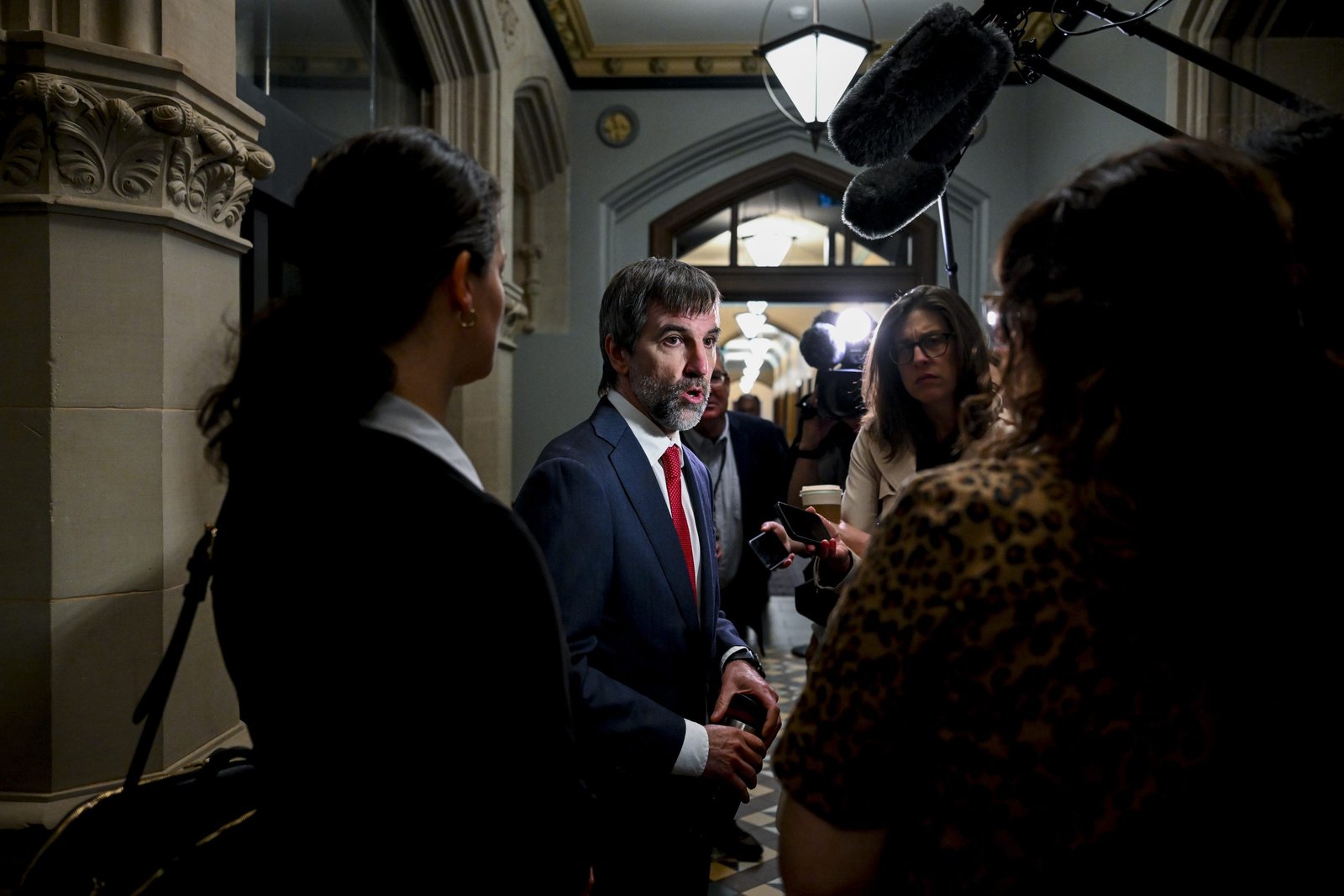
Carney said he is “grateful” for Guilbeault’s leadership and expertise as a member of the Liberal Caucus in a statement, sent out shortly after the former MP’s post on X.
Former cabinet minister Steven Guilbeault says he is “totally at peace” with his decision to resign as a federal MP Wednesday and plans to pursue climate actions in other ways.
Guilbeault says he will remain a member of the Liberal caucus until later this summer.
“After almost seven years in this wonderful, challenging place, it’s time for me to move on,” he told reporters.
Guilbeault, a staunch environmentalist, has become disillusioned in recent months by what he has called the dismantling of climate policies under Carney.
Guilbeault served as environment minister under former prime minister Justin Trudeau and later as the cultural and heritage minister under Carney.
The Quebec MP quit Carney’s cabinet last year after the announcement of Ottawa’s energy deal with Alberta, which included a memorandum of understanding to work toward the approval of a new bitumen pipeline.
“This decision is the result of careful consideration. After almost seven years as a member of Parliament and Minister, I have come to the conclusion that it is time for me to pursue my fight for environmental protection and the fight against climate change in a different way,” Guilbeault wrote in a statement.
Carney said he is “grateful” for Guilbeault’s leadership and expertise as a member of the Liberal Caucus in a statement, sent out shortly after the former MP’s post on X.
“Our government shares a commitment to climate ambition, climate competitiveness and the preservation of Canada’s extraordinary natural heritage,” the statement read.
“I wish Steven and his family all the best as he begins this next chapter.”
Carney also addressed questions from reporters in French when asked whether the party has abandoned the environment.
“Not at all… we’ve made a lot of progress, we have a good nature strategy,” Carney said.
Several other ministers also echoed similar sentiments on Canada’s trajectory on environmental policies.
Before caucus, Public Works and Procurement Minister Joel Lightbound said the current government simply had a more “pragmatic approach” to achieving results.
“What I hear from my constituents is there’s a strong desire for our government to be pragmatic… and the pragmatic approach that we’ve taken is that you need to have buy-in from provinces like Alberta if you are to have a meaningful climate and environment plan,” Lightbound told reporters.
Finance Minister François-Philippe Champagne also noted that Canadians understand “the world is changing,” when asked if Guilbeault’s departure means losing support in Quebec.
“The global energy architecture is being redesigned, and countries like Canada who can develop resources responsibly and sustainably will play a key role, both in conventional, renewable and nuclear,” Champagne said.
Guilbeault isn’t the only caucus member who has been critical of the environmental rollback.
Last week, CBC reported that 14 Liberal MPs sent a letter to the prime minister at the end of April to express unease about the agreement with the Alberta government.
‘Heartbroken’
Speaking to reporters, Green Party Leader Elizabeth May said she was “heartbroken” by Guilbeault’s resignation.
“He is a strong voice as we all know and a person of great integrity and courage,” May said.
May referenced the recent electricity strategy and the new Alberta MOU as evidence of “constant rollback” of environment policies, saying “it’s no wonder” Guilbeault left.
Upcoming byelection
Guilbeault’s departure would trigger an upcoming byelection in Laurier–Sainte-Marie.
In an interview with iPolitics, Liberal strategist and McMillan Vantage’s senior vice-president for Quebec Jonathan Kalles said Guilbeault’s success in the Montreal riding was highly personal, as much of it was based on his reputation.
Laurier—Sainte-Marie riding has historically swung between the sovereigntist Bloc Quebecois and left-wing NDP, Kalles said, suggesting that Guilbeault benefited from the vote split between those two parties.
“Steven Guilbeault is a known quantity in that riding and in that milieu, so it will be a challenge to find somebody who can replace him at that level,” Kalles said.
The Liberal’s best chance at holding the seat would now heavily depend on recruiting a candidate with strong “local notoriety,” Kalles added.
While Carney’s current popularity could offset some challenges, he noted that it would still be an “uphill battle.”
“It’s a riding that the Bloc should absolutely win, and if they don’t, it tells you about where they’re at more than anything,” Kalles said.
With files from The Canadian Press