dailynewsnblog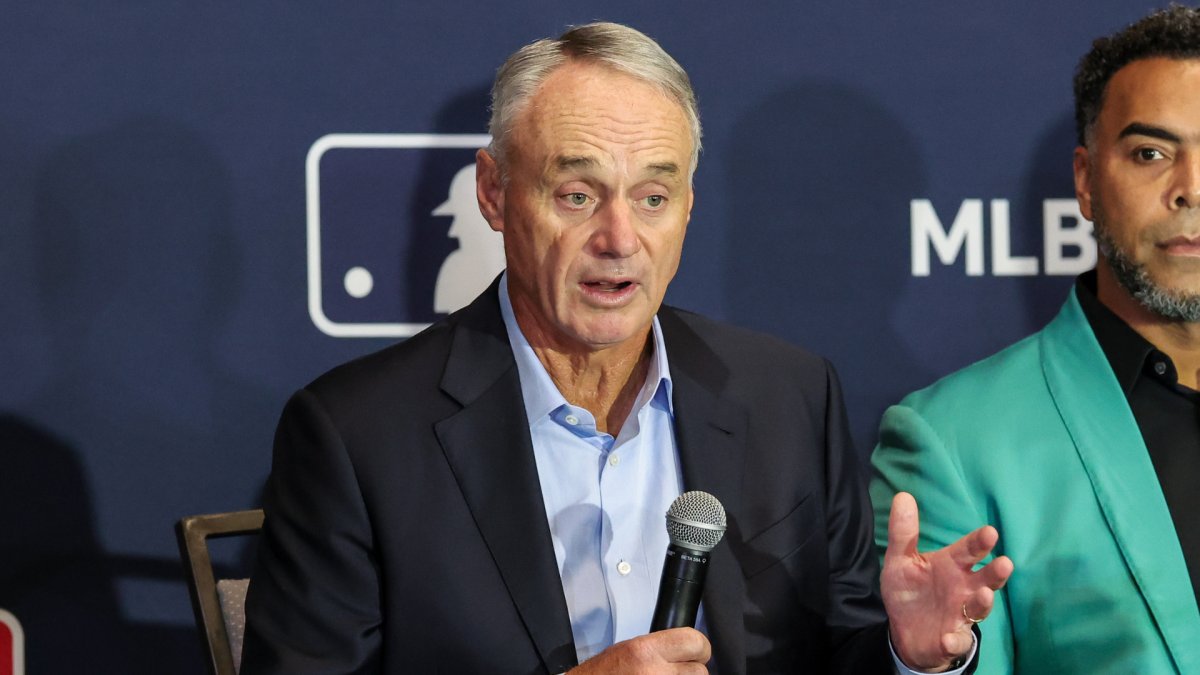
Negotiations over the next Collective Bargaining Agreement (CBA), the accord that governs the working relationship between players and clubs in Major League Baseball, intensified as the union made an opening suite of proposals to the league on Wednesday.
“Today, the MLBPA (Major League Baseball Players Association) presented a comprehensive set of economic proposals designed to advance the rights and benefits of players at all levels,” interim executive director Bruce Meyer said in a statement released by the union. “Our goal is to preserve and improve baseball’s market system, rewarding competition on and off the field. Additionally, the players’ proposals provide increased revenue sharing initially guaranteeing every small market club a minimum of $240m in revenue every season. This enhanced revenue sharing includes added protections to ensure clubs prioritize winning over profiteering. Ultimately, our proposals are designed to build upon the incredible momentum and popularity of our sport world-wide.”
MLB, MLBPA open negotiations ahead of CBA expiration: Salary cap, expansion and more issues on the table
Mike Axisa
The MLBPA most notably proposed the following to the owners:
- A “competitive integrity tax” levied against teams that don’t spend a minimum amount on player payroll.
- An increase of the minimum salary from $780,000 to $1.5 million.
- An increase of the bottom Competitive Balance Tax (more commonly known as the luxury tax) threshold from $244 million to $300 million.
Some other player-side proposals include:
- Increased sharing of local-broadcast revenues among teams but less sharing of stadium game-day revenues (the latter to incentivize on-field success).
- Tens of millions in extra revenue sharing to go to low-revenue teams that make the postseason or have a winning record.
- Free agency after five or more years, rather than six, for players who are at least 30 years of age at the time.
- Expanded draft lottery.
- Penalties for teams that neglect to spend revenue-sharing payments on team payroll.
- Draft picks and other incentives for low-revenue clubs active in free agency.
- Elimination of the qualifying offer for outgoing free agents.
- Increased compensation for lower-revenue teams losing players to free agency.
MLBPA’s opening proposal: What to know, what’s next
As is common in such negotiations, opening bids are effectively best-case scenarios for the side making the offer and, in reality, serve as a foundation for further negotiation. The ownership side will refuse these proposals in short order. According to ESPN, the owners are expected to counteroffer with their initial proposal on Thursday.
As for the specifics, the lack of spending by many small-market teams is a leading issue in MLB. Those teams uniformly receive significant revenue-sharing income — enough to cover payroll — but still don’t invest in the on-field product at adequate levels. The proposed competitive integrity tax addresses that, and the increase in the minimum salary would also necessarily have the corollary effect of increasing each team’s bottom payroll baseline. Philosophically, the MLBPA can argue for a tax “floor” since a tax “ceiling” in the form of the Competitive Balance Tax on payrolls already exists. Additionally, the opening proposal calls for direct penalties against teams that don’t spend revenue-sharing monies on payroll.
“We appreciate the union making a set of proposals and we look forward to continuing the bargaining process and working towards solving the competitive balance problem our fans are telling us needs to be addressed. We understand their proposals are designed to benefit players. Unfortunately, they do not address and in fact exacerbate the competitive balance problem our fans are telling us we must address,” MLB spokesman Glen Caplin said in a statement.
“The MLBPA’s proposal would reduce the amount transferred to lower-revenue Clubs, weaken the Competitive Balance Tax, and lead to even more payroll disparity than exists today. For example, under the Union’s proposal, the Dodgers would pay less in luxury tax payments, giving them an additional $70 million to spend on payroll.”
Why Dodgers owner Mark Walter’s ‘parity’ comments matter with potential MLB lockout looming
Dayn Perry

Owners are expected to vigorously pursue a salary cap during CBA negotiations, and the player side is expected to reject it just as vigorously, as they always have. Owners will costume their push for a cap in concerns over competitive balance, but the real motivation is what they perceive as flagging franchise valuations relative to other major North American leagues, which are all capped in varying forms.
At the same time, commissioner Rob Manfred must manage tensions between small- and large-market owners within his own side. That’s especially the case since Manfred intends to push for drastic changes to MLB’s revenue-sharing model — specifically to make it more of a national rather than a local model. Flagship clubs that own their own regional sports networks are likely to require serious persuasion on this front.
Additionally, any changes to the revenue-sharing system are subject to collective bargaining, meaning the players and their union must agree to them. The biggest fight, though, still figures to be over a cap.
The current CBA expires on Dec. 1, at which point the owners are expected to lock out the players. Owners also locked out the players during the last round of CBA talks, leading to a 99-day lockout that delayed the start of spring training and the 2022 regular season. That marked the sport’s first labor stoppage since 1994-95.