dailynewsnblog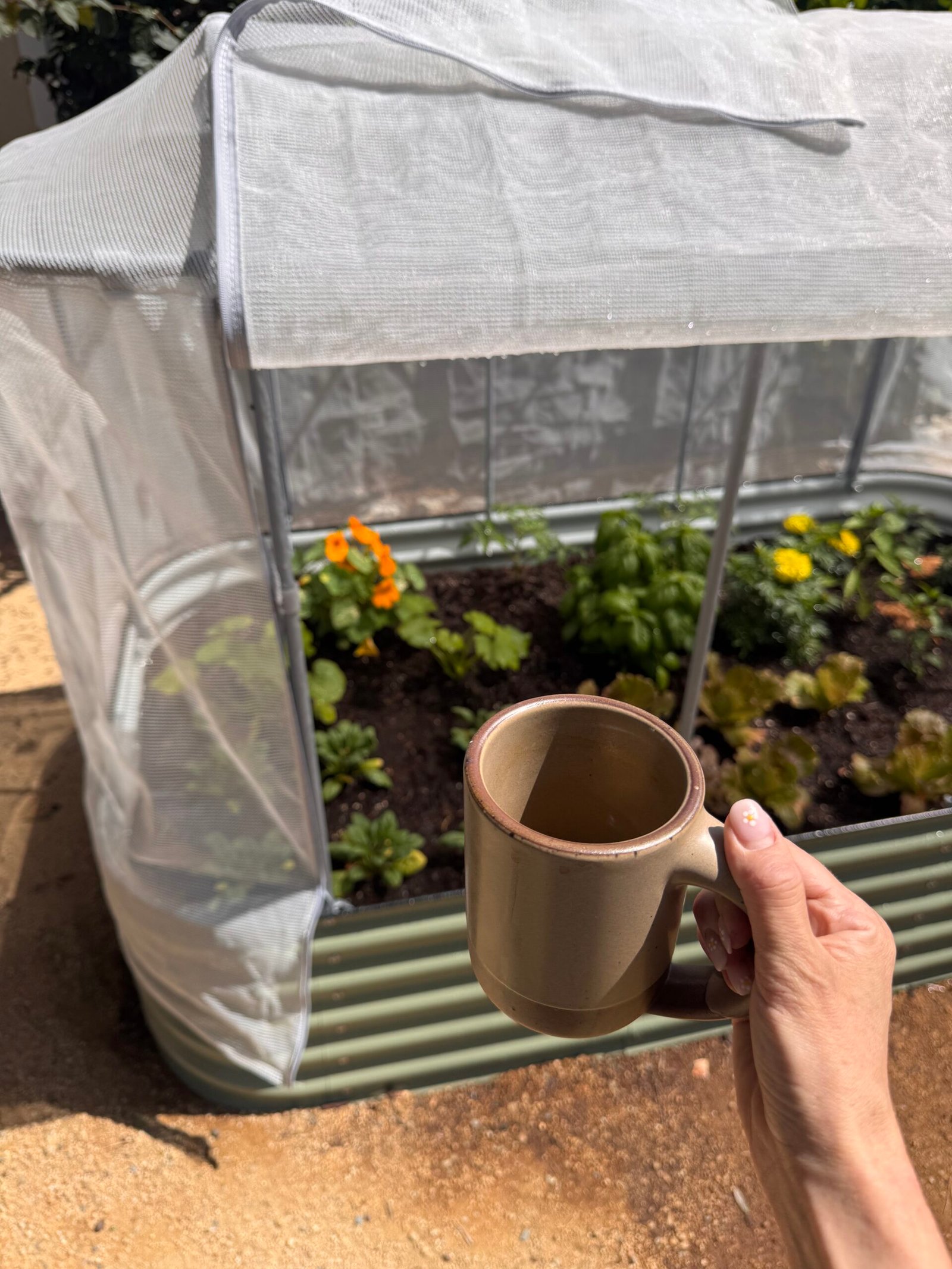
I was born in the arid desert of Southern California, but I grew up in the Midwest, where land was plentiful, crops lined each side of the highway, and my very own mother owned forty acres of farmland and various livestock over the years. Growing up, we had lambs, a goat, and even an emu farm. In the summers since I became an adult, she had a sprawling garden on the south side of the yard. When spring came, she could practically throw seeds over her shoulder, forget about them, and reap a harvest by midsummer.
This early exposure was the bedrock of my comfortability with nature and my understanding of how all living things are connected. After college, my own interest in gardening grew as I learned about how far food often travels before arriving in our homes, and that reducing our food mileage is one small way we can practice a more sustainable way of life. I began sourcing my groceries exclusively from the farmers’ market and local delivery boxes. I eventually hoped to grow my own food someday when I had the space.
“If you’re interested in growing your own food, you can do so much with even just a few square feet.”
In an era of seeing large homesteads and lavish gardens online, here’s what I want people to know: if you’re interested in growing your own food, you can do so much with even just a few square feet. While a sprawling garden is wonderful and dreamy, I have found so much pleasure in nurturing our small, budding garden and our tiny flock of chickens.
Here’s how we’re creating a small urban homestead while living in a rental. 🪴🐓
Gardening 🥕
When I returned to California after college, I dreamed of having a backyard with just enough space for a small garden. After I moved into my first home — a 100-year-old, two-bedroom Craftsman on the main street of our little town — I quickly learned that gardening in the rich soil of rural Minnesota was very different from trying to grow our own food in the desert climate of LA County.
Shortly after we were married, my husband and I enthusiastically tilled the silt in our backyard, filled our pickup truck with compost, laid down chicken wire, and planted about twenty square feet of carrots, tomatoes, zucchini, and potatoes. Just after planting our first garden, I learned I was pregnant with our first child. We were able to harvest a few summer squash and some heirlooms, but most of our efforts only ensured that the gophers and the ground squirrels were very well fed.
“Most of our efforts only ensured that the gophers and the ground squirrels were very well fed.”
Back then, my understanding of gardening was essentially to simply stick seeds in the ground and water them (Can you hear that? It’s all of the seasoned gardeners laughing at me in the distance.) My biggest takeaway from that first summer of gardening was that growing food is very dependent on your region, your space, and your own personal capabilities. We needed better soil, better tools, and an honest assessment of our capacity. I knew next time we committed ourselves to the project, it would need to be in a season with more margin.
Flash forward five years, and we’re now in a different rental with a more amenable yard — and I’ve learned a thing or two about gardening in California. On top of that, I have two sets of tiny hands eager to help me with the chores!
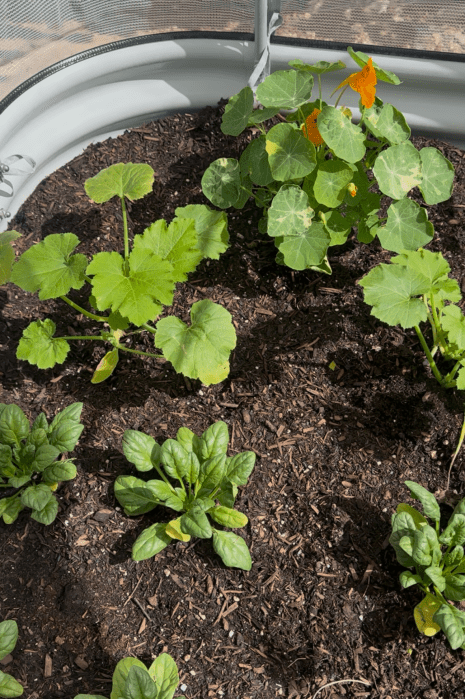
On Mother’s Day of this year, we planted tomatoes, spinach, lettuce, peppers, basil, strawberries, and squash. I loosely followed a companion planting guide and added some marigolds and nasturtiums to deter pests.
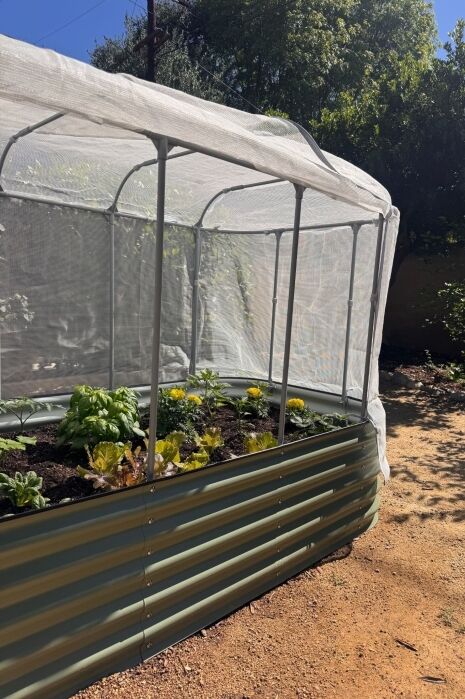
Instead of troubleshooting and DIY garden beds, I wanted equipment that was easy to assemble and would help us keep moisture in and pests out. I’d been eyeing Vego Garden’s raised aluminum garden beds for months, and we decided to use the 17″ Tall 9 In 1 Large Modular Metal Raised Garden Bed Kit and built the 6.5 ft x 3.5 ft configuration. In order to save money on soil, we filled the bed a third of the way up with cardboard, layered a small amount of sticks, twigs, and leaves, and then filled the bed the rest of the way up with organic soil. Finally, we added a Mesh Cover System that allows us to zip the garden closed when we tuck her in for the night.
At the time I’m writing this, we’ve just harvested our first bit of basil from the garden. I finally feel like we’re set up for success, and tasting these first fruits of our labor was sweet. All of this has inspired me to revive my compost pile, and moving forward, I’m excited to use our own compost (once it’s finished) to feed our garden.
“I finally feel like we’re set up for success, and tasting these first fruits of our labor was sweet.”
If there’s one thing I’ve learned throughout this process, it’s to start small and, if budget allows, invest in the right tools in the first place. I’ve found that this ends up being more cost-effective long-term. It was for us, anyway. And if your budget or your space is small, you can do so much with a few pots and some tomato plants. They’re surprisingly hardy, yield a generous crop, and are the perfect plants that will encourage you to keep going!
Raising chickens 🐥
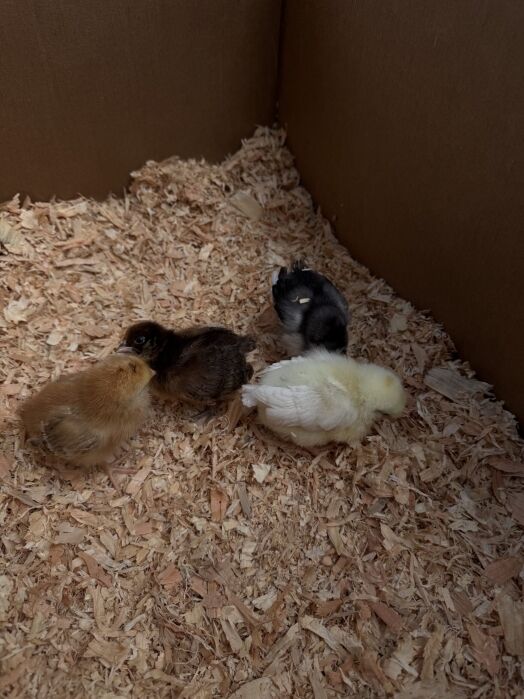
To expand our fledgling homestead, we decided to go all-in and surprise our kids with baby chicks for Easter. To prepare, we read “A Complete Beginners Guide To Raising Baby Chicks” and asked my mom, who has a small flock of her own, a lot of questions.
Getting started was surprisingly simple. We bought everything we needed from our local feed store — food and water dispensers, starter feed, bedding, a heat lamp, and the chicks themselves — for just under $100. To keep them a surprise, we tucked them into the garage and locked the door, tending to them when the children weren’t around and after they went to sleep. On Easter morning, we revealed the surprise, and it became the core memory I’d envisioned — for all of us!
“We bought everything we needed from our local feed store — food and water dispensers, starter feed, bedding, heat lamp, and the chicks themselves — for just under $100.”
After six weeks, we moved our little chicklings into their coop outdoors. If you’re someone who is handy and has a can-do attitude, building your own coop may be the right fit. We weren’t confident in our ability to do so, so we purchased ours online. I won’t link to the coop we bought because, truthfully, I don’t love it. But I will share the one we have our eye on, and we hope to upgrade when we have the chance.
Because we started with babies, our hens aren’t laying yet and will begin producing eggs when they’re six to nine months old. Until then, we’re enjoying their company, the entertainment, and how they dutifully eat our bugs and nourish our soil.
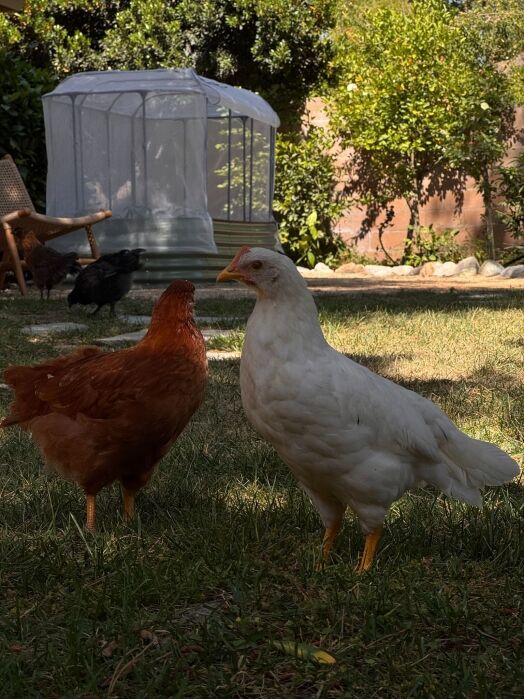
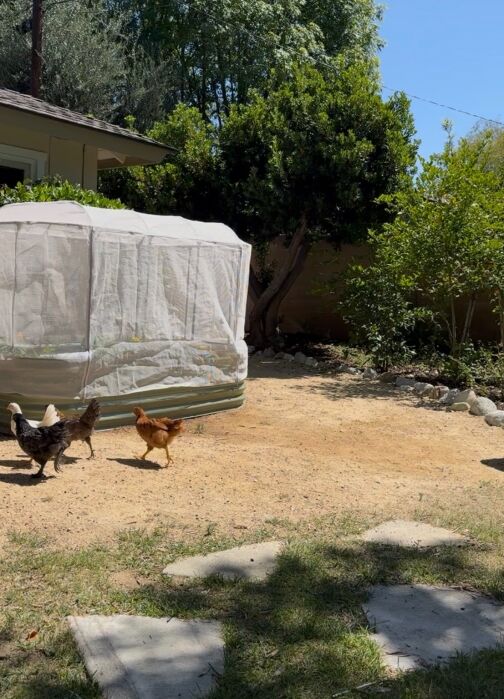
Very practically, our garden and our hens get our kids outside even more than they were before (which was a lot!). My favorite part about having them is how my daughter eagerly runs outside first thing in the morning to let them out of their coop, picking them up one by one, cradling them close, snuggling each of her beloved hens like a puppy. My son loves to water the garden daily. Both kids now know how to corral our flock into their coop for the night, shut the door, and latch the locks. And we are all looking forward to those first eggs from the coop.
The benefits of homesteading ✨
When we began, I wanted to normalize being in a relationship with our food and the earth. I expected the enthusiasm, the friction, the trial and error, and the joy.
What I didn’t expect was how creating our tiny homestead has also connected us to our community in ways we weren’t before. We now frequent our local feed store and the garden center by our house. We’ve connected more with our neighbors, asking the ones who have chickens for advice, and another to check in on our flock when we’re out of town.
“What I didn’t expect was how creating our tiny homestead has also connected us to our community in ways we weren’t before.”
We lost one of the baby chicks early on, and it sparked conversations we hadn’t had yet about death and loss. The whole experience is helping us be more in tune with each other, our home, our food, and the earth. I want my kids to know that yes, we often still source our food from the grocery, but ultimately, all of it originally comes from or is connected to the ground. And I want to be reminded of this daily, hourly, as much as possible, too.
Something about creating our small, humble homestead is keeping me connected to my life in a tangible way, and the rituals that come along with it are serving as an anchor in our days. Literally touching everything with my hands — building the coop, feeling the dirt, chasing the hens — is helping me rewire my brain in an increasingly technological world. Most importantly, all of this is something we do together — a tenet of our family, grounding us in our current location and current season of life. More than the hope of a perfectly ripe tomato or eggs fresh from the coop, I needed these grounding routines more than I realized.
For our family, homesteading is a practice in plenty, in pleasure, and helps us reinforce a slower way of life. I hope my children will remember just how long it took for our hens to lay their first eggs and the satisfaction of finally plucking something off the vine.
Kate Arceo is a writer based in Southern California and the Community Manager at The Good Trade. She has a Bachelor’s degree in Communication Studies and has been reviewing sustainable home and lifestyle brands, as well as organic kids’ apparel and nontoxic cosmetics for the last ten years. In her free time you can find her hosting dinners on the back patio, reading a novel on the sofa, or sipping a latte at the local café. Say hello on Substack and Instagram!