dailynewsnblog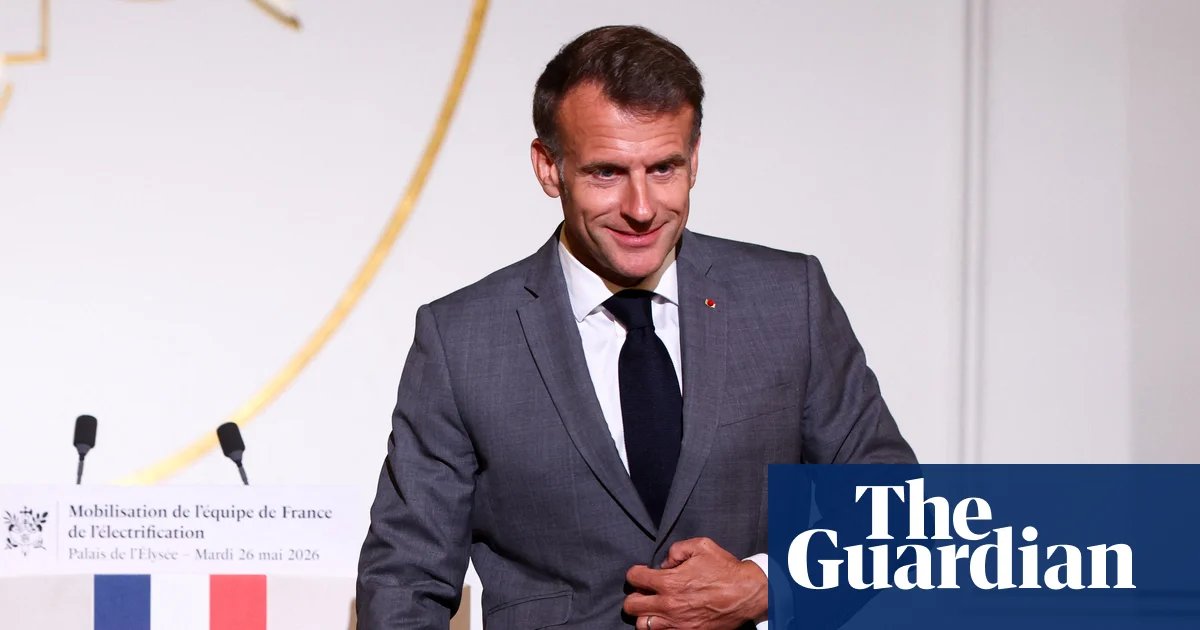
“The real risk,” France’s prime minister, Sébastien Lecornu, reportedly said last month, “is that this tangle of ambitions reflects such a lack of engagement with reality on the part of all these candidates that voters find the whole thing grotesque.”
He has a point. By this time next year, France will have a new president and Emmanuel Macron, who is constitutionally barred from serving more than two consecutive terms, will have left after a decade in the Élysée Palace.
The number of candidates jostling for position in the race to succeed him – whether formally declared, plainly preparing to do so, known to harbour presidential aspirations or merely on record as “interested” – currently stands at (wait for it) 35.
The obvious danger, as Paul Taylor observes, is that with so many runners and riders from the moderate left, centre and centre-right, the presidential race ends up being a shoo-in for the far right, currently comfortably ahead in all first-round polls.
For the EU, the blow would be immense. A nationalist leader in Paris could paralyse the bloc’s decision-making, challenge the supremacy of EU law and push a “France First” agenda that undermines the single market and Schengen free-travel zone.
Yet unless the mainstream parties get their act together, the prospects for the EU’s second-largest economy and only nuclear power being run by a far-right president from this time next year look alarmingly high.
The latest to throw his hat in the ring is former prime minister Gabriel Attal, declaring (as would-be French presidents must) that he loved France and the French “with a passion” and was “fed up with 50 shades of managing decline”.
But Attal – France’s youngest prime minister when he was appointed in 2024 – faces two major obstacles: not just his perceived proximity to the outgoing president, currently languishing on a 75% disapproval rating, but centrist rivals.
The leader of Macron’s Renaissance party is trailing another of the president’s former prime ministers, Édouard Philippe, the popular, moderate-right mayor of the port city of Le Havre and head of the hitherto Macron-allied Horizons party.
Both may well be challenged by yet a third centrist, the justice minister, Gérald Darmanin, who has said that he too intends to play a role in the election “either as a candidate, or by supporting the person best placed to represent” the centrist camp.
Attal and Philippe have reportedly set up a “mechanism” to assess by early 2027 whether one or the other should step aside. But the centrists are not alone in their confusion.
Similar if not worse chaos reigns on the fractured centre-right (whose presidential candidate in 2022, Valérie Pécresse, scraped just 5% in the first round), but which has backed successive Macron governments since 2024.
There, three candidates have already declared, and another may soon. Bruno Retailleau, a hardline recent interior minister, will run for his Les Républicains party – but a regional president and a mayor are challenging him to represent the broader right.
Also likely to join the race is Dominique de Villepin, prime minister all of 20 years ago. Again, there are calls from both the centre and the centre-right for a single candidate to run for both camps – but zero agreement on how they might be chosen.
The field on the left is even more hopelessly tangled. Among 17 potential or declared candidates are a former president (François Hollande), prime minister and cabinet minister, plus an assortment of (ex-)MPs and an MEP.
Some among the Socialists (currently feuding among themselves), Greens and smaller left groups want to field a joint candidate, but cannot decide how. The Greens, Communists and a pro-EU independent, Raphaël Glucksmann, do not.
The left is further split over whether to hook up in any way with Jean-Luc Mélenchon, the veteran radical leftist making a fourth run for the Élysée. Some argue the moderate left will be annihilated without him; others say he’s toxic to most voters.
There’s even an element of doubt on the far right: the National Rally (RN) will learn on 7 July whether Marine Le Pen’s legal woes definitively prevent her from running – in which case her hand-picked protege, Jordan Bardella, will do so in her place.
The stakes are high
To be fair, most analysts are confident the field will narrow by autumn. French presidential races often do not really get under way until the New Year, they note, and very few are won by the early frontrunners.
But the stakes could hardly be higher. The bottom line: if the centre and the centre-right cannot agree on a joint candidate, the chances of either Le Pen or Bardella – both polling at more than 35% for the first round – seizing the presidency surge.
If the moderate left also cannot field a single candidate, they will – as in the past two presidential elections – fail to reach the run-off. And if both mainstream camps are unable to unite, France faces a run-off pitting Bardella or Le Pen against Mélenchon.
Polling suggests either far-right candidate will comfortably win the first round, likely to be on 11 or 18 April – while the only candidate so far predicted to be remotely capable of beating either far-right candidate in a run-off is Philippe.
As Angelique Chrisafis points out, polling also suggests 74% of French voters want either a “radical transformation” or “deep changes in France” – a big increase over the past few years that clearly cries out for serious policy initiatives.
But, warned Brice Teinturier of the Ipsos polling agency, the dominant feeling among voters is simply: “No one is bothered with them – politicians are giving the strong impression they are only interested in themselves and their candidacies.”
It is all a potential recipe for disaster. Joseph de Weck of the Foreign Policy Research Institute reckons the game is not yet up: France may have a “fatalist and depressive streak”, he said, but also “a deep voluntarist and idealist tradition”.
Will it rise to the occasion to keep the RN out? The French, wrote Alexis de Tocqueville back in 1856, are “the most brilliant and the most dangerous nation in Europe – in turn an object of admiration, hatred, pity or terror, but never indifference”.
It would be nice, come next summer, if the sentiment was admiration.
To receive the complete version of This Is Europe in your inbox every Wednesday, please subscribe here.