

 dailynewsnblog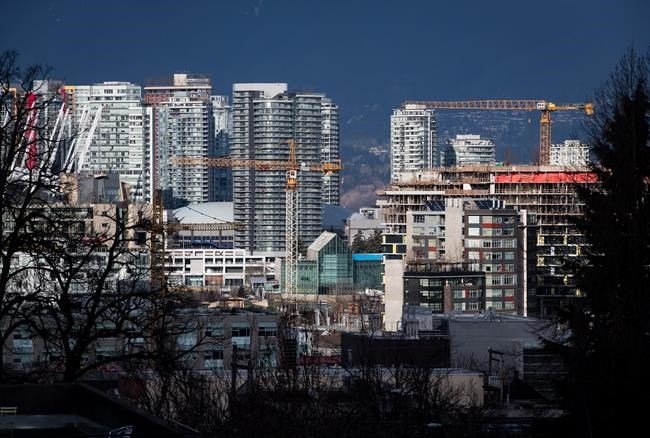

B.C.’s housing market remained sluggish in April as affordability pressures weighed on sales as manufacturing posted modest gains in March
B.C.’s housing market remained tepid into April as sales pointing to another disappointing spring market. Seasonally adjusted home sales decreased by 1.1 per cent in April to 5,227 units after a 0.5 per cent drop in March. This was also the lowest monthly figure since November 2023. Year-over-year sales declined by 3.8 per cent. Elevated economic uncertainty, weak growth and ongoing affordability pressures continue to sideline prospective buyers, with these challenges particularly acute in B.C., which remains the most expensive housing market in the country.
Driving this month’s decline was a four per cent drop in sales in Metro Vancouver, while sales in Okanagan Mainline also declined by 5.4 per cent. Home sales also fell in Vancouver Island (excluding Victoria, -3.4 per cent), Kamloops (-5.2 per cent), and South Okanagan (-0.7 per cent). On the other hand, sales increased in Chilliwack (+6.3 per cent), Victoria (+1.2 per cent), the Kootenay (+10.9 per cent), and Northern B.C. (+3.7 per cent).
That said, year-to-date sales fell across all markets. Overall, B.C. home sales fell by 8.4 per cent in the first four months of the year, compared to same period in 2025. Contributing to this was a significant decline in Chilliwack during the period by 25.8 per cent, the Kootenay by 11.9 per cent and Metro Vancouver by 9.4 per cent, as well as decreases in other markets.
Surprisingly, home prices were back on the rise in March as the provincial average price increased by 2.1 per cent to $939,400, and down from its peak in February 2022 by 12.8 per cent. This was also the first monthly increase since October 2025. Price increases were recorded in Metro Vancouver (+1.2 per cent), the Okanagan Mainline (+5.2 per cent), among other regions, while Victoria (-0.7%) and Kamloops (-2.7%) saw declines. That said, geographic and product sales compositions can swing monthly patterns. Quality-adjusted benchmark prices, which give a clearer picture of the underlying trend declined in April by 0.4 per cent, continuing a steady decline since early 2025.
Weak housing market conditions are likely to progress in the near term given the shaky geopolitical climate, sluggish economic growth and weak labour market conditions. A modest recovery later in the year is possible if conditions improve alongside ameliorating affordability.
On the manufacturing front, sales in B.C. rose marginally in March. On a seasonally adjusted basis, manufacturing sales in the province increased by 0.7 per cent to just under $5.7 billion. The rise was driven by a 1.4 per cent increase in sales from durable goods industries to $3.1 billion. Non-durable goods sales, however, were unchanged month-over-month at around $2.5 billion. So far this year, manufacturing sales have been stronger than last year. Over the first three months of the year, monthly sales averaged just above $5.6 billion, compared to an average of $5.3 billion in 2025. Year-to-date unadjusted sales are up 5.3 per cent compared to the same period last year.
Within the durable goods sector, the transportation equipment manufacturing subsector rose 16.7 per cent to a seasonally adjusted $353 million, the highest level since March 2025. Over the previous 11 months, sales averaged around $285 million. Primary metal manufacturing also increased, rising 4.8 per cent to $601 million, but commodity prices have lifted sales. This marked the fourth consecutive monthly increase and a record high for the subsector.
Fabricated metal products manufacturing also rose, increasing 8.4 per cent in March. Partially offsetting these gains was a 25.6 per cent decline in non-metallic mineral product manufacturing sales, which fell to $163 million. This was the lowest monthly level since October 2021, when sales were $162 million. Average sales over the previous 12 months were $208 million.
Wood product manufacturing also declined for the third consecutive month, falling 2.4 per cent to $728 million. This represents the lowest level since May 2020, when sales were $623 million. Year to date, durable goods sales are up 2.6 per cent.
Data for most subsectors in the non-durable goods category are suppressed for confidentiality reasons. However, seasonally adjusted food manufacturing sales rose 3.0 per cent in March to just under $1.1 billion, while paper manufacturing sales fell 12.7 per cent to $318 million. Year-to-date unadjusted non-durable goods sales have grown by 8.9 per cent compared to the same period in 2025.
In the Metro Vancouver area, seasonally adjusted manufacturing sales fell by 1.1 per cent in March, following an increase of 2.7 per cent in February. Average monthly sales so far this year are above $3.2 billion, compared to 2025, when manufacturing sales averaged just under $3 billion.
Bryan Yu is chief economist at Central 1.






![Only 109 Miles: United Airlines Launches New Extremely Short Route [Map]](https://dailynewsnblog.com/wp-content/uploads/2026/08/united_e175_in_hartford.jpg)