dailynewsnblog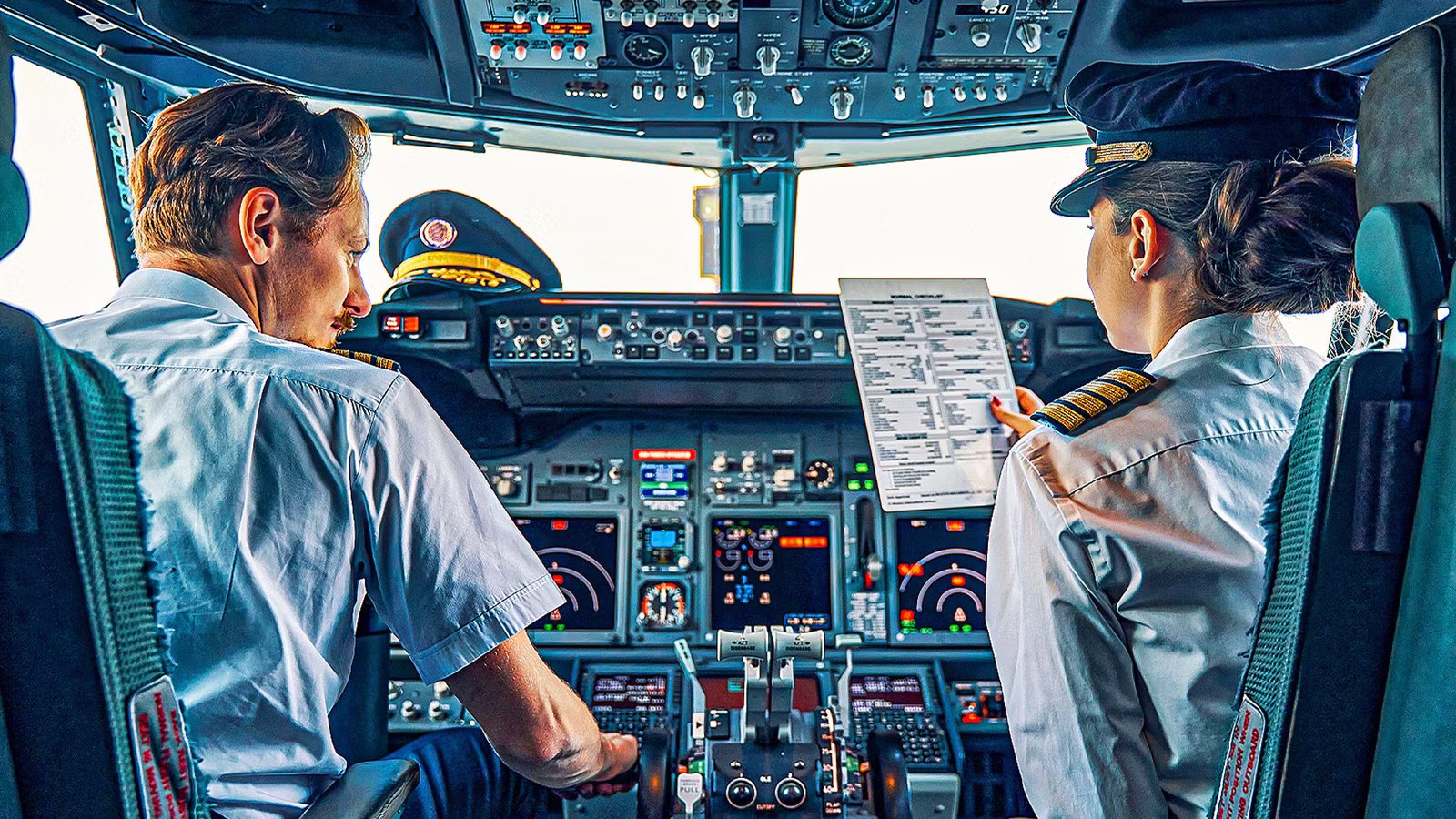
When observing the flight deck of a modern commercial airliner, the structural differences between the two dominant aerospace manufacturers are where the most profound divide in human-machine interface design can be seen. The question of why Airbus and  Boeing commercial jets utilize completely different cockpit philosophies is central to modern aviation engineering, directly influencing how flight crews interact with automation during critical flight regimes.
The historical trajectory of commercial flight decks shifted rapidly during the late twentieth century as mechanical control cables gave way to electronic processing. Boeing chose a path that prioritized traditional mechanical sensations and explicit pilot supremacy, and Airbus pioneered an ecosystem where computer algorithms act as an absolute safety envelope. This article will explore the deep-seated electronic, mechanical, and operational motives that distinguish these two competing flight decks, detailing how their contrasting architectures dictate real-world handling characteristics.
Who Holds The Authority?

The core difference between Airbus and Boeing cockpit philosophies centers on who holds ultimate authority over the aircraft in extreme flight conditions. Airbus designs its flight decks around digital envelope protection, viewing the onboard computers as a definitive safety shield that actively blocks a pilot from exceeding structural or aerodynamic limits. Boeing, conversely, operates under the conviction that a human pilot must always possess final command authority, allowing the flight crew to physically override automated constraints if an emergency demands it.
This core divergence manifests visibly in the primary flight controls. An Airbus cockpit replaces the central control column with a compact sidestick mounted on the outboard console, transmitting electronic requests to computers that automatically manage pitch trim and path trajectory. A Boeing flight deck retains a large, centrally located control yoke that physically moves in unison with autopilot inputs or the actions of the opposite pilot, ensuring high tactile and visual feedback across the entire flight deck.
This split emerged during the digital revolution of the 1980s when Airbus introduced the Airbus A320, aiming to capture global market share by heavily reducing pilot workload through automated flight laws. Boeing observed this digital shift but deliberately chose a conservative trajectory, waiting until the development of the widebody 777 in the 1990s to implement its own electronic control architecture. When Boeing finally adopted digital systems, it engineered them to replicate the heavy mechanical resistance and speed-stability feel of a traditional aircraft, preserving decades of institutional pilot muscle memory.
Divergence In Controls

Aircraft designers must balance physical space requirements and pilot fatigue against the crucial need for crew coordination and immediate situational awareness. These engineering priorities dictate not only the mechanical layout of the controls but also how seamlessly two pilots can monitor each other’s physical inputs during a high-stress approach.
Airbus utilized the electronic nature of fly-by-wire to remove the bulky central column entirely, opening up a spacious open-concept front console that accommodates a pull-out tray table for charts, manuals, and crew meals. This design allows pilots to operate the sidestick with simple wrist movements supported by an adjustable armrest, reducing physical exertion on long-haul sectors. In contrast, Boeing maintains the interconnected dual-yoke system so that any control input made by the captain is instantly mirrored on the first officer’s column, preventing conflicting simultaneous commands and offering a clear visual cue of what the aircraft or autopilot is executing.
|
Design Feature |
Airbus Sidestick System |
Boeing Central Yoke System |
|
Physical Location |
Outboard lateral console |
Center floor between pilot legs |
|
Feedback Mechanism |
Passive spring centering (no movement on autopilot) |
Active back-driven feedback (moves on autopilot) |
|
Crew Coordination Cues |
Electronic dual-input audio/visual alerts |
Direct visual tracking and physical resistance |
|
Workspace Ergonomics |
Open floor space with integrated tray table |
Traditional instrument visibility, high tactile layout |
|
Trim Management |
Full auto-trim based on trajectory laws |
Manual speed-stability trim via yoke switches |
The decision by Boeing to eventually adopt fly-by-wire technology on the 777 and later the 787 serves as an excellent case study in balancing digital modernization with philosophical continuity. The manufacturer recognized that swapping heavy mechanical cables for electronic wiring saves significant structural weight and improves fuel efficiency; however, it refused to abandon the central yoke. Instead, Boeing engineers designed a complex, back-driven actuator system that artificially forces the yokes to move, shake, or harden as speed and aerodynamic load change, ensuring that a pilot transitioning from an older 737 or 767 still encounters a familiar, hands-on environment.
The Striking Differences Pilots Notice When Training On Airbus & Boeing Aircraft
Airbus and Boeing aircraft are built from the ground up with different design philosophies that completely change what it’s like to fly them.
The Airlines Are Watching Closely

There is frequent analysis across the airline industry on how these opposing systems impact crew coordination and cognitive processing under stress. Commercial carriers making fleet procurement choices will closely evaluate the long-term capital required to train flight crews across distinctly configured fleets. Safety experts highlight that the physical design of the controls directly dictates how information is distributed across the flight deck, framing automation management as a core operational variable.
Real-world evidence of this split appears in how both manufacturers handle system alerts and operational checklists during abnormal events. Airbus utilizes its Electronic Centralised Aircraft Monitoring infrastructure alongside a strict dark cockpit philosophy, meaning that overhead switches remain unlit unless a fault requires human intervention. Boeing flight decks provide pilots with a more exhaustive stream of concurrent system data, trusting the human operator to synthesize the information and execute appropriate non-normal checklists.
|
Operational Category |
Airbus Training Protocol |
Boeing Training Protocol |
|
Information Presentation |
Sequential filtering via centralized monitoring |
Comprehensive data access across overhead gauges |
|
System Status Cues |
Dark cockpit design (lights illuminate for faults only) |
Continuous status illumination for operational switches |
|
Automation Tracking |
Visual monitoring of flight mode annunciators |
Physical tracking of moving levers and back-driven yokes |
|
Cross-Cockpit Monitoring |
Audio-visual warnings for dual sidestick inputs |
Direct observation of physical control column displacement |
Moving a pilot from a conventional control setup to an advanced digital flight deck requires an intensive period of ground school to ensure they understand how computers translate physical inputs into aerodynamic changes. If a crew fails to fully grasp the underlying automation laws governing their aircraft, they risk experiencing automation surprise during a sudden system degradation. Consequently, airline training curricula place immense emphasis on manual handling proficiency, which ensures that regardless of whether a pilot operates a lateral stick or a central yoke, the core principles of airmanship remain intact.
A Drastically Different Feel For Pilots

An alternative perspective suggests that because modern aircraft from both manufacturers utilize electronic signaling, the operational differences are purely cosmetic. This line of reasoning posits that a digital pulse traveling through copper wiring operates identically whether it originates from a small plastic handle or a heavy aluminum wheel. However, this simplified view collapses when analyzing the distinct mathematical algorithms that govern how each manufacturer translates a physical hand movement into control surface deflection.
The reality is that an Airbus and a Boeing jet behave entirely differently during manual flight due to their contrasting control laws. Under normal operating conditions, an Airbus stick does not command a specific elevator position; instead, it commands a flight path factor, such as a precise roll rate or a specific vertical load. If a pilot deflects the stick sideways and then releases it to neutral, the computers will lock in that exact bank angle up to 33 degrees without requiring any further human correction. A Boeing flight deck rejects this hands-off path hold, using complex control laws that artificially introduce speed stability. The design forces the pilot to constantly adjust the pitch trim switches on the yoke whenever they change the airspeed of the aircraft, mimicking the classic physical resistance of a mechanical airplane.
Contrasting these two systems in heavy crosswinds or turbulent weather highlights why the engineering choice matters so much to modern aviators. When an unexpected wind gust deflects a wing during a low-visibility approach, a Boeing pilot immediately feels the physical yoke twitch and counter-rotate in their hands, providing an instantaneous physical cue of what the autopilot or the airframe is experiencing. An Airbus pilot must rely entirely on visual instruments to track these rapid adjustments because the passive sidestick remains perfectly stationary while the computers manipulate the control surfaces.
Here’s What Pilots First Notice When Switching From The Boeing 737 MAX To The Airbus A320neo
Stepping into the cockpit of an Airbus A320neo after flying the Boeing 737 MAX reveals a world of differences.
Keeping An Eye Out In Danger

Both design philosophies have greatly elevated commercial aviation safety, but neither system is entirely immune to specialized operational risks and human-factors anomalies. The absolute envelope protection engineered by Airbus can introduce severe complications if a mechanical failure or icing event corrupts the underlying aerodynamic data stream, causing the computers to misinterpret the true state of the airframe. Differently, the absolute pilot authority championed by Boeing means that if a flight crew becomes severely disoriented or misinterprets their instruments, the aircraft will not step in to prevent them from executing an unsafe manual maneuver.
The critical risks unique to each flight deck become apparent during extreme emergency scenarios where standard automation degrades. On an Airbus, if multiple air data computers fail, the flight deck drops from Normal Law into Alternate Law or Direct Law, completely disabling the digital safety envelope and forcing the sidestick to command direct, unmitigated control surface deflections without overspeed or stall protections. On a Boeing fly-by-wire flight deck, the exception to absolute authority lies in the physical effort required to command the jet, as a pilot must exert more than 50 pounds (22.68 kilograms) of physical force on the control column to completely overpower the automated trimming systems during a runaway stabilizer event.
Safety investigators urge flight crews to remain deeply vigilant regarding how these distinct architectures communicate hidden system status changes during high-workload operations. On an Airbus flight deck, because the lateral sidesticks are completely passive and do not move in unison, one pilot cannot visually or tactilely track the exact tracking inputs being made by the other aviator. If both pilots manipulate their respective controls at the same time, the system registers a dual-input error, meaning the inputs are mathematically combined unless one pilot presses a priority takeover button, an anomaly that demands rapid vocal coordination to resolve before the aircraft deviates from its intended path.
Can The Best Of Both Worlds Exist?

The great division between Airbus and Boeing cockpit philosophies demonstrates that the aerospace industry does not have a singular, universally accepted solution for human-machine interface design. The core lesson of this technological divide is that both manufacturers are trying to solve the identical problem of flight safety through two completely opposite human-factors paradigms. One philosophy treats the onboard computer as an unyielding supervisor designed to catch human mistakes, while the alternative philosophy views automation as an exceptionally capable tool that must always defer to human judgment.
From a practical perspective, neither flight deck configuration has established a statistically superior safety record, as both brands have achieved exceptional safety metrics across billions of global flight hours over the last three decades. For commercial airlines, the decision to purchase a specific fleet format is typically guided by route economics, fleet commonality, and training capital rather than a preference for a lateral stick or a central column. For the pilots operating these machines, mastering airmanship means thoroughly adapting their personal reflexes and mental checklists to match the specific digital logic or tactile feedback loop engineered into their specific flight deck.
On the horizon of commercial aviation sits future clean-sheet aircraft designs, which will seek to blend the best elements of both worlds as artificial intelligence and single-pilot operations face deeper industry evaluation. Next-generation flight decks are already experimenting with active-control sidesticks that utilize internal electronic motors to provide tactile cross-cockpit feedback, mimicking the linked nature of a Boeing yoke within the space-saving layout of an Airbus console. The line between human command and software execution will continue to blur, but the foundational requirement for rigorous training and clear situational awareness will remain the absolute benchmark of aviation safety.