dailynewsnblog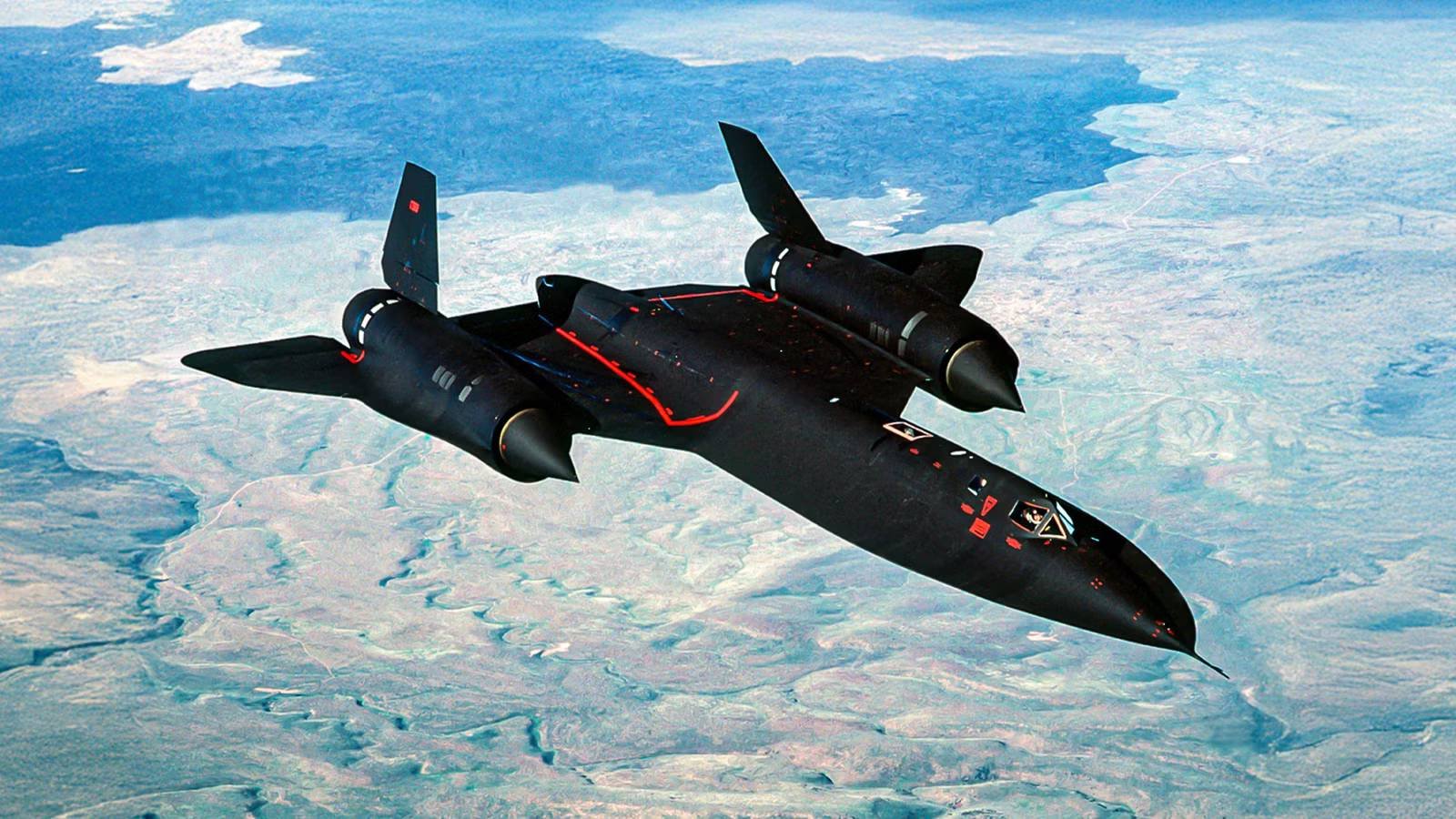
Dozens of aircraft types have broken the sound barrier, far too many to list here. These include almost all fighter jets, many military trainers, various experimental aircraft, and various strategic bombers. For the sake of brevity, fighter jets, experimental aircraft, trainers, and retired bombers will be excluded from this list. However, the list will include the famous North American X-15 rocket plane as the only manned aircraft to fly hypersonically.
This list will focus on the very few commercial aircraft to break the sound barrier, supersonic strategic bomber aircraft in service today, and two record-setting Cold War spy/experimental aircraft. The next generation of stealthy strategic bombers (B-21/H-20) is subsonic. No business jets have been designed to achieve supersonic flight.
Douglas DC-8
Max speed Mach 1.012

The Douglas DC-8 is a 1950s-era quad-engined narrowbody airliner built by Douglas and later McDonnell Douglas until 1972. It is the only conventional tube-and-wing aircraft to make this list of supersonic aircraft. The DC-8 was not a supersonic aircraft, but it did demonstrate how many subsonic aircraft can exceed the speed of sound during dives.
In August 1961, a DC-8-43 deliberately broke the sound barrier, reaching Mach 1.012, during a controlled dive. It flew supersonic for 16 seconds. The purpose of the supersonic dash was to collect data on a new leading-edge wing design. During the test, it became the first commercial airliner to fly supersonically.
The aircraft (registered CF-CPG) was later delivered to Canadian Pacific Air Lines. According to Planespotters.net, the aircraft was 20 years old when it was scrapped. The aircraft was initially called the Empress of Montreal before being named the Empress of Buenos Aires. Like other commercial aircraft, the DC-8 had a cruise speed of around Mach 0.82.
Rockwell B-1B Lancer
Max speed Mach 1.25

In the early Cold War, the USAF looked to altitude and speed to overcome enemy air defense. First, it developed the supersonic B-58 Hustler, then doubled down on its concepts by developing the North American XB-70 Valkyrie. The XB-70 was to fly at around 77,000 feet (23,500 meters) and have a max speed of around Mach 3.3.
But the development of Soviet air defense and the invention of ICBMs rendered them obsolete before they could enter service. Next, the Air Force developed the B-1A Lancer to fly under the radar with a dash speed of Mach 2.0. The development of look-down radars also made this infeasible.
Finally, the USAF brought back the B-1 as the redesigned B-1B bomber as a bridge until the subsonic B-2 Spirit could eventually enter service. The B-1B’s top speed was reduced to Mach 1.25 while its radar cross-section was significantly reduced. The B-1B is now expected to continue flying into the 2030s as the US’s only supersonic bomber.
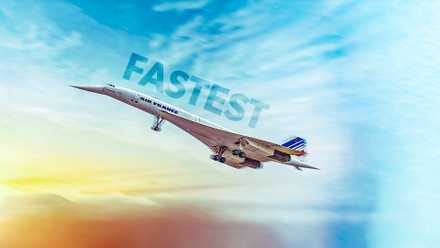
Concorde: Inside The Fastest Passenger Jet Ever Built
What was it like to ride the fastest commercial airliner? We take a look at the interior of Concorde.
Sud Aviation/BAC Concorde
Max speed Mach 2.04

The Anglo-French Concorde is the icon of supersonic flight. It is worthwhile to emphasize both the engineering and geopolitical aspects of the aircraft. As Concorde went into development, it soon became clear that supersonic passenger aircraft were not commercially viable, leading Boeing and Lockheed to cancel their plans to build supersonic jets.
However, Concorde was a political, not commercial, project. It was a landmark treaty between Great Britain and France designed to keep Europe relevant in the face of US and Soviet dominance and foster inter-European integration. From this perspective, Concorde was a success that laid the groundwork for European states to cooperate and pool their aerospace resources, leading to the creation of Airbus.
Only 14 operational passenger-carrying examples were ever built, and it remained in service from 1976 to 2003. The only operators were British Airways and Air France, which were essentially gifted to them by their respective national governments. Its maximum speed of Mach 2.04 is not expected to be matched by Supersonic Boom’s upcoming Overture (cruise speed, Mach 1.7).
Tupolev Tu-160
Max speed Mach 2.05

The Tupolev Tu-160 “Blackjack” was developed as the main nuclear-carrying bomber of the Soviet Union. It is the largest bomber in service and was designed to brute force its way through enemy air defense. However, the collapse of the Soviet Union meant they were only produced in low numbers, with most being inherited by Ukraine.
Ukraine later traded most of its Tu-160s to Russia, which continues to operate them. Today, they function more as prestige aircraft and lack the numbers needed to brute force their way through today’s modern air defense. Russia started using them against Ukraine in 2025 after it suffered significant losses in its Tu-95 and Tu-22 bombers.
While the variable geometry Tu-160 is able to fly at Mach 2.05, in practice it flies subsonically and operates only at stand-off ranges with stand-off munitions. As the USAF gears up to introduce its second-generation stealth bomber (the B-21), Russia has placed the legacy Tu-160 bomber back into low-rate production.
Top 5 US Military Surveillance Aircraft That Made History
The legacy of the US military developing some of the world’s most iconic and successful surveillance aircraft looks set to continue into the future.
Tupolev Tu-22
Max speed Mach 1.88

The Tupolev Tu-22 “Backfire” is often described as a strategic bomber, although it was originally designed for an anti-ship role. The supersonic aircraft was designed with the range and speed needed to penetrate carrier task forces’ air defense and strike US and British aircraft carriers.
One of the main reasons the US Navy developed the venerable Grumman F-14 Tomcat was to counter the Tu-22 and defend the fleet. Today, they remain in service with the Russian Air Force in diminishing numbers as they face attrition and airframes wear out. Like Russia’s Tu-160, the Tu-22s are used on subsonic stand-off missions.
The Tu-22s have a maximum speed of Mach 1.88. It is unclear how long Russia will be able to keep the Tu-22 fleet (upgraded to the Tu-22M3) in service. The Sukhoi Su-34 “Fullback” fighter-bomber is intended to eventually replace the Tu-22M3 as well as the old Su-24 tactical strike fighter.
Tupolev Tu-144
Max speed Mach 2.15

The Tupolev Tu-144 “Concordski” was the failed Soviet competitor to the Anglo-French Concorde. While it did fly before Concorde, it also crashed very publicly at an air show in Paris. It didn’t enter service until 1975, and another crash led it to be quickly withdrawn from scheduled passenger use after just 102 commercial flights.
In some ways, the Tu-144 was an engineering marvel, but in other ways, it represented the Soviet political insecurity of the time. It was built by military aircraft engineers who were not used to designing comfortable passenger aircraft. This resulted in the aircraft cabin being exceptionally noisy. The engines also had appalling service lives, although this improved somewhat over time.
It had a maximum speed of Mach 2.15 (a little higher than Concorde). While Concorde is famous for its limited routes, it was even worse for the Tu-144. Only one domestic route was ever used: Moscow to Alma-Ata (now Almaty in Kazakhstan). The final operator was NASA in the 1990s, which replaced the engines with better US ones and then used the aircraft for experiments.
Lockheed SR-71
Max speed Mach 3.3

The Lockheed SR-71 Blackbird is one of the most famous supersonic aircraft ever built and was developed from the related A-12 program. In the 1950s, the USAF and the CIA developed the black box subsonic Lockheed U-2 spy plane. With a cruising altitude of around 70,000 feet (23,100 meters), it was thought to fly above Soviet air defenses with impunity.
But the development of Soviet surface-to-air missiles proved this wrong, and the U-2 shootdown of 1960 shocked the Air Force. Lockheed’s Skunk Works then set out to develop a new spy plane that would become the Blackbird. With an altitude of 85,000 feet (26,000 meters) and a max speed of around Mach 3.3, it was able to outfly the threats of its day.
The expense of operating the SR-71, along with the decline of the USSR and the development of new ISR assets (like satellites), led to the quasi-retirement in 1989 and full retirement in 1998. NASA retired its aircraft in 1999. The Blackbird remains one of the great engineering achievements of the Cold War.
North American X-15
Max speed Mach 6.7

The North American X-15 was developed as part of NASA’s space program in the late 1950s and 1960s, and it managed to fly into the edge of outer space. Only three were built, with their pilots also meeting some definitions of astronauts. Among the pilots who flew the X-15 was Neil Armstrong, who went on to become the first man on the moon.
The X-15 broke a number of records, some of which remain unbroken today. It was unable to take off by itself and had to be launched at altitude by a B-52 bomber. It is the only manned aircraft to have achieved hypersonic flight, with a record Mach 6.7 being set by William J. Knight in 1967 at an altitude of 102,000 feet (31,120 meters). Anything above Mach 5 is generally considered hypersonic.
As a parasite rocket plane, the X-15 is sometimes excluded from air-breathing airplane records. Today, there are start-up companies with stated goals to make hypersonic commercial passenger travel a reality. But this remains far off, and the most significant passenger supersonic programs with credible funding and substantial development remain the Supersonic Boom Overture and the Spike Aerospace S-512 business jet. China’s state-run COMAC is also developing a supersonic passenger jet.

![US “Drawing Up Plans” To Pull Customs Officers From 10 Major Airports [Full List]](https://dailynewsnblog.com/wp-content/uploads/2026/05/300-american-airlines-boeing-787-8-kamilpetran-_-shutterstock-simple-flying.jpg)