dailynewsnblog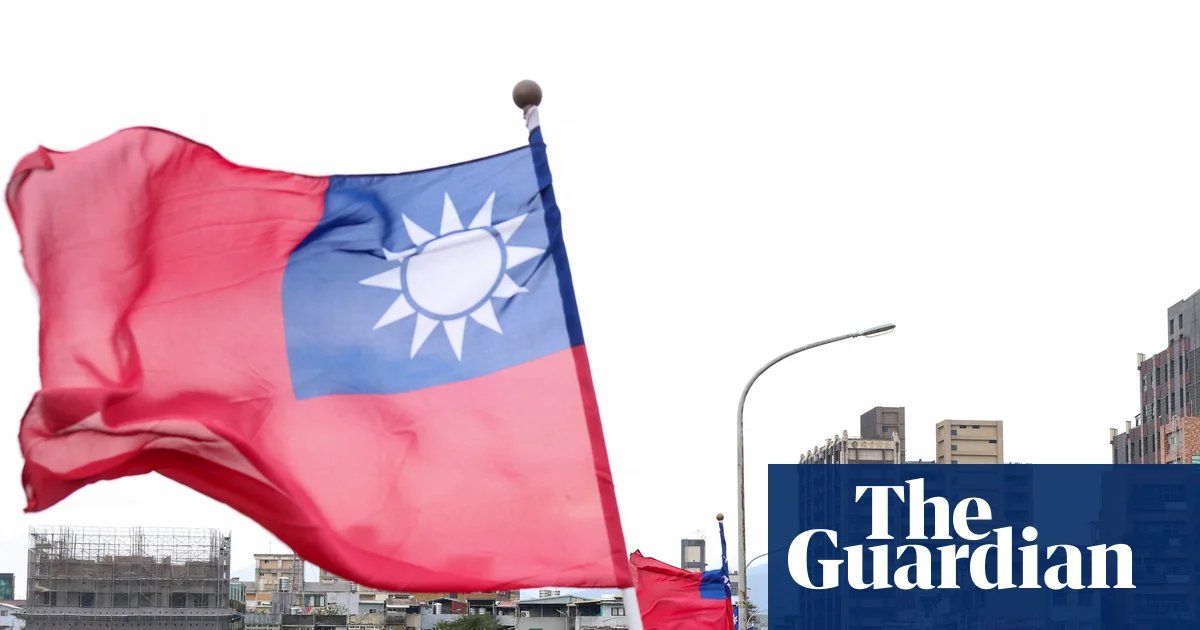
The Trump administration’s war against Iran should have no impact on arms sales to Taiwan, experts have said, after a US official suggested a pause in the delivery of a key weapons package was due to the Gulf conflict.
Analysts told the Guardian that a $14bn arms package left in limbo after Donald Trump’s meeting with Xi Jinping could take up to six years to process, and there was a “low likelihood” of any true connection between events in Iran and weapons delivery to Taiwan.
Uncertainty over Washington’s support for the island democracy re-emerged after Trump suggested he could use arms sales to Taiwan as a “negotiating chip” in future talks with Beijing.
Comments by Washington’s acting navy secretary, Hung Cao, at a congressional hearing on Thursday provoked further alarm in Taipei after he suggested that the weapons package awaiting Trump’s sign off for months had been paused.
“Right now we’re doing a pause in order to make sure we have the munitions we need for Epic Fury [the Iran war],” he said. “We’re just making sure we have everything, then the foreign military sales will continue when the administration deems necessary.”
The US has reportedly drained its missile stockpiles since launching its increasingly intractable war against Iran on 28 February.
Cao’s justification for the pause “makes no sense”, according to Rupert Hammond-Chambers, president of the US-Taiwan Business Council and a senior adviser at strategic consultancy group Bower Group Asia.
There is a “very very low likelihood” that there is any true connection between events in Iran and weapons delivery to Taiwan, Hammond-Chambers said, adding that the weapons deals that Trump is considering at the moment “don’t get delivered for anywhere from three to six years”.
“If he sends those congressional notifications by the end of June, you’re talking about another six to 12 months before the contract is signed, and then the clock starts on delivery. So we’re really into the 2030s [by the time Taiwan’s weapons are delivered],” he said.
Over the weekend, Reuters reported comments from an unnamed US official that the military had “more than enough munitions, ammo, and stockpiles to serve all of President Trump’s strategic goals and beyond”, and that the pause in sales to Taiwan was “unrelated to the war with Iran”.
China claims Taiwan as a breakaway province, despite never having ruled it, and strongly opposes Washington’s arms sales to the island democracy. US law dictates that Washington should supply Taiwan with defensive materials in order for the island to maintain a “sufficient self-defense capability”.
Xi told Trump in Beijing this month that the Taiwan issue was “the most important issue in China-US relations,” according to a Chinese foreign ministry statement. Trump has said he made no commitments about Taiwan during the meeting with Xi, but his statements since have cast doubt over Washington’s support.
Trump’s suggestion he could use Taiwan arms sales as a bargaining chip would violate Washington’s longstanding policy that it does not discuss the issue with Beijing.
The US president’s comment last week that he may speak directly with Taiwan’s president, Lai Ching-te, was another break from decades of diplomatic protocol. No sitting US president has spoken to a Taiwanese president since 1979, when Washington shifted diplomatic recognition to Beijing, and it would enrage China if the call were to take place.
On Monday, five lawmakers from Taiwan’s ruling Democratic Progressive party, joined by Peter Mattis, president of the Jamestown Foundation, a thinktank, held a press conference addressing Taiwan-US relations in the wake of the Xi-Trump summit. There, DPP legislator Ngalim Tiunn reiterated that “Taiwan’s communication channels with the US remain open and smooth”.
Mattis said he also thought Cao’s comments were not accurate, saying there was “no way” in which arms packages to Taiwan that had already been decided and notified to the US Congress could be affected by the Iran conflict.
“Whatever has been said is somebody misspeaking and not necessarily understanding the technical details of how US arms sales work,” he said. “I think these are separate issues and should be treated differently.”
Hammond-Chambers said that if Trump approved the sales “in the next four to six weeks” then uncertainty about US support for Taipei “mostly goes away”.
But if delays were to drag on into the autumn – when Trump is set to host Xi in Washington, before another two potential meetings at the Apec summit in China in November and the G20 summit in Miami in December – then it “puts Taiwan in a terrible position”.
The White House and China’s Taiwan Affairs Office were approached for comment.