dailynewsnblog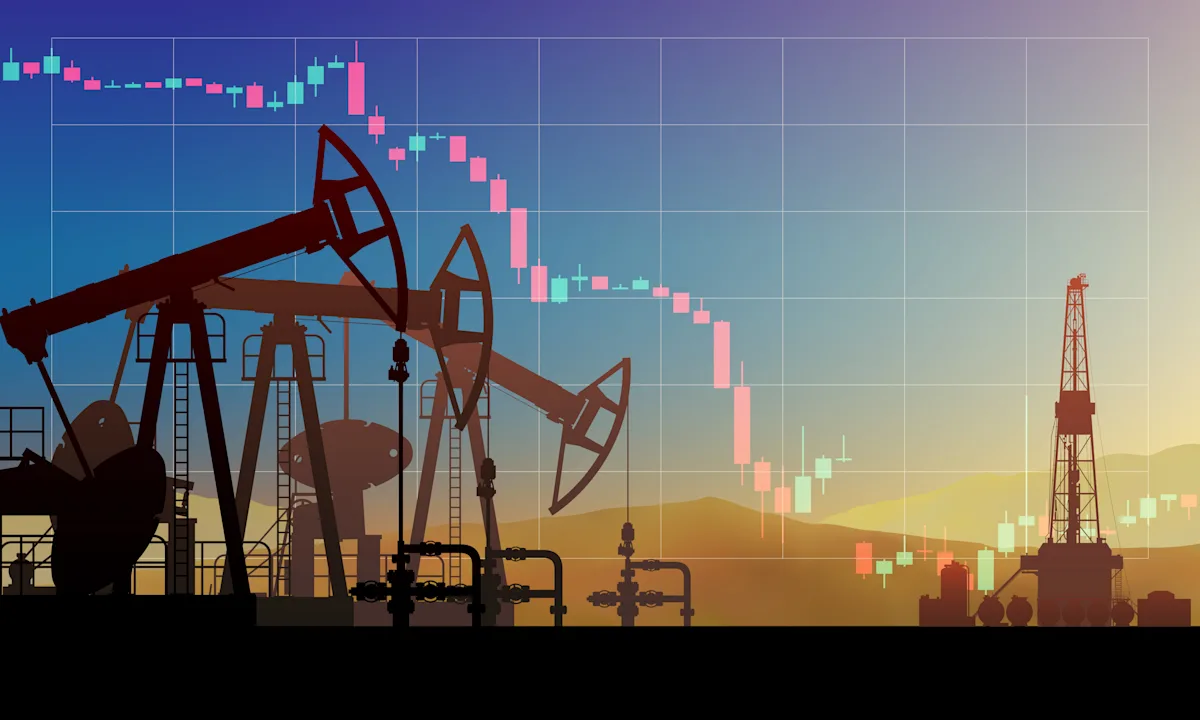
Oil prices were volatile on Tuesday after the US and Iran exchanged strikes in Southern Iran, complicating ceasefire efforts between the two countries.
Futures on Brent (BZ=F) crude, the international benchmark, climbed 2% to trade near $98.5 per barrel, still well below Friday’s close north of $103. Those on the US benchmark West Texas Intermediate (CL=F) crude fell 4% to $92 per barrel.
The attacks occurred just hours after US President Donald Trump said over the weekend that discussions with Tehran were moving forward on extending the ceasefire and reopening the strait.
US Secretary of State Marco Rubio said in India on Tuesday that negotiating a deal with Iran could “take a few days.”
US forces carried out strikes on missile launch facilities and vessels suspected of laying mines in southern Iran, actions a US military spokesperson described as “self-defense.”
Meanwhile, Iran’s Supreme Leader Mojtaba Khamenei released a statement warning that “the nations and territories of the region will no longer serve as protection for American bases.”
Iran’s Islamic Revolutionary Guard Corps claimed it shot down a US Reaper drone and aimed fire at an F-35 jet.
“Net net, optimism is still elevated that an agreement can be made to end the war” wrote Deutsche Bank Research analysts on Tuesday.
“Last night’s targeted action is clearly a warning shot that the ceasefire is fragile though, so we will have to see what the next few days of negotiations bring,” said the note.
Over the weekend President Trump said that an agreement with Iran that will set the framework for renewed peace talks and reopen the Strait of Hormuz — a critical shipping lane for global energy flows — would be announced “shortly,” renewing hopes for a potential end to the war.
While firm details around the terms of an agreement haven’t been made public, Iranian media and sources throughout the US and Iranian governments have said that a deal could include a full ceasefire on all fronts of the conflict, a reopening of the Strait of Hormuz, and a gradual easing of sanctions on Iranian crude oil sales. Other key issues such as the fate of Tehran’s nuclear program and its stores of enriched, near-weapons grade uranium, would be negotiated at a later date, according to reporting from various media outlets.
While the Strait of Hormuz remains effectively shuttered to vessel transits, the market has lost roughly 1 billion barrels of oil since the war began in late February, according to data from the International Energy Agency, pushing the global market into the largest supply shock on record.