dailynewsnblog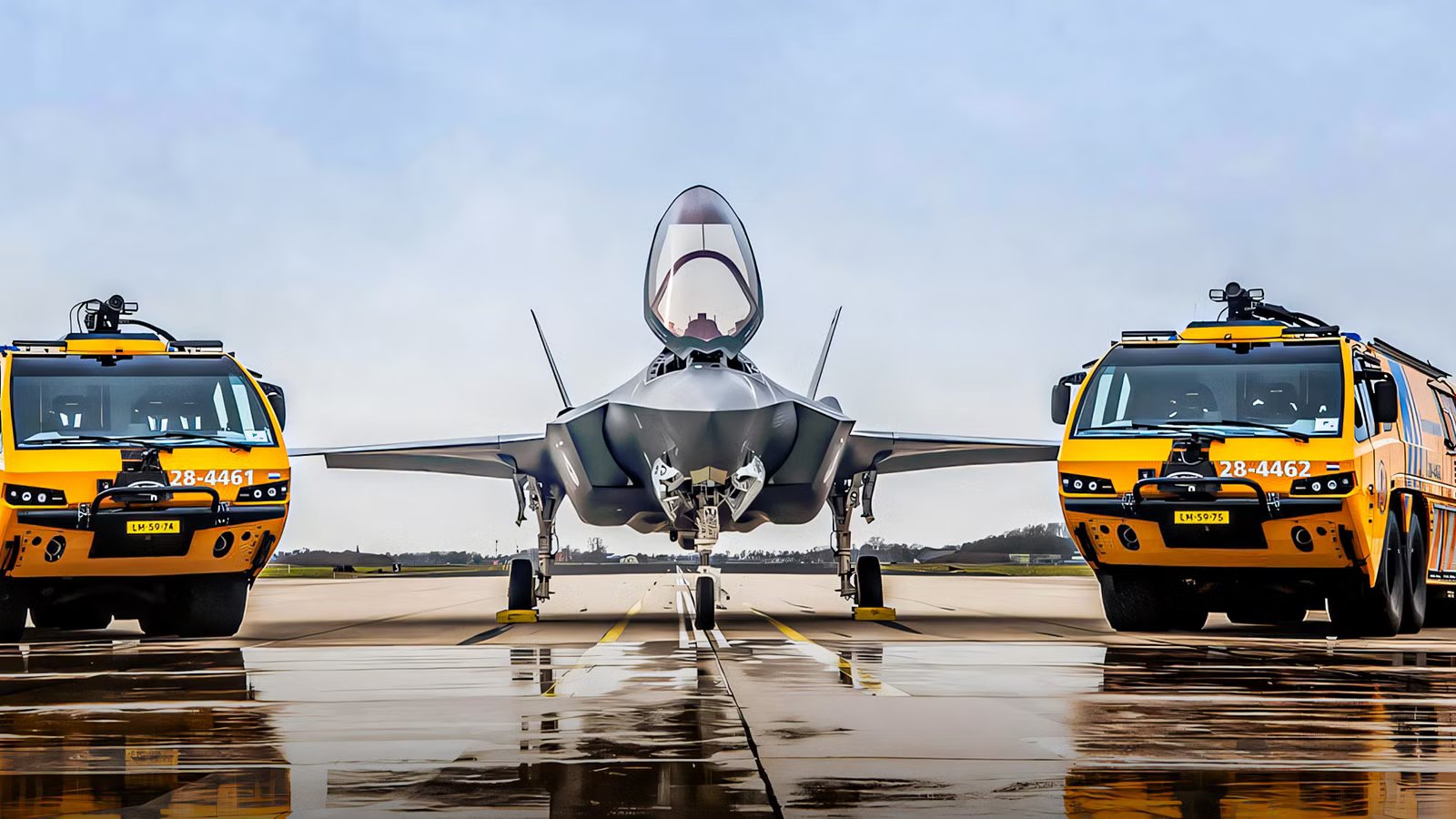
The most decisive military aircraft today are very much context dependent. For a campaign projecting air power far beyond its borders, aerial tankers are likely to be a critical necessity, while stealth aircraft may be excessive for combating poorly equipped militants in some regions. It also depends on who is participating. The air campaign between Russia and Ukraine has been ongoing since 2022, but the F-35 is not decisive as it is not used by any of the combatants.
While it’s tempting to include the air dominance F-22 Raptor fighter jet, there just aren’t any ongoing conflicts where it can prove decisive. The 2026 Iran campaign could have offered an opportunity, but as it unfolded, the Iranian Air Force barely got off the ground. The only Iranian aircraft that are known to have been shot down were a Yak-130 (by an Israeli F-35) and a pair of Su-24s (by Qatari F-15s).
The All-Important Enablers

Underpinning the USAF’s ability to project power are its many enablers, which were recently on full display in the 2026 air campaign over Iran. The United States possesses around 75% of the world’s tankers, as well as a massive number of the most advanced ISR aircraft and other information-gathering aircraft. The tankers allow the US’s fighter jets to rapidly deploy to its bases around the world within just a few short weeks. This is something no other country on earth can do at scale.
Once in the theater, the tankers allow the fighter jets to remain airborne for much longer, increase their combat radius, and carry heavier payloads (which reduces range). Tankers like the KC-135 and KC-46 serve as a bridge for fighter jets to cross oceans and as airborne gas stations that keep them in the fight. ISR aircraft search for and identify the targets and threats for fighter jets and bombers.
Radar aircraft like the E-3 Sentry provide excellent battlefield awareness and alert jets to threats such as approaching enemy fighters. Another important class of enablers is the cargo aircraft (C-130Js, C-17s, C-5Ms) that transport munitions, spare parts, and needed supplies to sustain the fighter jets’ operations. With that being said, it is the Navy’s massive sealift capability that provides the bulk of the needed supplies for expeditionary operations. France and the UK also have some of these capabilities, but the United States is in a league of its own.
The F-35 Lightning II

Perhaps the closest thing to a ‘decisive’ fighter jet in the modern US military is the F-35 stealth fighter. In 2024, 2025, and 2026, it is widely believed to have proven its advanced capabilities against Iran. This is particularly relevant in the SEAD (Suppression of Enemy Air Defense) and DEAD (Destruction of Enemy Air Defense) roles. It also excels in electronic warfare, networking, and providing a ‘god’s-eye-view’ of the battlespace to fourth-generation fighters, and more.
However, it is important to point out its limitations. The F-35 may be excellent at ‘kicking in the door’ and dismantling a country’s higher-end S-300s and radars, but it also doesn’t carry a large amount of ordinance like the F-15. The F-35 (unless operating in the non-stealthy ‘beast-mode’) is poorly suited to the bomb truck role that the F-15E excels in. The F-35 is designed for high-end precision attacks, not lower-end brute force. It also can’t take out lower-end air defenses like MANPADS.
Additionally, the stealthy F-35 is not an invisible aircraft. It can be destroyed on the ground, just like any other aircraft, and it can be shot down at close range using line-of-sight guidance when it is flying low and slow. Put another way, if the F-35A is flown like an A-10, it can be shot down like an A-10. While details of the US F-35A that was hit by a surface-to-air missile in Iran remain murky, it is likely the F-35 was flying low and slow when it was hit.

The World’s Largest Air Forces By Number Of Fighter Jets
This guide ranks the world’s largest fighter forces in 2026
The US’s Strategic Bombers

After years of existing largely in the shadows, the world’s strategic bomber fleets were suddenly very active in 2026. Russia has been using its Tu-22 and Tu-95 bombers against Ukraine since 2022. Russia only started using its limited fleet of prestige Tu-160 bombers after Ukraine’s successful Operation Spiderweb that took out around 20% of Russia’s remaining bomber fleet. Russian bomber sortie rates remain very low.
In 2025, the US used its B-2 Spirits on a single raid against Iranian nuclear facilities, but in 2026, seemingly all of the USAF’s strategic bomber fleets awoke. USAF B-2s, B-1s, and B-52s pounded Iranian targets with near impunity. It is impossible to assess how much damage was inflicted, but the amount of munitions, including bunker-busting munitions, that they dropped was immense. Notably, the United States was able to use its bombers in a far more intense and ‘decisive’ way than Russia.
As Russia has failed to secure air superiority, its bombers are limited to stand-off attacks using expensive and limited long-range missiles (e.g., Kh-101s, Kh-22s). Coupled with Russia’s famously poor ISR-gathering, the effects of its bombers are limited. By contrast, the US achieved air superiority, allowing it to switch from expensive, high-end stand-off munitions, like JASSMs, to plentiful bombs like JDAMs and bunker busters like GBU-28s, BLU-109s, and GBU-57 MOPs. The difference in effects between the US and Russian fleets is stark.
The F-16 Fighting Falcon & Su-30/35 Flanker

At this stage in the conflict, Ukraine’s legacy fleet of Soviet-era Su-27s, Su-25s, Su-24s, and MiG-29s is heavily attritied and aging/wearing out. Likewise, Russia’s fleets of MiG-29s, Su-25s, Su-24s, and Su-27s have also either been attrited (mostly the Su-25s) or largely relegated to rear echelon duties (like border patrols). Ukraine’s Mirage 2000s are valuable, but are only available in tiny numbers (perhaps four aircraft). Russia’s previously touted Su-57 Felon is yet to make a major impact in the conflict.
The aircraft remains available in low numbers, immature, and Russia appears unwilling to risk losing them. Losing them in combat would risk Russia’s careful branding of the Su-57 as a fifth-generation fighter and undermine chances of foreign sales. With that being said, Russia has been using them throughout the conflict, but it hasn’t been decisive at all. The two most consequential fighter jet families at this stage (mid 2026) are the Ukrainian F-16s and Russia’s extended Su-34/30/35 family.
The Flanker series is now the Russian workhorse on the frontlines. Ukraine has effectively used the F-16s for air defense as well as limited strikes, and has provided increased risk to Russia’s fighters, helping keep them at bay. Russia’s Flankers have failed to secure air superiority or effectively counter the F-16s, but they do carry out most of the glide bomb missions and air superiority missions. Regardless, as the air war remains deadlocked, no aircraft type has been decisive.
Which Country Has The Most Superior Military Jets In The World?
Discover why the US leads global air power with over 13,000 aircraft, cutting-edge fighters like the F-35, and sixth-gen tech like NGAD and B-21.
Aircraft In Small Conflicts

Several small conflicts with poorly equipped air forces have followed a similar pattern. The most effective air assets started out as legacy Soviet-era fighter jets, but these gave way to mid-sized combat drones over time. Examples include the Sudan Civil War, the Ethiopian Tigray War (2020-2022), the Mali Insurgency, and others. In the case of Sudan, this even included converted Antonov transport bombers. In 2022, Russia supplied two Su-25 ground attack Frogfoots to Mali, but both were lost within months.
Combat drones (Turkish Bayraktar TB2-type and Chinese Wing Loong-type drones) were decisive in the 2020 Armenian/Azerbaijani War, the 2019 Khalifa Haftar’s Libyan National Army (LNA) march on Libya’s Tripoli, and against the Tigrayans in 2022 after the Federal Ethiopian Army broke, leaving the capital, Addis Ababa, open. While combat drones were decisive in these conflicts, they have not been decisive in Mali, Sudan, or Myanmar (Burma).
|
United States Air Force combat aircraft on order |
Estimated future acquisitions (per US budget documents) |
|---|---|
|
F-47 |
185+ |
|
F-35A |
1,000+ (based on program of record) |
|
F-15EX |
240 (27 delivered, total purchase potentially increased to 267) |
|
B-21 |
100+ (perhaps 150+) |
It seems likely that, as time goes on, some of these countries will become more reliant on combat drones, as well as one-way attack drones and FPV drones. They offer a relatively quick and cost-effective way to replenish attrited airpower compared with purchasing lower-end fighter jets like MiG-29s. A limiting factor is air defense. Combat drones work in these conflicts as the opposing side lacks air defense. Once a combatant has a functioning air defense, these mid-sized drone systems can quickly become obsolete.
Peer-On-Peer Requires High-End Precision

Looking forward, in a future high-end peer-on-peer conflict, the USAF intends to continue relying on the enablers mentioned above. It also intends for the F-22 to be the tip of the air superiority spear, at least until the F-47 arrives. The main fighter jet it expects to rely on is the F-35 (all variants across the Air Force, Marines, Navy). A core part of US air power in the 2030s is expected to be incoming Collaborative Combat Aircraft (CCAs) or loyal wingman drones.
The venerable B-1B Lancer’s days are numbered, with Fiscal Year 2025 budget documents initially suggesting a planned phase-out between 2028 and 2032. However, Fiscal Year 2027 proposals suggest the B-1B retirements may be delayed at least to 2037. Eventually, the USAF is expecting to rely on the incoming B-21 Raider strategic bomber for high-end penetration strikes. The B-2 Spirit is expected to remain in service for at least another decade before being replaced by the B-21.
The 2026 Iran air campaign was an example of a weaker opponent, whereby the US was able to dominate the skies and bring its non-stealthy F-15Es, B-1s, and B-52s carrying masses of ordinance to bear. However, this is not something the USAF necessarily thinks it can replicate in true peer-on-peer conflict. In such a conflict, the USAF will have to look for ways to make a decisive impact using expensive higher-end systems targeting fewer, but high-value targets.