dailynewsnblog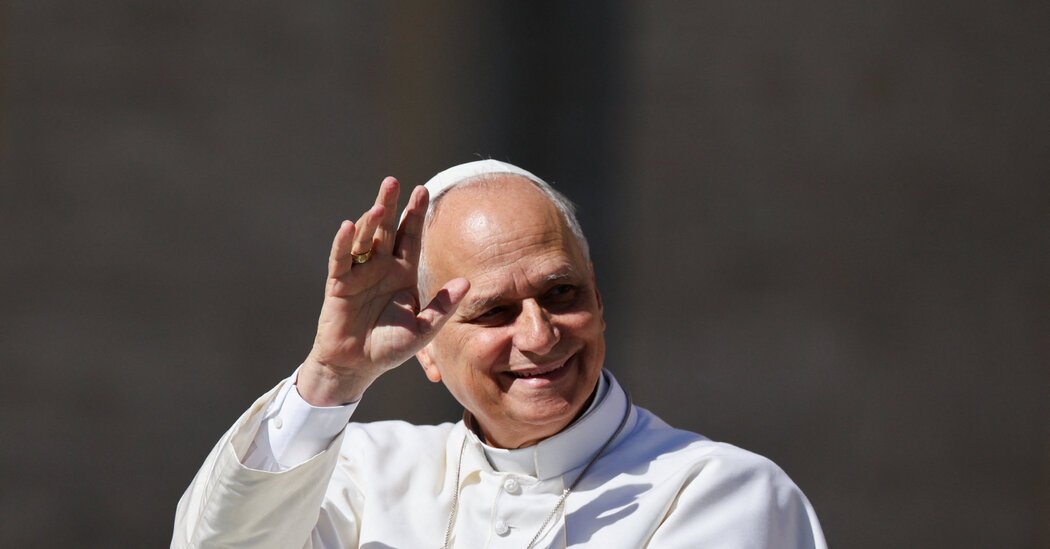
Pope Leo XIV on Monday will present his vision for how to preserve human dignity in the era of artificial intelligence.
He will offer his ideas by issuing a kind of document known as an encyclical, a nearly 400-year-old papal tradition of teaching the Roman Catholic faithful. The document will be Leo’s first encyclical since he became pope last year.
Written by the pope and generally addressed to the whole church, encyclicals impart authoritative teachings about moral or social challenges. They lack the legal status of a papal bull, which is a formal declaration of an article of faith or moral law. But Catholics are still encouraged to use encyclicals to guide their lifestyles and choices.
Popes do not usually attend the presentation of their encyclicals, but Leo is set to present his in person at the Vatican alongside Christopher Olah, a founder of Anthropic, a major A.I. developer, and several Catholic prelates and theologians.
Popes have been writing letters to the faithful since the early days of the church, but Benedict XIV, pope from 1740 to 1758, is credited with having codified the encyclical as it is understood today.
Here are five previous encyclicals that stand out.
1. On Workers’ Rights: “Rerum Novarum”
Issued on May 15, 1891, this encyclical from Pope Leo XIII became a foundation for Roman Catholic social teaching.
It’s no coincidence that the current pope chose his papal name from Pope Leo XIII, and formally signed his first encyclical, “Magnifica Humanitas,” or Magnificent Humanity, on May 15, 2026, even though he is presenting the document publicly 10 days later.
After the upheaval of the Industrial Revolution, “Rerum Novarum,” or “Of New Things,” addressed the needs of the working class and helped kindle a social justice movement. The encyclical defended workers’ rights, including the right to form unions and to earn a living wage, while rejecting both the socialism of the time and laissez-faire capitalism.
Written in 1963, in the context of the Cold War, Pope John XXIII presented a catalog of rights that he said all people and nations had a duty to respect. Unlike earlier encyclicals, the document was addressed to all of humanity, not just to Catholics.
The encyclical, which means “Peace on Earth,” called for a ban on nuclear weapons and suggested the creation of a global public authority that would promote the “universal common good,” seeing the United Nations as a first step in that direction. The document exhorted people to participate in public life “and to work together for the benefit of the whole human race.”
When it was issued, The New York Times printed the entire text.
3. On Birth Control: “Humanae Vitae”
Paul VI’s encyclical in 1968 confirmed the church’s prohibition of artificial birth control. It immediately prompted debate among Catholics that has continued for decades.
The central point of the encyclical, whose title means “Of Human Life,” was that every act of sexual intercourse had to be free of any deliberate effort to prevent conception.
Not all Catholics agree. According to a 2024 Pew Research Center poll, most Catholics in the United States and Latin America said the church should allow the use of artificial birth control. And to stop the spread of AIDS, many bishops have since offered qualified support for teaching about condoms.
Pope Benedict XVI’s 2009 encyclical, “Charity in Truth,” called for a radical rethinking of the global economy. The declaration criticized a growing divide between rich and poor, urged financiers to behave more ethically and called on businesses to exercise greater social responsibility.
Like the “Pacem in Terris” of John XXIII, Benedict’s encyclical also called for a global political authority to play a role in regulating the economy. Many scholars admired the document’s powerful reflections on the links between love, truth and justice, but some critics considered the encyclical a tough read, citing the dense prose and sprawling range of themes.
5. On the Environment: “Laudato Si’”
Written by Pope Francis in 2015, “Laudato Si’,” or “Praise Be to You,” was the first encyclical focused solely on the environment. The document called on people to care for the planet, framing that obligation as a moral and spiritual imperative, not just a consideration of politics, science and economics. When the encyclical was issued, The Times published an interactive version online.