dailynewsnblog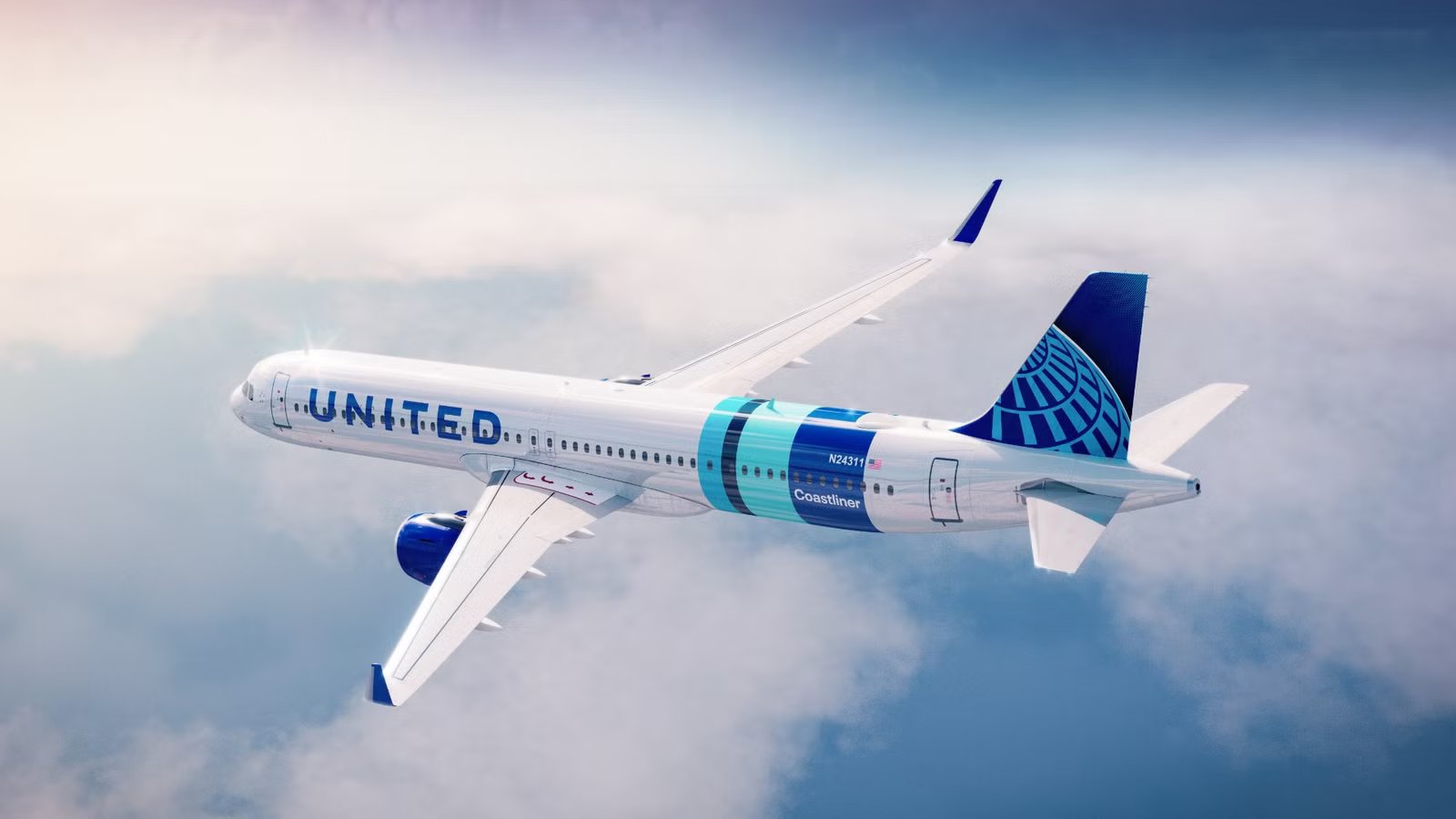
Plane spotter @Tobias_Gudat posted photos that reveal a first look at the new ‘Coastliner’ sub-fleet being rolled out by  United Airlines this year. Two Airbus A321neo jets sporting fresh liveries are part of UA’s modernization plan that will add 250 aircraft from regional jets to widebodies, in the largest fleet growth currently underway of any airline in the world.
This pair is the first of 100 planned to serve the dedicated Coastliner route from California to New York. Featuring United’s new ‘Elevated’ interiors, the A321neo and A321XLR jets will be ‘premium heavy’ with 50% more seats, like the Polaris lie-flat seat,t and Coastliner flyers will be the first domestic travelers to access the Polaris United lounges when they enter service.
UA’s New Coastliners: New And Improved Domestic Flying

Taken at Hamburg Finkenwerder Airport (XFW), where Tobi is based, the shot of the two jets ‘in the wild’ appears to have been caught just after leaving the paint shop. According to Airways, XFW is the primary hub for A321neo production. The new Coastliners are easy to spot thanks to their unique livery that complements their special cabin builds and distinguishes the planes from the rest of the UA fleet.
The new Airbus single-aisles will be the first narrowbody jets to join the United fleet equipped with the Elevated interior. Inside the Coastliners will be all-aisle access lie-flat seats in United Polaris with a trademark design that affords more elbow and shoulder room. The Polaris suite walls give privacy to each flyer but still grant the cabin an open atmosphere.
The standard A321neos will have 20 all-aisle access lie-flat Polaris seats, while the A321XLRs in the Coastliner fleet will feature 32 premium seats. The planes will even have a dedicated rear economy snack bar. United Executive Vice President and Chief Commercial Officer Andrew Nocella gave this remark on United’s fleet plans in a press release at the end of March:
“These new planes and products not only complement our fleet and network plans, but they also give our customers more amenities and seat choices – whether they bought a basic economy ticket to fly from Chicago to Ft. Wayne or are flying Polaris between San Francisco and Singapore.”
United Next: UA Is Taking Off Again

United’s drive to add 250 new planes in the next two years builds on the momentum of the past five years of fleet-wide and systemic growth. Since the ‘United Next’ fleet upgrade campaign began in 2021, UA has added 22 Boeing 787 Dreamliners, 237 Boeing 737 MAX, and 67 Airbus A321neos. The airline also added 40% more premium seats to its domestic aircraft, replaced 100 regional jets with larger mainline aircraft, and even hired 60,000 more employees.
United has emphasized that its next phase of fleet growth is less about adding capacity and geared more toward improving the flying experience on every plane. The biggest change will be the ‘widebody style comfort’ introduced on narrowbody jets like the Coastliners. On top of superior seats, snack bars, lounges, and refreshed interior design, new planes are also getting Starlink Wi-Fi, new seatback entertainment, and larger overhead bins.
United Airlines’ New Premium Plus Vs. The World’s Most Superior Premium Economy Cabins In 2026
The airline has ramped up its premium economy offering, but is it better than the rest?
United Bets Big On The World’s Top Narrowbody

Historically, if United wanted to offer a truly premium, lie-flat widebody experience on a route, it had to fly a heavy, twin-aisle jet like a Boeing 767 or 787. The A321 Neo will replace older and less efficient Boeing 757 jets as they are gradually phased out. United has long operated one of the largest Boeing 757 fleets in the world. While loved for its performance, the 757 is decades old, expensive to maintain, and inefficient by current standards.
Both variants of the A321neo are some the quietest jets in the sky, thanks to newer cabin insulation tech, combined with the incredibly quiet geared turbofan engines, resulting in a significantly lower ambient cabin noise. Those same power plants are much more fuel-efficient and have lower maintenance than the outgoing 757. while the A321XLR is the first narrowbody jet with a 4,700 nautical mile range, which gives UA very broad mission flexibility for future network options overseas to fly as long as ten hours point-to-point.