dailynewsnblog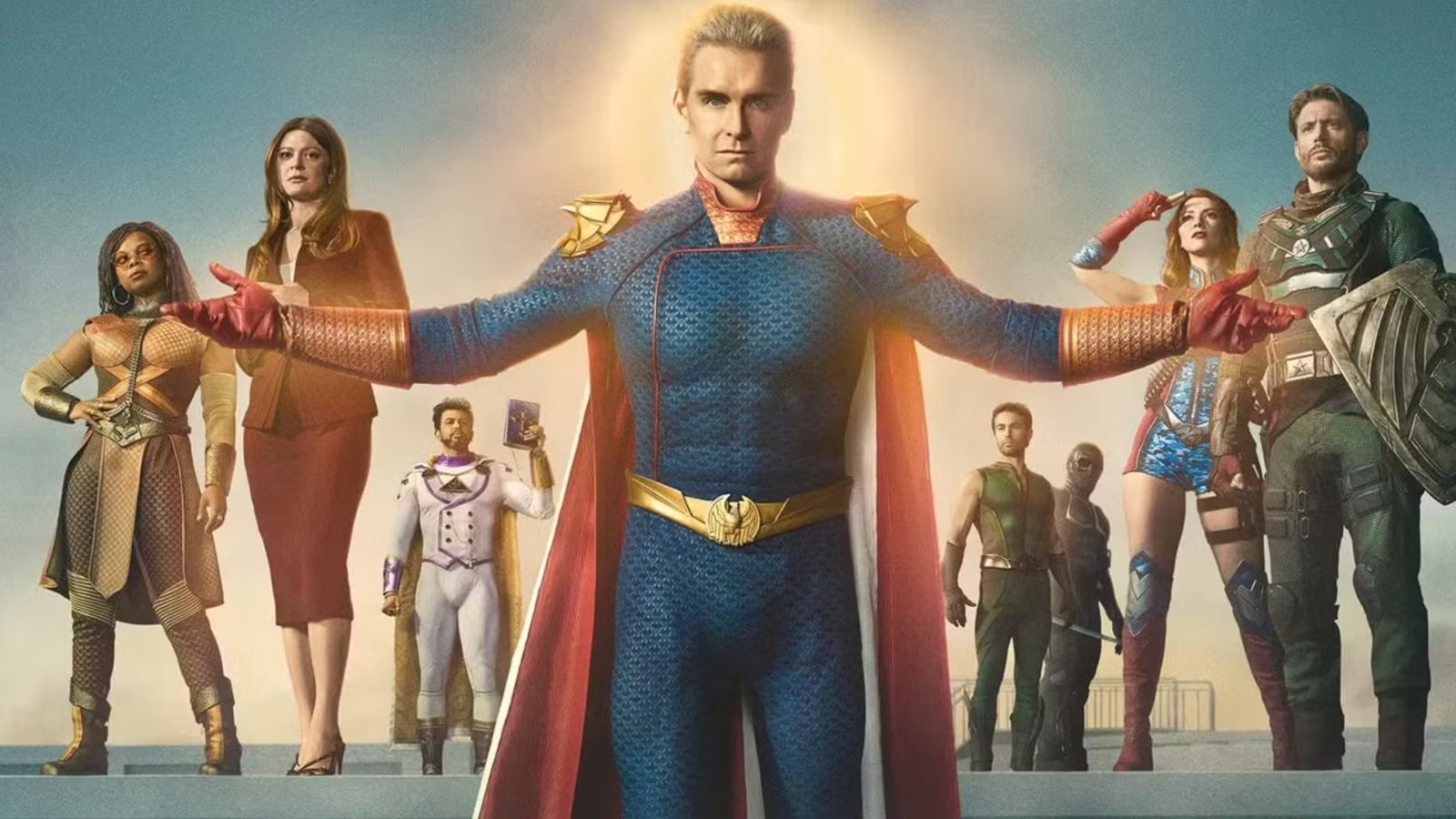
When Amazon’s adaptation of The Boys was announced, I was thrilled. Garth Ennis is my favorite comics writer, and The Boys occupies a stable spot on my Mount Rushmore of best comics of all time right alongside Preacher, Planetary, and The Invisibles. At the same time, AMC’s then-recent disappointing adaptation of Preacher had already shown me that the Irish writer’s trademark blend of realistic characters and surreal situations doesn’t necessarily translate to TV.
Watching The Boys on Prime Video felt like eating pineapple pizza: First, you bite in, driven by curiosity over a new spin on something you love; then, the flavor creeps in, and you realize what a mistake this was; finally, you finish it because wasting food is wrong, while contemplating all your terrible life choices. Not that I would ever eat pineapple pizza, to be clear, but I did sit through five seasons of The Boys, and the only positive outcome is that it reminded me just how excellent the comics are.
However, for some “diabolical” reason, at some point during the airing of the show, disparaging the comics became customary among YouTubers and content creators looking for a nice algorithm boost. Panels were posted out of context, highlighting the most graphic and ridiculous aspects of the story while ignoring its robust narrative and character development. Now that the show has ended, people are bringing up its many flaws as a counterpoint, but rather than fueling pointless factionalism, it’s more constructive to focus on explaining why The Boys is one of the best superhero comics you’ll ever read.

Created by Ennis and artist Darick Robertson, The Boys debuted in 2006 and concluded in 2012. The core of the story is an attack on the transformation of superheroes and the culture surrounding them into a pervasive mass-culture feature, devoid of its original creative charge and turned into a money-making machine. In that sense, The Boys is a visionary series: Marvel Studios’ Iron Man debuted in 2008, opening the floodgates for a decade of superhero takeover in the entertainment industry. A few months before The Boys’ final issue, The Avengers was released in cinemas.
It’s hard to look at the world of The Boys and not make a comparison with the golden age of the Marvel Cinematic Universe. In Ennis and Robertson’s series, superheroes exist not to fight evil or save the planet, but because they’re the most marketable corporate products. They are literally owned (and partially created) by an evil mega-corp whose real goal is to get these “assets” accepted into the U.S. Army to gain access to lucrative defense contracts. But they face one problem: superheroes are idiots, egocentric, and mostly incompetent.
This is one of the most important points where Amazon’s show diverges from the source material. Vought American plays an important role in the show, but it’s far from being the main villain. In season 4, Homelander takes full control of the corporation, marking a shift that was already pretty clear in the writing of the series. While the comics are about the impersonal greed of corporations ruining the lives of the common people, the show is about the danger of giving too much power to an unstable individual, Homelander.

It’s not a secret that Amazon’s The Boys is politically charged, which makes its message a lot less effective than the comics’. Besides on-the-nose references to a certain blonde President, some watchers argued that it’s never actually clear what specific policies the show is satirizing. Sure, there’s the mandatory MAGA-pandering, but Homelander doesn’t lock up immigrants (even if he does start throwing dissenting citizens into work camps in season 5). The show’s assumed anti-Fascist stance also clashes with the refusal to acknowledge the Tomer Capone controversy. More importantly, while people can have different opinions on politics, it’s hard to find someone who disagrees with “big, greedy corporations are bad.”
But if The Boys comics were simply about corporate greed, the series would have been remembered as just another satire of the superhero genre and nothing more. Instead, Ennis does what he does best, portraying painfully realistic characters who struggle through lives where trauma and violence are always entwined. William “Billy” Butcher is the main character of the story, but he’s not the protagonist. That role goes to Hugh “Wee Hughie” Campbell, who acts as the readers’ anchor and the writer’s point of view.
The stark contrast between the two has a purpose: Butcher is big, strong, and handsome. He’s a tough guy who gets things done no matter the cost. As readers, it’s natural to gravitate towards him for the majority of the story since he represents the stereotype of the cool anti-hero that comics started relying upon from the 1980s. But Ennis, who wrote some of the best Punisher stories, knows what hides behind that costume: violence as a way to exorcize trauma that will never go away. The comics’ final arc almost mocks readers for liking Butcher when he turns out to be a genocidal maniac who is not any better than the wretched “‘supes” he wants to kill, including Homelander. It’s plain, meek Hughie who does the right thing in the end.

Butcher’s character is the other important (and catastrophic) change made by the TV show, which took away his main motivation with the big plot twist at the end of season 1, where it was revealed that Billy’s wife Becca (Becky in the comics) was still alive. (At the end of season 2, she is accidentally killed by Becca and Homelander’s son Ryan.)
TV Butcher still hates Homelander — he did rape his wife — and transfers that hatred to all the ‘supes, but the show really fails to deliver on the background to that hatred, which the comics explore in the six-issue limited series Butcher, Baker, Candlestick Maker. This tells the story of Butcher before The Boys: a man warped by domestic violence who gets one shot at redemption, a chance meeting with Becky. The woman becomes Butcher’s salvation, but he’s always doubting how long it will be before the beast comes out again. When Becky dies as a consequence of Homelander’s alleged rape, that’s not simply the trigger to a classic revenge story. The subtle suggestion is that this is what Billy was waiting for: an excuse to embrace his violent impulses again.

This realization is the true culmination of Butcher’s character arc, further highlighted in the 2020 sequel series Dear Becky, in which Hughie receives Butcher’s diary. Just like in The Boys finale, Billy admits that the motivation for his crusade is not avenging his dead wife, who always tried to steer him away from violence: “That was a hundred percent me, you would’ve hated what I’ve done with me life.” This is also why Butcher sets up things so Hughie could stop him before it’s too late. He tried for the entire series to turn Hughie into himself, and his failure was ultimately his only redemption.
While the show’s finale ultimately brings back Butcher’s genocidal mission, the execution is much weaker compared to the comics. The character played by Karl Urban simply went through too many extra steps along the way, losing the brutal effectiveness of his story as told in the comics.
The Homelander/Black Noir plot twist, which the TV show perhaps understandably eschewed, also functions in the context of Butcher’s story. All of his hatred had been directed at the wrong person: it wasn’t Homelander who raped Becky, but Noir. Sure, Homelander is still terrible, but this is a realization of the futility of hatred and violence, delivered by a writer who grew up in Northern Ireland during the Troubles. Homelander himself is, in the end, just a regular guy with god-like powers: he’s insecure, petty, and ultimately not even responsible for his worst crimes.

The existence of a clone is highly symbolic. It’s Vought American telling the “most powerful” man on Earth he’s just a product they can replace at any time. One could argue the comics’ dynamic between Homelander and James Stillwell, the Vought executive who keeps him on a leash without showing a hint of fear, is too cliché: big corporation is scarier than evil Superman. But simplicity isn’t necessarily a flaw. I would argue the TV show’s finale, with the blonde tyrant crying and begging for mercy, is much more on-the-nose, without delivering the same sense of dramatic closure as the comic book scene where Stilwell, looking out of his window after Homelander’s coup, shows emotion for the first time, bending down and uttering: “Bad product.”
Now that the TV show has ended, rather than criticize the comics based on hearsay or out-of-context posts, I hope more people will give a chance to Ennis and Robertson’s The Boys. Trust me, it’s diabolical.
Now watch: Hamish Linklater describes The Boys and Gen V showrunner Eric Kripke in a normal way