dailynewsnblog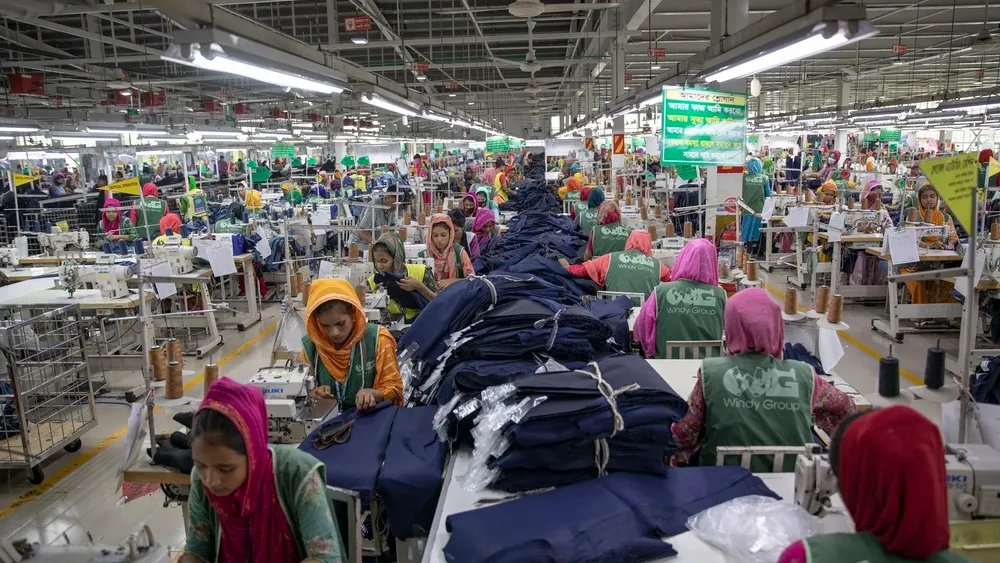
On the Line is a weekly roundup of sourcing and labor quick hits in the apparel and footwear industry, from worker protests to boardroom maneuvering, tracking the developments shaping conditions on the factory floor and beyond.
H&M order cuts in Bangladesh
H&M Group, Bangladesh’s largest foreign buyer of locally manufactured garments, is gradually reducing orders from more than half a dozen factories as part of a broader plan to scale back production, according to local media reports.
Speaking to the Daily Sun, the managing director of one affected supplier said, “We have been supplying ready-made garments to H&M for many years, but we have been informed that the buyer will begin cutting orders starting in June. We still have some orders in the pipeline.”
Another exporter said the Swedish retail giant is shifting toward India as part of a wider global sourcing pivot, raising concerns about the potential impact on Bangladesh’s garment sector.
“Our entrepreneurs have invested heavily to secure orders from H&M,” the exporter said. “Many companies operate nearly 50 percent of their factories based on orders from the global buyer. If H&M reduces its orders, many factories may shut down and a large number of workers could lose their jobs.”
H&M Group said it has been sourcing from Bangladesh since the early 1980s and continues to view the country as a “very important sourcing market,” citing long-term supplier partnerships and a strong local presence.
Faisal Samad, a director of the Bangladesh Garment Manufacturers and Exporters Association, told the Daily Sun that while buyers can adjust sourcing strategies, they should adhere to responsible business practices.
“At least one year’s notice should be given if they plan to discontinue business relations,” he said. “Buyers often impose strict compliance requirements on exporters, so they also have responsibilities.”
H&M supplier in Myanmar to shutter
More than 1,000 garment workers in Yangon’s Shwepyithar Township will lose their jobs after Kings Rich Fashion, which supplies clothing to H&M Group, shuts down at the end of June due to a drop-off in orders following the military’s 2021 coup.
“They gave us a month’s notice, claiming orders had simply dried up,” one worker told The Irrawaddy. “We will be paid compensation, but we will have to find a new job.”
H&M Group is in the process of phasing out its operations in Myanmar in what it says is a “responsible” manner in line with IndustriALL Global Union’s ACT Responsible Exit Policy and Checklist.
“Our priority throughout has been to minimize any negative impact on workers. We are working closely with our suppliers, including the one referenced, to develop and implement measures aimed at mitigating impacts on employees,” a spokesperson said. “Our team on the ground has been present throughout the phase-out and is actively working with suppliers to monitor factory closures and worker retrenchment, ensuring that the process is carried out in accordance with applicable laws and standards.”
Kings Rich has been the site of repeated labor rights disputes, The Irrawaddy said, with workers at the factory repeatedly protesting against unfair dismissals and unsustainably low wages.
A court-approved right to strike
In a 10–4 decision, the International Court of Justice ruled Thursday that “the right to strike of workers and their organizations is protected” under the Freedom of Association and Protection of the Right to Organise Convention, 1948 (No. 87).
The case, referred to the court by the International Labour Organization’s governing body in November 2023, marked the first time a question on the interpretation of an international labor convention has been brought before the ICJ.
Central to the dispute was whether Convention No. 87’s protections of freedom of association extend to strike action. Employers’ groups argued the treaty contains no language—explicit or implied—establishing such a right, citing both its text and drafting history. Worker representatives countered that the right to strike is intrinsic to freedom of association and has long been upheld by the ILO’s supervisory bodies.
The ICJ acknowledged that although Convention No. 87 “does not contain an explicit reference to the right to strike,” the absence of such a provision “does not necessarily mean that the issue is excluded” from the treaty.
Bangladesh reels under heatwave
As Bangladesh enters its hottest season, factories are switching off fans and coolers because of energy cuts tied to the Iran conflict, according to Thomson Reuters Foundation reporting, leaving workers baking in temperatures that have already reached 37 degrees Celsius (98.6 degrees Fahrenheit) and threatening billions in productivity losses.
Bangladesh relies on imports for the vast majority of its energy needs. With the closure of the Strait of Hormuz leading to an energy supply shortage and a sharp spike in the cost of fuel, factories are “struggling to keep up production, let alone run fans, ventilation and cooling equipment adequately,” A.K.M. Kamruzzaman, a manager at Matin Spinning Mill in Gazipur, told the foundation.
“With such distressing heat, many workers are falling sick with profuse sweating, dizziness, nausea, cramps and fainting,” said Kalpona Akter, executive director of the Bangladesh Center for Worker Solidarity, a workers’ rights organization.
A February survey by the Bangladesh Institute of Labour Studies found that 78 percent of the 215 garment workers interviewed had experienced rising summer temperatures, with about half reporting that the heat made them feel weak and ill.
A ‘highly successful‘ protest
Speaking of the right to strike, a protest at luxury group Kering’s new facilities in Italy was “highly successful,” with participation rates of 70-100 percent, the Filctem Cgil, Femca Cisl and Uiltec Uil trade unions said in a joint statement on Wednesday.
The one-day protest targeted 54 job cuts at the Alexander McQueen label, along with what employees described as a lack of clarity over the reorganization plan known as “ReconKering.”
“We are striking over the layoffs at Alexander McQueen, over the company’s refusal to engage with union representatives to find solutions for the redeployment of workers or to make use of social safety net mechanisms, over CEO [Luca] de Meo’s unwillingness to share the group’s reorganization plan with the social partners, as well as with investors,” the unions said.
Kering said the Alexander McQueen layoffs were unavoidable and “consistent with…the strategic review of its global operations, aimed at restoring the business to sustainable profitability over the next years.”