dailynewsnblog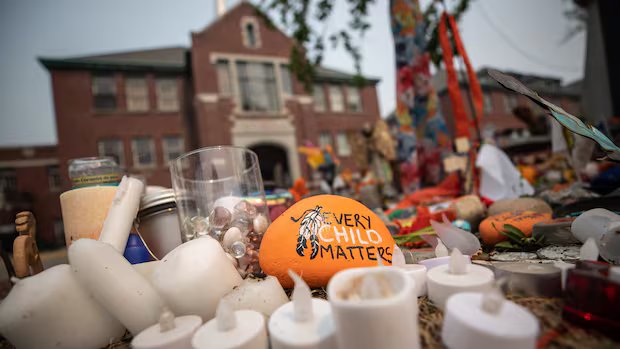

Listen to this article
Estimated 4 minutes
The audio version of this article is generated by AI-based technology. Mispronunciations can occur. We are working with our partners to continually review and improve the results.
An international tribunal investigating missing children and unmarked graves associated with Canada’s residential school system will hold a session in Montreal next week.
In a news release, the Permanent Peoples’ Tribunal said it will examine evidence of Canada’s responsibility for the residential schools system and the human rights violations associated with it including “forced and coercive sterilizations, the disappearances and unmarked burials of Indigenous children, and intergenerational trauma linked to the loss of language, culture, and identity.”
Na’kuset, executive director of the Native Women’s Shelter of Montreal, who is Cree from Lac la Ronge in Saskatchewan, said she began the work to invite the tribunal in 2023.
She said she has wanted action since 2021, after Tk̓emlúps te Secwépemc announced a ground-penetrating radar survey found about 200 suspected unmarked graves on the grounds of the former Kamloops residential school.
The sessions in Montreal May 25-29 will coincide with the fifth anniversary of the announcement.
What is the Permanent Peoples’ Tribunal?
The Permanent People’s Tribunal is an independent opinion tribunal, used as a justice mechanism to build global awareness and provide an international record of evidence.
It has been independently investigating human rights abuses worldwide since 1979. This will be its 57th session.
The Native Women’s Shelter of Montreal is partnering with Amnistie internationale Canada francophone, Future Generations Foundation, David Suzuki Foundation, Know History, JFK Law LLP, Aboriginal Legal Services and the daphne art centre in Montreal to host the session.

Na’kuset said along with accountability, she hopes the live-streamed hearings will be an opportunity to further educate Canadians about residential schools.
“We have to push the needle,” she said.
The tribunal sent notice of the hearing to Canada and the Canadian Embassy in Rome on April 14.
Jennifer Cooper, spokesperson for the Department of Crown-Indigenous Relations and Northern Affairs, said in a statement the Government of Canada will not be participating in the proceedings.
“We will continue working with Indigenous partners to support education, commemoration, and community-led healing initiatives for survivors, families, and future generations,” Cooper said.
‘There is more than enough evidence’
Christa Big Canoe, who will be the lead prosecutor at the tribunal, said there will be three types of evidence presented: documents, Canadian law and policy and witness testimony.
“In my legal opinion, there is more than enough evidence to demonstrate and meet the legal tests for everything that’s being alleged,” said Big Canoe, legal director of Aboriginal Legal Services.

This evidence will be presented to a panel of seven judges from across the globe with expertise in Indigenous law, transitional justice, international criminal law and minority rights.
Na’kuset and Big Canoe said they worked with various international legal experts on the indictment and then with Laval University in Quebec City and organizations like Know History for over a year to compile over 2,700 pages of documentary evidence.
“There should be nothing that should be surprising,” she said.
“I mean, should it be shocking? Yes, it’s really hard evidence to hear. Is it heartbreaking? Yes. Is it shocking? It should be. But at the end of day, none of this is new.”
Big Canoe said Canada has an obligation for “reparations for the acts that they have committed.”
A court of opinion
Seánna Howard, associate professor of the Indigenous Peoples Law and Policy Program at the University of Arizona and an international human rights lawyer, is one of the judges for the tribunal.
Howard, who is originally from Hamilton, said she was compelled to participate in the tribunal after hearing about residential school denialism in Canada.
“I think this tribunal will give a voice to the survivors and bring back visibility to the lasting harms that residential schools have caused,” she said.

Howard, who has provided academic support to various United Nations mechanisms in the past, said what happens in Canada can have an international impact.
The tribunal’s ruling is not legally binding, but Howard said the tribunal does have “moral authority” as a court of opinion.
“I think that Canada cares about its reputation upholding human rights, and so I’m hoping for some response from Canada,” Howard said.