dailynewsnblog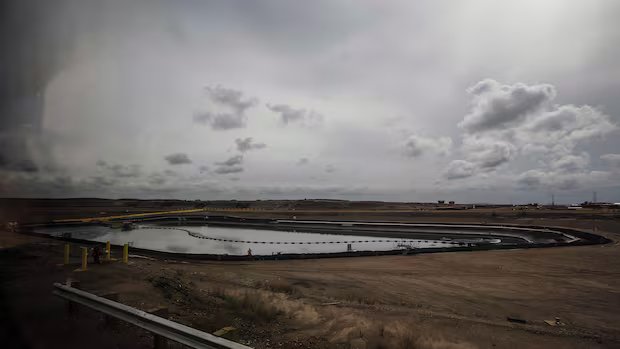

Listen to this article
Estimated 4 minutes
The audio version of this article is generated by AI-based technology. Mispronunciations can occur. We are working with our partners to continually review and improve the results.
The Alberta government has announced it will be launching engagement sessions this year as it develops a long-term plan to manage tailings ponds and mine wastewater from the oilsands.
The government says its plan will be based on recommendations developed for the province last year.
In a news release issued Tuesday, the government said the engagement process will include Indigenous communities in Alberta, local municipalities, environmental groups, the technology sector and federal agencies.
Tailings are the waste left over from the mining process that separates oil from sand and clay. What remains is a sludge of water, sand, clay and residual amounts of bitumen. The province says there are more than 1.5 trillion litres of fluid tailings and 380 billion litres of mine water in the oilsands region.
Tany Yao, UCP MLA for Fort McMurray-Wood Buffalo, is chair of the committee that developed the recommendations for how to manage tailings ponds.
“There are still educational opportunities for the province and industry to provide so that people understand the issues, but in a nutshell, the technology exists to address our concerns,” he said in an interview with CBC News.
The oilsands mine water steering committee’s recommendations include releasing tailings into the Athabasca River after they have been treated.
Other suggestions include studying how to reclaim tailings ponds by turning them into end-pit lakes, which are man-made freshwater lakes in what used to be former mines. This strategy has been used in other mining sectors but has never been used in the oilsands.
Some First Nations and Métis leaders have raised concerns about the idea of releasing treated tailings into the Athabasca River downstream from the oilsands. They argue the risks to human health and the environment are too great.
“Treat and release is a no-go for Mikisew Cree First Nation,” Chief Billy-Joe Tuccaro said in an interview with CBC News in October.

The money will come from an industry-funded environmental program, and the province’s environment minister says it will go to nine projects.
Yao pointed out that Jim Boucher, former chief of the Fort McKay First Nation, was part of the committee that came up with the recommendations. That community is also downstream from tailings ponds, said Yao.
“I would argue we’re very safe in regards to the environmental record, that Canada will continue to be the most environmentally friendly to harvest energy like this compared to Russia or the Middle East, Venezuela as an example,” he said.
Janetta McKenzie is the director of the oil and gas program at the Pembina Institute, a think tank that advocates for a clean energy transition.
McKenzie said she believes previous Alberta governments were slow to act as the volume of oilsands tailings in the province grew. However, she said she wants the feedback from the government’s engagement sessions to be transparent to the public before any plan is adopted.
“If there are ways that new technological solutions — or [just] new solutions — can be deployed to begin to chip away at the problem of oilsands tailings, that’s a good thing,” said McKenzie.
“But we need to do it in a way that keeps the risk off of Albertans.”
In a statement to CBC News, the Oil Sands Alliance said the government’s launching of the engagement process on the issue is the next step towards creating oilsands-specific “treat and release guidance, which will allow operators to advance progressive reclamation towards successful mine closure.”
The organization, which is made up of several of Canada’s largest oilsands firms, said it would also like to see the federal government “put in place regulations to further support safe oilsands mine water treatment and release.”