dailynewsnblog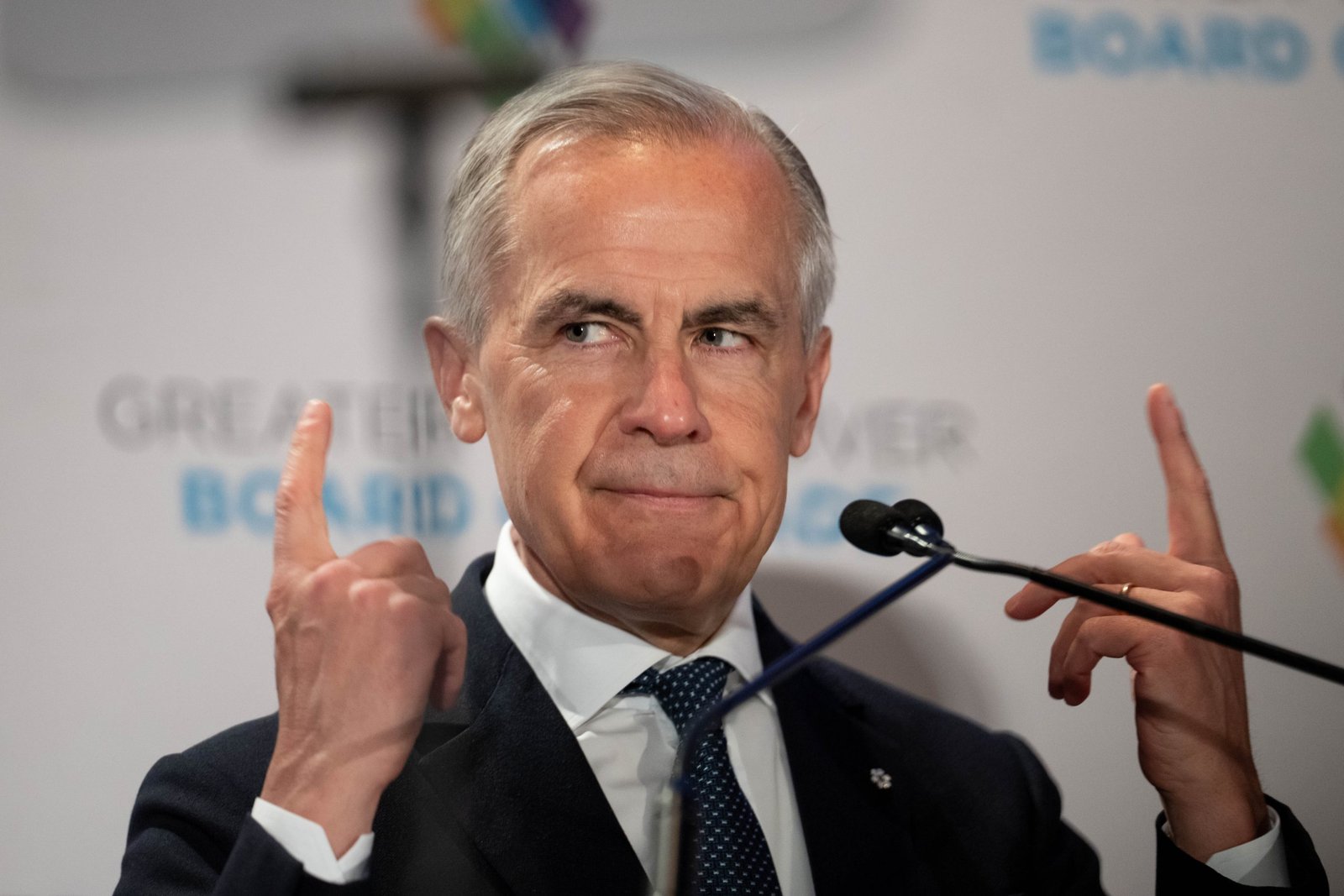
Welcome to Economic Insights, your twice-weekly deep dive into the major projects and policy shifts shaping the Canadian economy.
Stories we are following:
- The Supreme Court of Canada has added a high-stakes B.C. case to its docket, agreeing to hear an appeal that could reshape how resource exploration interacts with Indigenous rights nationwide.
- British Columbia could get its own Memorandum of Understanding with Ottawa after Prime Minister MARK CARNEY and Premier DAVID EBY agreed to launch formal negotiations on the province’s economic priorities.

Supreme Court to rule on B.C. mineral claims and DRIPA consistency (iPolitics)
This case fundamentally relates to Section 35 of the Constitution and Canada’s Indigenous rights framework, and was fated to land on the national stage. The country’s top court will now hear British Columbia’s appeal of a December ruling that found its Indigenous rights law is inconsistent with the province’s mineral claims regime.
- The conflict: The battle began when the Gitxaała and Ehattesaht First Nations challenged B.C.’s automated online registry, which allows mining companies to claim mineral rights on Crown land without prior Indigenous consultation. The nations argued that mining exploration can affect Indigenous rights and should trigger a duty to consult.
- New framework: A lower court agreed with them in 2023, saying the current system was incompatible with the province’s Indigenous rights law. It gave the province 18 months to redesign the system. The province was quick to apply a new consultation framework, but the case raised broader legal questions on how DRIPA is interpreted and applied across the legislation.
- Eby’s political headache: The issue has triggered a major political crisis for Premier David Eby. Facing pressure, he initially suggested amending or suspending parts of the law pending a top-court hearing—a move that sparked a fierce backlash from First Nations who felt betrayed and argued it would effectively neuter the legislation. Eby quickly backtracked, pausing the proposed changes and releasing a joint statement with the First Nations Leadership Council vowing to work together on a path forward.
- Elsewhere: The conflict resonates beyond B.C. as many Canadian provinces still allow mineral claims to be registered automatically. In Ontario, the Grassy Narrows First Nation is currently launching a similar constitutional challenge against provincial mining laws that permit companies to stake claims and conduct land assessments without consultation or accommodation.
- READ MORE: Ottawa monitors B.C. Indigenous law, rules out changes at federal level

Carney and Eby sit down to talk pipelines, tanker bans, and fair shares (CP)
Eby and Carney met just days after the B.C. premier slammed Ottawa’s energy deal with Alberta, warning the federal government to stop “rewarding bad behaviour” by fast-tracking projects for premiers who use separatist threats as leverage.
- The Vancouver meet-up: Carney joined Eby for a closed-door meeting in Vancouver on Wednesday. It followed a speech by Carney to the Greater Vancouver Board of Trade, where the Prime Minister sought to cool tensions by outlining the strict prerequisites required before any new Alberta-backed bitumen pipeline to the West Coast moves forward.
- Non-negotiables: Carney said an expedited pipeline approval process would only go ahead if Pathways carbon capture is built and First Nations and B.C. are appropriately consulted and accommodated.
- Towards a B.C. MOU? Eby said the two leaders have now agreed to enter formal negotiations to ensure B.C. gets its “fair share” and federal enthusiasm for its provincial priorities.
- Carney’s clock: While Carney spoke of being able to “adjust to what people want,” he also told the board that if things stall in B.C., “ we’re going to be spending more time elsewhere in the country because we need to move forward.”
By the numbers:
230: The distance in kilometers of the Grays Bay road project, designed to connect an Arctic deepwater port in Nunavut to the Northwest Territories.
$50 million: The amount of federal funding allocated to the Grays Bay Road and Port project from Ottawa’s $1.5 billion First and Last Mile critical minerals fund.
39.5 per cent: The year-over-year surge in the average price of Western Canada Select (WCS) as of March 2026, a massive bump for Alberta heavy crude producers.
Major projects watch:
– Crown-Indigenous Relations Minister REBECCA ALTY announced $1.8 million in additional funding for Indigenous consultation capacity in Northern Manitoba and British Columbia. The funding will primarily support participation in projects being considered under the Building Canada Act, according to the advisory. In Manitoba, that means support for consultations on the Port of Churchill Plus. In B.C., projects being considered include the northwest mining corridor, Ksi Lisims LNG and the Red Chris mine expansion.
– Energy and climate advisor PHILIPPE DUNSKY, speaking in a webinar on the new electricity strategy Thursday, doubting that an effective carbon price can achieve the same goals as the Clean Electricity Regulations in terms of using natural gas for peaking and not for baseload. “I think a lot of this discussion comes down to the push for data centers in Alberta and their desire to potentially be fed by baseload gas. It’s a very big, very real, very live issue and this doesn’t resolve it yet.”
– At least nine companies are in talks with the U.S. government for access to seabed minerals, according to a recent Associated Press review. Sections of the seafloor from American Samoa to Alaska could be auctioned for offshore mining this summer and through the fall. Vancouver-based The Metals Company is among those seeking American permits for deep-sea mining in international waters.
– Carney voiced concerns about the productivity of Canadian ports while in Vancouver Wednesday. This comes after the Bank of Canada issued warnings about Canadian ports falling behind their peers in terms of connectivity to global shipping routes. Under the World Bank’s latest assessment of global port performance, released in September, the Port of Vancouver ranked 389th out of 403 in terms of the time container ships spend in a port. Canada’s other major West Coast port, Prince Rupert, did not fare much better at 362nd. The Port of Montreal was ranked 344th.
Headlines: