dailynewsnblog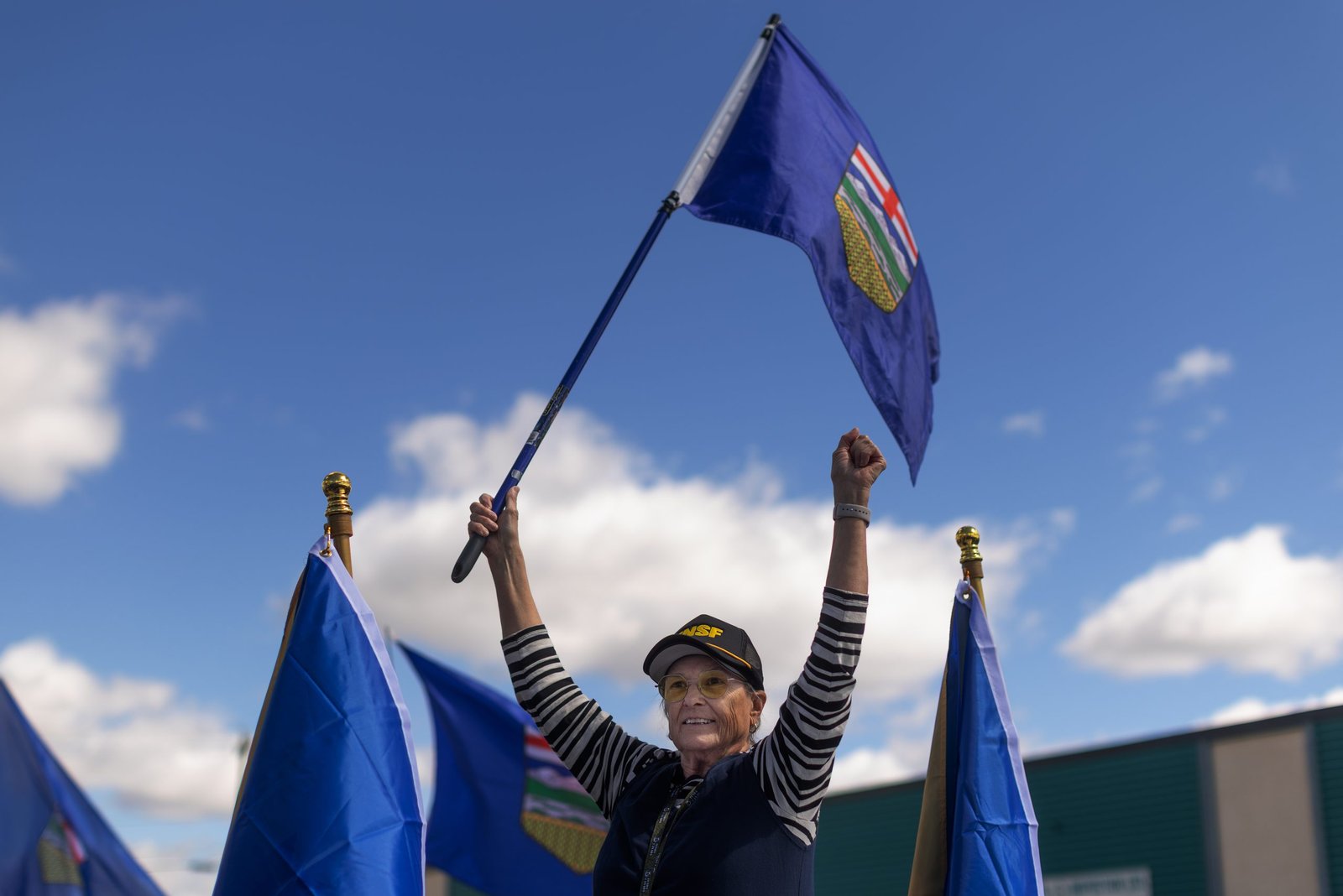
Here’s what the activist media is reporting on this week.
‘IT’S NOT OVER’ proclaimed the title screen on the Youtube video in which Rebel Alberta bureau chief Sheila Gunn Reid delivered her real-time, off-the-cuff response to the then-hot-off-the-presses judicial ruling that has at least temporarily hit pause on a potential independence referendum later this year.
“301,000 signatures collected by 7,000 volunteers in a brutal Alberta winter,” Gunn Reid notes.
“And what happens after ordinary Albertans do everything the system asked of them? Well, a Trudeau appointed judge from New Brunswick steps in and freezes the referendum process before a single signature can be verified. Not defeated in a vote, not rejected by Albertans given a fair say, but stopped in court, because apparently, democracy is only sacred when Liberal appointees approve of the outcome.”
Indeed, Gunn Reid highlights Alberta Court of King’s Bench Justice Shaina Leonard’s origins no fewer than three times in the first two minutes of the video, although she inexplicably fails to mention that, although born in New Brunswick, Leonard graduated from the University of Alberta Law School in 2002, spent several years with the Calgary branch of Borden Ladner Gervais LLP and, up until her appointment to the bench, was serving as Deputy Chief Federal Prosecutor for the Alberta Region of the Public Prosecution Service of Canada.
“This is exactly why Albertans increasingly believe they need more control over their institutions, including judicial appointments,” she contends.
“Why should judges appointed by Ottawa governments that Alberta overwhelmingly rejected get to meddle in Alberta’s democratic processes? Why should someone appointed by Trudeau from the other side of the country have the power to freeze a referendum movement built by hundreds of thousands of Albertans?”
She also cites constitutional lawyer Keith Wilson, who was quick to assert that the decision “doesn’t permanently prohibit an Alberta independence referendum,” she notes.
“Instead, he’s saying the referendum has to be initiated directly by cabinet under the Referendum Act, rather than through the citizen initiative process” and that, she points out, “means is the question can still be put on the ballot in October by Premier Smith if she wants.”
Wilson also made an appearance on Rebel News commander Ezra Levant’s nightly Youtube show to discuss what Levant referred to as a “shocking decision.”
For her part, Gunn Reid also found time to highlight the launch of a new Rebel Media initiative — namely, AlbertaFactCheck.com, “a rapid-response war room staffed by researchers working around the clock to fight back against Ottawa’s disinformation machine,” as she explained in an email blast announcing the new site, which will also include contributions from Levant and Western Standard contributor Cory Morgan.
“This is a project dedicated to pushing back against the lies with sourced, documented, on-the-record facts,” she explained.
“When a politician twists the truth or tried to rewrite history about Alberta’s future, we’ll fact check it. When the CBC launders activist talking points as journalism, we’ll fact check it. When legacy media reporters spread misinformation about the independence movement, treaties, equalization, the economy or the referendum process, we’ll have receipts ready before their spin cycle is over. We are building our own fast-response war room from the ground up.”
Recent dispatches focus on a recent PressProgress feature that “implies (U.S. Ambassador Pete Hoekstra) is connected to the independence movement,” which the site dismisses as false, a bulletin penned by Gunn Reid that challenges the claim that Former Alberta deputy premier Thomas Lukaszuk’s ‘Forever Canada’ is “just Alberta grassroots activism,” which, she contends, it is not and, courtesy of Morgan, an attempt to debunk the claim that Alberta First Nations “monolithically oppose an independence referendum.”
One province over, B.C.-based Rebel correspondent Drea Humphrey chatted with some of the targets of what she described as a “deceptive CBC-APTN media sting, including “political scientist and documentarian” Frances Widdowson and historian Jerry Amernic, who “were among several individuals claiming they were lured under false pretenses into participating in a gotcha-style production, apparently aimed at humiliating them and swaying public opinion against work they’ve done that challenges the ‘residential school was genocide narrative,’ and Canada’s booming reconciliation industry,” she explains.
She also spoke with lawyer Jim Heller “about whether any lines may have been crossed,” which Heller suggests may be the case, given the Criminal Code prohibitions against false pretenses.
“CBC News, which operates under the same broadcaster as CBC Entertainment, has attempted to distance itself from the controversy,” Humphrey points out.
“CBC head of public affairs Chuck Thompson stated that ‘CBC News and APTN News have no involvement in this production,’ while also noting that ‘satirical prank shows are a long-established television format used by broadcasters.’”
Back in Montreal, Alexandra Lavoie sounded the alarm over the “anti-capitalist militant collective known as Back Alley Robin Hood,” who have “claimed responsibility for several coordinated thefts targeting grocery stores across Quebec,” she notes.
“Thousands of dollars’ worth of food was stolen before it was redistributed during demonstrations in Quebec City on May 1-2. Bags filled with stolen groceries were handed out with the message, ‘it’s free because it’s stolen.’”
While the “masked activists” have “been targeting major retailers for months, what might be more surprising is the amount of public support these actions receive, as if crime committed in the name of social justice is somehow more acceptable,” she suggests.
“This isn’t just about food price; this is about advancing a Marxist, anti-capitalist agenda, one where chaos, disorder and intimidation become normal political tools — and the public seems increasingly willing accept it as long as the target is a large corporation or an ideologically opponent.”
Rounding out the Rebel roster, Tamara Ugolini flags a recent response to a written parliamentary question that, she contends, reveals that Health Canada and the Public Health Agency of Canada “were aware of myocarditis and pericarditis risks linked to mRNA COVID-19 vaccines before granting interim approval to Pfizer in December 2020.”
In fact, “that safety signal continued to mount throughout the rollout, the official parliamentary response shows,” but Canadians “were repeatedly told that adverse events are rare and that the benefits of vaccination outweigh the unknown risks,” she notes.
“Today, some of the young people who were sold this narrative five years ago are now appearing in heart-failure clinics, unable to walk more than a few feet without debilitating exhaustion.”
Over at Juno News, Alex Dhaliwal recaps the latest developments in the federal government’s bid to update the federal lawful access regime – and, more specifically, an attempt by the official X account for Public Safety Canada to “rebut criticism” of the bill on X that prompted a community note, leaving Ottawa “humiliated,” in his view.
Meanwhile, his fellow Juno contributor Cosmin Dzsurdzsa highlighted what he frames as contradictory messages coming from the same department, which “recently posted advice encouraging Canadians to use VPNs online to better protect their privacy,” he notes.
“It was sensible advice when taken out of political context. I use a VPN and you should too. But it ultimately didn’t play well with the general public and backfired. That’s because Ottawa is simultaneously telling Canadians to shield themselves online while major VPN and other encryption-based platforms are threatening to pull out of the country, all because of Bill C-22.”
Finally, Clayton Demaine reports on a Victoria Day rally at Hamilton’s Gore Park in which “about 100 protesters gathered, calling for a statue of Canada’s first prime minister, Sir John A. Macdonald, to be erected at the site where a monument to him was previously removed.”
Trending on the progressive-left side of the Canadian activist mediaverse:
- Ricochet correspondent Justin Brake takes a closer look at whether Newfoundland and Labrador “can have oil and gas, and climate targets too” when recent Access to Information requests “show there’s no plan for how to do both, and reveal significant unpublished emissions estimates.”
- Breach writers Nikolas Barry-Shaw and Saima Desai revisit a 2021 interview with not-yet-premier Danielle Smith in which she “admitted she wants to ‘throw out’ Canada’s public health care law.”
- Rabble politics writer Karl Nerenberg warns that Prime Minister Mark Carney’s “new energy approach favours jobs of the past, not the future,” and “heavily favour fossil fuels to the detriment not only of the environment and Indigenous interests, but of the vital clean energy sector.”
- Canadian Dimension contributor Ken Collier makes the case that the promised national pharmacare program is “on the ropes,” and explains how the “battle over universal drug coverage is really a battle to preserve what’s left of our withering social safety net.”