dailynewsnblog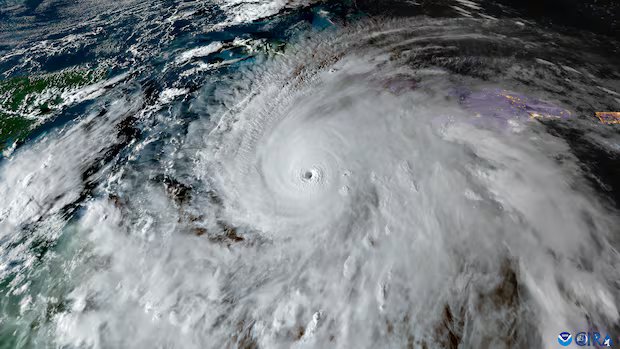

Listen to this article
Estimated 4 minutes
The audio version of this article is generated by AI-based technology. Mispronunciations can occur. We are working with our partners to continually review and improve the results.
The U.S. National Hurricane Center (NHC) is calling for a below-average Atlantic hurricane season this year.
It is forecasting between eight and 14 named storms, with three to six of them becoming hurricanes. Of those, one to three are forecast to develop into major hurricanes (from Category 3 to Category 5 on the Saffir-Simpson scale).
The 30-year average from 1991-2020 is 14 named storms, seven hurricanes and three major hurricanes.
The Atlantic hurricane season runs from June 1 to Nov. 30.
During a media event Thursday detailing the forecast, NOAA director Ken Graham stressed that hurricanes are dangerous, no matter how many they forecast.
“Don’t let the words ‘below average’ change the way you prepare.”
The Canadian Hurricane Centre (CHC) released its forecast Thursday, and it aligned with NOAA’s.
Bob Robichaud, a warning preparedness meteorologist with Environment and Climate Change Canada, noted that on average, 35 to 40 per cent of storms pass through the CHC’s response zone, which stretches from Atlantic Canada to northern Ontario, and that typically one or two of these storms have some sort of impact.
The reason for the below-average forecast is due to El Niño, which some models are forecasting to be a particularly strong one.
During an El Niño, there tends to be strong wind shear in the Atlantic Ocean.
Vertical wind shear is the change of wind speed and direction at different altitudes. If there are strong upper level winds, that can destroy any storm formation. Weak winds help to amplify the formation of hurricanes.
However, it’s important to note that global ocean temperatures, including in the mid-Atlantic Ocean where hurricane formation begins, are some of the warmest on record due to climate change. And warm waters are the fuel for hurricane formation.
As we continue to pump fossil fuels into the atmosphere, that causes excess warming. And the oceans take up 90 per cent of excess heat.
“Those warm waters are still out there,” Daniel Gilford, a climate scientist with Covering Climate Now (CCN), an organization that supports journalists in climate reporting, said during a media briefing Wednesday, ahead of the NOAA forecast. “You can almost think of the warm waters as the speed limit and the shear as the stoplight.”
He said that if the stoplight turns green — or the wind shear weakens — the storm can start to spin up and quickly intensify.
The waters are as much as 1.1 C on average warmer than they would have been without climate change, which can lead to increases in the upper limits of hurricane strength, he said.
In the Pacific region, NOAA is forecasting an above-average hurricane season.
It is calling for 15 to 22 storms, with nine to 14 named storms and five to nine major hurricanes.
Be prepared
Last year, there were 13 named Atlantic storms, five hurricanes and four major hurricanes. However, not a single storm made landfall in the U.S. as a hurricane. Still, the storms killed 125 people and caused $503 million US in damages, according to NOAA.
However, the final hurricane of the season, Melissa, slammed into Jamaica as a Category 5 storm, killing 45 people (and another 43 in Haiti), causing $12.2 billion in damages.
“Previously, Jamaica was known to have like a major hurricane … every 40 years,” Kelesha Williams, a journalist with Television Jamaica, said during the CCN briefing. “But since hurricane Gilbert in 1988 — 37 years ago — we are now seeing where these major events … they’re becoming more frequent.”

Meteorologists warn a possible ‘super’ El Niño event driven by warmer than normal Pacific waters could bring weather more extreme than usual this summer, with some countries seeing severe flooding and more intense heatwaves and droughts.
The remnants of Hurricane Melissa ended up impacting Atlantic Canada, bringing strong winds and heavy rain.
NOAA officials also stressed that it’s all about being prepared, no matter what the forecast or the strength of the hurricane.
“We just can’t let our guard down,” Graham said.