dailynewsnblog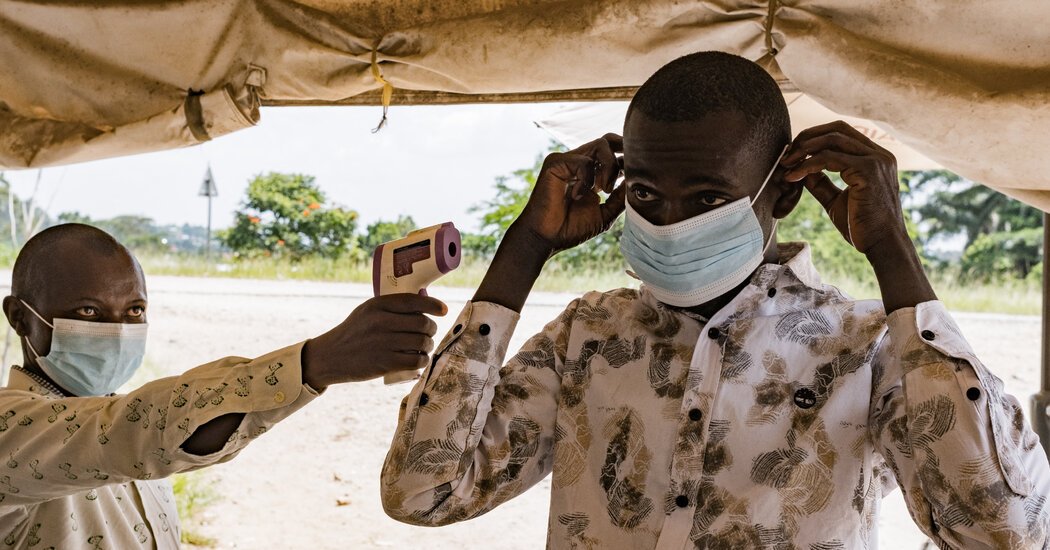
The authorities in Uganda said on Thursday that they were not aware of U.S. plans to fund treatment clinics to fight an Ebola outbreak in the region, in a sign of confusion over the global coordination of efforts to stop the virus from spreading.
The State Department said on Tuesday that it was funding up to 50 clinics and covering “associated frontline costs” in the Democratic Republic of Congo and Uganda, through the United Nations office that coordinates humanitarian affairs, as part of a broader response to the outbreak.
The outbreak, which was first identified this month in Congo’s northeastern Ituri Province, has been declared a public health emergency of international concern by the World Health Organization.
The State Department did not say exactly where the clinics would be established. It said on Tuesday that they would be “rapidly deployed” and were meant to “strengthen outbreak containment.”
But Uganda’s health ministry said on Thursday that it had had no communication with the U.S. government about the treatment centers.
“I don’t know the ones they are talking about,” Dr. Diana Atwine, the health ministry’s permanent secretary, said in an interview. “Maybe that is their future plan. Or maybe it’s for Congo, not Uganda. We are not aware.”
The authorities in the Democratic Republic of Congo did not immediately respond to requests for comment about the U.S. announcement.
The announcement followed criticism of the Trump administration by international health experts, who have argued that cuts to foreign aid and the closure of the U.S. Agency for International Development have made it harder for the W.H.O. and countries affected by Ebola to combat the outbreak.
The State Department also said this week that it was sending $23 million to Congo and Uganda that would go toward protective equipment and other resources. It was not immediately clear whether the authorities in Congo and in Uganda had received or discussed that aid.
The confusion over the U.S. announcement comes as countries are ramping up efforts to fight the outbreak, which is suspected to have caused more than 130 deaths and nearly 600 infections, according to the W.H.O.
The Africa Centers for Disease Control and Prevention, the public health body of the African Union, urged member states to support efforts to curb the outbreak. South Africa’s government has pledged $2.5 million. Britain said on Thursday that it had set aside 20 million pounds, or over $26 million, to support the W.H.O. and nongovernmental organizations.
The International Federation of Red Cross and Red Crescent Societies said on Thursday that it was sending volunteers to go door-to-door among communities in eastern Congo, providing information about the virus.
“Families are also being advised not to touch or wash the bodies of suspected Ebola victims, as this remains one of the most common routes of transmission during outbreaks,” the organization said in a statement. “On the first day of activities, Red Cross volunteers reached 645 families.”
Western Uganda borders Congo’s Ituri Province, the epicenter of the outbreak, and many people cross that frontier each day. But the authorities in Uganda have insisted that the country is safe and prepared to deal with the virus.
In a statement on X on Thursday, the chief government spokesman, Alan Kasujja, said the only person being treated for the virus in the country was a Congolese national. An additional Congolese person had died of Ebola in Uganda after coming to the country for treatment.
“No Ugandan person or person living in Uganda has Ebola,” Mr. Kasujja said.
Uganda’s president, Yoweri Museveni, said on Sunday that the government had postponed an annual Catholic festival set for June 3 that usually attracts worshipers from across the border in Congo.
Many tourists undertake treks to look at mountain gorillas in southwestern Uganda, near the borders of Congo and Rwanda. The country’s tourism board said this week that while people should observe standard hygiene practices, Uganda remained “safe, open and welcoming for tourism, business and investment.”
Musinguzi Blanshe contributed reporting from Kampala, Uganda.