dailynewsnblog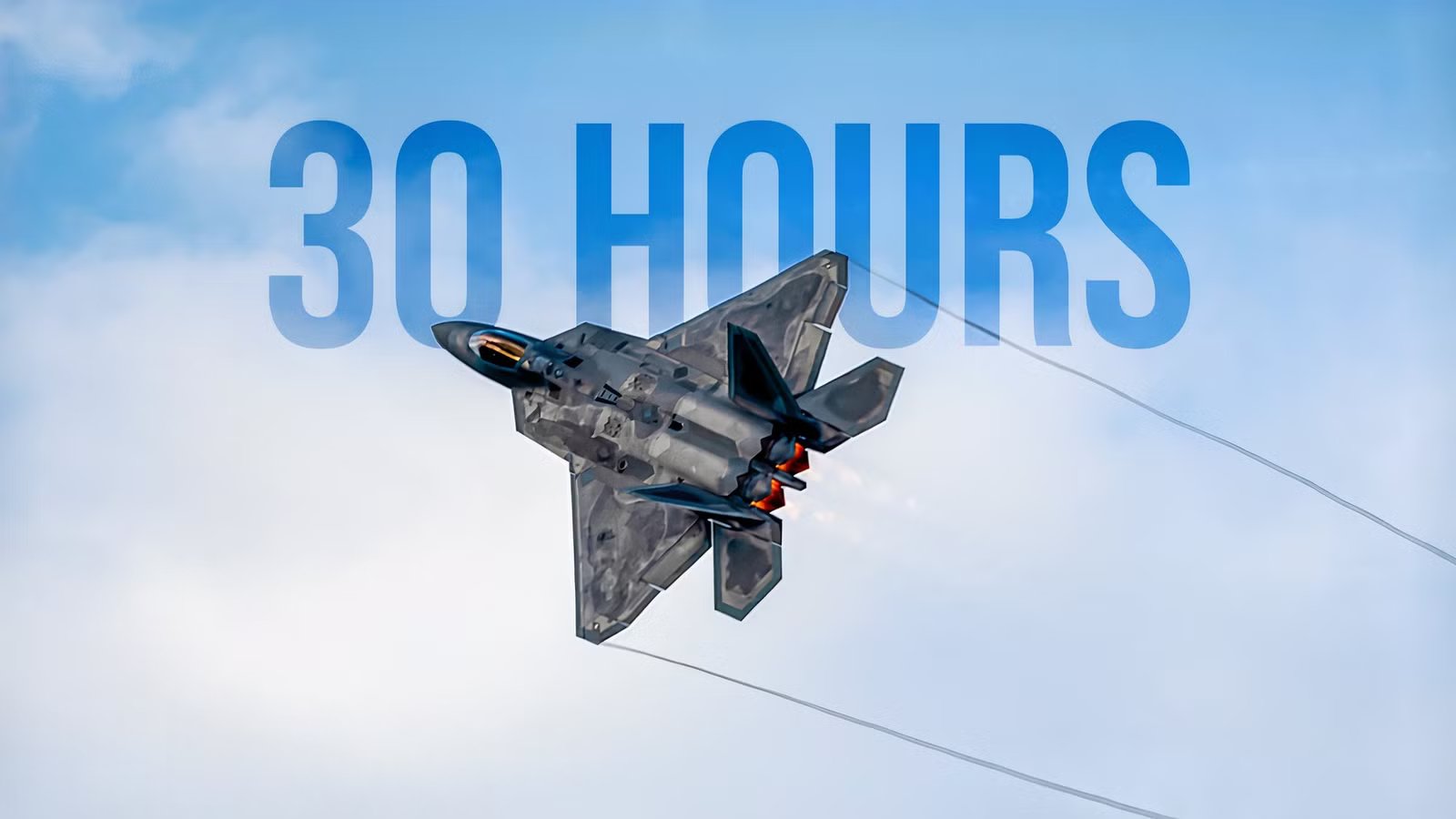
The Lockheed Martin F-22 Raptor remains a marvel of combat engineering, setting the global benchmark for technological sophistication and air-superiority capability for more than two decades. While the aircraft remains a force to be reckoned with, the fact is that the F-22 fleet is not getting younger. Its airframes are aging, and the high-stress environment of combat or readiness operations places significant structural strain on any such aircraft.
These factors are particularly relevant given the F-22’s role as a critical component of the Global Strike Task Force. As part of this operational framework, F-22 units are routinely rotated to forward-deployed regions viewed as potential conflict flashpoints or strategic priority areas. Given the F-22’s significant operational tempo as a forward-deployed asset used for both combat operations and deterrence, these aircraft require substantial maintenance to ensure they remain ready to operate at a moment’s notice.
Globally Deployed And Consistently In Need Of Maintenance

The F-22 is deployed globally to areas such as Europe, the Middle East and Asia, where the aircraft performs critical mission criteria. Some of the core areas covered are escort missions through potentially hostile airspace, deterrence operations in contested airspace, and joint training exercises. The latter can cover escort missions, suppression of air defenses, coordinated air combat drills, and integration exercises with partner-state air forces.
As reported by the United States Air Force (USAF), the most recent deployment of the F-22 was to Kadena Air Base on May 6, 2026. The Raptors are assigned to the “…the 90th Fighter Squadron, Joint Base Elmendorf-Richardson, Alaska, and the 27th Fighter Squadron, Joint Base Langley-Eustis, Virginia, arrived at Kadena Air Base, marking the latest fighter rotation supporting operations across the Indo-Pacific region.”
The constant cadence of activity ensures that the aircraft will require regular upkeep in order to carry out their vital tactical and strategic missions. To this point, a Washington Post report states that, for every one hour of flight time, the Raptor requires 30 hours of maintenance.
One of the primary issues associated with the F-22’s servicing routine is its low observable coating, a key component that provides the aircraft with its stealth characteristics. This issue alone prevented the USAF from meeting its F-22 aircraft availability goals in any fiscal year from 2011 to 2021.

Why The US Air Force Is The World’s Exclusive Operator Of The F-22 Raptor
How America locked down the world’s best fighter.
Issues With Stealth Coating

The F-22 was the first air-superiority fighter designed with an all-encompassing stealth profile. In doing so, this aircraft is covered with low-observable stealth coatings, which are more than just paint. Given the complexity, importance, and sensitivity of these materials, Lockheed Martin reports that 50% of the repairs performed on the F-22 are related to their sustainment. These materials include specialized surface coatings that absorb and scatter radar waves, composite materials that are built into the aircraft’s skin, carefully shaped panel edges, and conductive magnetic materials that are engineered down to the microscopic level.
As the F-22 is an aircraft that routinely sees deployments, it is subject to hostile environments, such as sand, humidity, and sea salt, as well as thermal stresses that are experienced when the Raptor is in supercruise. Therefore, each time this aircraft is flown, it sustains damage, or just enough damage that to require time with the highly skilled maintainers.
When these men and women undertake the necessary and regular inspection or repair, they must take place in controlled environments, which is a time-consuming and costly downtime for the aircraft. The facilities used for repairing the stealth coating are climate-controlled to ensure the materials cure properly. Additionally, these facilities are akin to a clean room, so dust and contaminants are mitigated, as they could ruin the coating. As such, the maintainers must wear protective outfits to avoid contamination.
The Striking Differences Between The F-22 Raptor & F-35 Lightning II
F-22 vs F-35: 2 fifth-generation fighters with unique strengths: speed and air dominance vs multirole flexibility. Discover what truly sets them apart
A Periodic Spare Parts Slowdown

Spare parts became a major issue after the decision to reduce the F-22 fleet from roughly 750 planned aircraft to just 187 operational jets in the 2010 defense budget. This reduction was initiated due to the dissolution of the Soviet Union.
With the absence of a near-term peer competitor, there was a reduced need for a large inventory of air-superiority fighters. Additionally, the prohibition on foreign sales meant there would be no cost-sharing with allies and no widespread production base to reduce unit costs. Given the Lockheed Martin F-22 Raptor’s high operating and maintenance costs, the fleet was ultimately capped.
The smaller fleet size created long-term service and supply-chain challenges, as fewer manufacturers were willing to invest company resources for the continued production of specialized F-22 components without sustained funding and large orders. To keep the remaining Raptors operational, maintainers have at times relied on cannibalizing parts from out-of-service F-22s, a sustainment effort hampered by limited production runs for replacement components. This has contributed to long lead times for critical parts and increased aircraft downtime.
The US Air Force Bases Assigned F-22 Raptors
From the heartland to global deployments, the F-22 Raptor provides air superiority, supporting US troops and allies worldwide.
A Look At The Network That Supports The F-22 (And All USAF Aircraft)

Flight line repair at forward airbases is the first line of defense in terms of keeping the F-22 in operating condition. At this stage, maintainers conduct quick repairs on such systems as hydraulics, wiring, panels, sensors and more. Additionally, software issues are taken care of and line-replaceable units(avionics boxes, flight and mission computers, data links, electronic warfare and cockpit display processors) are quickly swapped out and later assessed for issues.
Base-level repair is the next stage in terms of repair, and it is taken care of at dedicated facilities on base, rather than “on the ramp”. At this point, an aircraft may be pulled out of operation and sent to have a deeper level of work completed. Such work at specialized shops can include component repair shops which recalibrate systems and run diagnostics on electronic warfare systems, radar modules, and flight computers.
Backshop maintenance facilities handle the repair of systems such as hydraulics, pneumatics, environmental systems, and structural repair. Engine intermediate maintenance facilities handle module replacement, accessory gearbox work, and limited tear down of the aircraft. Low Observable/Stealth coating shops handle the repair of radar-absorbent material, panel realignment, surface restoration, edge treatment, and more.
Regional supply and logistics hubs manage inventories of high-value, less-common, or frequently replaced parts. These sustainment nodes support multiple bases and form the backbone of logistics operations within a given theater or region. These facilities route high-priority components to forward locations and coordinate the tracking and transportation of critical parts to ensure they reach maintainers as quickly as possible.
At the very back end of the service chain is the repair depot. This is handled at Hill Air Force Base, Utah at the Ogden Air Logistics Complex. At this level, the most complex and time-consuming work is done. This includes an aircraft’s full structural tear-down and rebuild
(structural life extension), stealth coating and airframe restoration, major fatigue repairs, software and avionics modernization. The goal of this aft-end repair work is to return the aircraft to its respective unit “like new.”
Here’s Why The US Air Force Chose The F-35A Over The F-22 For Export Partners
Congress simply was not willing to send the F-22’s secrets abroad.
The F-22 Is Still In Good Form, But Global Competition Is Not Helping The Aging Process

The F-22 is an amazing aircraft and has served the national security needs of the United States admirably. While this is certainly true, all the Raptor airframes are, by now, at a midlife point in their service life. While they are not near retirement structurally, they are in the long process of being incrementally upgraded to remain a viable combat aircraft, until their eventual replacement.
The remaining years of the F-22’s active service will rely on near constant upkeep from its skilled maintainers. The process of periodic or perhaps constant downtime will not be given any sort of reprieve by the fact that the US is in what is termed as great power competition. This interstate competition for access to natural resources, further geographic influence and the probing and testing of alliances will further stress the F-22.
In this heightened time of competition, the F-22 may not be pushed to its breaking point, but it will be further worn as it is constantly on-call for strategic deterrence and occasional intercept duties. This may also be a tactic used by America’s competitors, in order to further degrade this aircraft, as they surely know that it is a deadly nemesis.

![Massive 569 Seats: Emirates’ Brand-New Airbus A380 Now Has 3 Routes [Map]](https://dailynewsnblog.com/wp-content/uploads/2026/05/emirates-a380-in-the-air-custom-thumbnail.jpg)