dailynewsnblog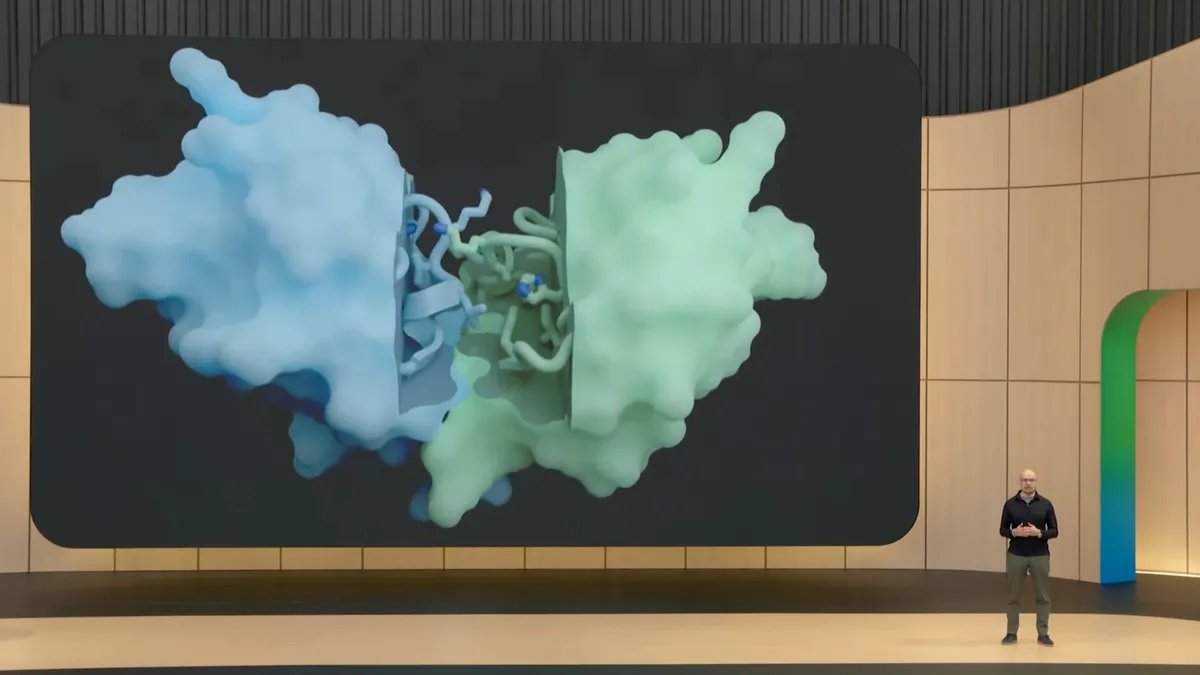
One hour and 45 minutes into the Google I/O keynote, I suddenly sat upright in my chair. The CEO of Google DeepMind and Alphabet’s Isomorphic Labs, Demis Hassabis, was on stage talking about Gemini for Science and the work his team is doing to solve meaty, difficult real-world problems with AI. It’s important, compelling stuff, and I was hooked immediately.
In case you didn’t stick around until the very end, here’s what you need to know: Google is predicting the path of hurricanes to put early-warning systems in place at a time when climate change is making extreme weather more unpredictable than ever — and as the government is defunding National Oceanic and Atmospheric Administration. It’s creating digital twins of the planet to tackle deforestation and food insecurity. It’s in the preclinical stage for multiple medical projects, including treatments for immune disorders and cancer.
Amid the ongoing slopification of the internet and the looming threat of mass unemployment, it’s easy to forget that there are a handful of indisputably noble reasons for AI to exist. None are obviously profitable, of course, but surely they deserve to be more than a mere footnote in Google’s I/O agenda?
Perhaps this last-minute mention of Gemini for Science was a Hail Mary attempt to leave things on a positive note after over 100 minutes of talk about incremental improvements to AI models that the wider world never asked for. But more likely, it simply speaks to how Google (de)values this work in comparison to the search, shopping and generative AI tools that occupied the bulk of the keynote.
Google is mapping the path of hurricanes to keep people safe.
It feels like an oversight — not only because this work should be a moral priority, but also because AI isn’t exactly universally beloved outside Silicon Valley. Showing how it can genuinely benefit humanity could provide a sorely needed reputational boost for this technology, which many people are skeptical of and even, justifiably, fear.
Google wants people to be excited about AI that can plan a block party for them, and it’s a big ask. Many of us are more worried about the potential for our block parties to be ruined by an AI data center being built in our neighborhoods.
But do you know what might actually get people excited about AI? The potential of curing, or at least more effectively treating, cancer.
I’ve read endless interviews with Hassabis over the years and have seen him speak at events. It’s clear that pursuing AI for its medical benefits is where his real passion lies.
“I’ve always believed the number one application of AI should be to improve human health,” he said at I/O. This is a man who won the Nobel Prize for Chemistry, who has pioneered new tools for drug discovery and who, I believe, has genuinely honorable intentions for using AI to solve the health challenges of our time.
Using AI to simulate the world can help solve some of Earth’s most pressing problems.
I question the wisdom, then, of Google also putting him on stage to announce a new generative video model that has no obvious benefit to humanity. In the future, Hassabis could well be a household name, hailed as among the truly impactful scientists of this generation. But he needs to be allowed to get on with it, to direct his talent and passion toward things we all agree matter.
If Hassabis succeeds in his missions, Google will get its flowers too. The company could one day be credited with bankrolling his breakthroughs at a time when scientific funding was harder to come by than ever. But it means playing the long game rather than living from one financial quarter to the next. It means being prepared to prioritize good-for-humanity efforts that require an endless font of money, but provide few, if any, benefits to shareholders.
Google should be shouting from the rooftops about the work Hassabis’ team is doing through DeepMind and Isomorphic Lab and prioritize it above shopping on your phone. Gemini for Science should be the headline, not an afterthought.