dailynewsnblog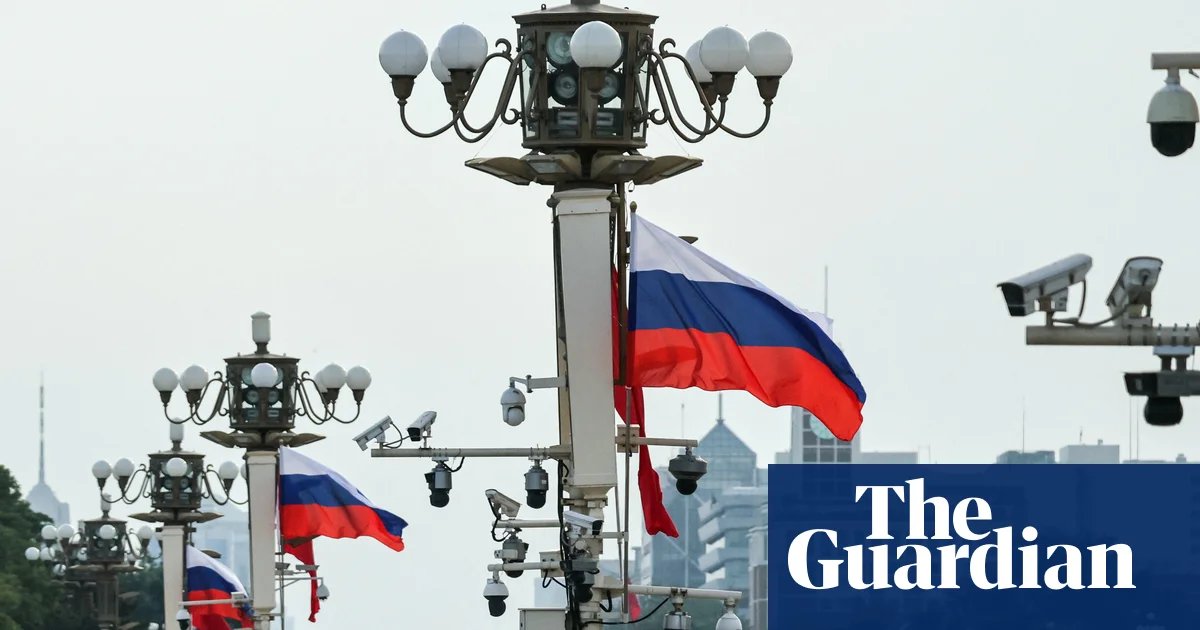
Vladimir Putin is due to arrive in Beijing on Tuesday for a state visit, four days after Donald Trump left China.
Putin’s visit to China – his 25th, according to Chinese state media – reflects Beijing’s growing confidence on the world stage as a centre of global diplomatic activity.
It also underscores the deep relationship between Putin and China’s leader, Xi Jinping. The two men have met more than 40 times, far outstripping Xi’s encounters with any western leaders.
“Hosting two of the most powerful leaders in the world in a matter of days shows China’s growing confidence in its place and standing in the world,” said William Yang, a senior analyst at the International Crisis Group.
He said Xi “likely wants to remind Trump that Beijing has other solid and robust relationships that it can count on, so Washington can’t easily isolate or harm Beijing if it tries to”.
Putin’s visit comes as he is entering what may be the most difficult period of his long rule. His strongman image at home is beginning to fray as Russia has made little progress on the battlefield in Ukraine this year. Russia’s growing economic troubles are steadily increasing its dependence on China, turning what the Kremlin frames as a partnership of equals into a far more lopsided relationship.
The Russian leader published a video address to China on the eve of the visit. He said China-Russia relations had reached “an unprecedented level”, pointing to the countries’ soaring bilateral trade, the fact that settlements were conducted nearly entirely in roubles and yuan rather than the US dollar, and mutual visa-free policies for Chinese and Russian travellers.
China’s foreign ministry spokesperson Guo Jiakun said on Tuesday: “The friendship between China and Russia will be further deepened and will be more deeply rooted in people’s hearts” by the strategic guidance from Xi and Putin.
This year marks 30 years since Beijing and Moscow signed a strategic partnership agreement and 25 years since they singed the “treaty of good-neighbourliness and friendly cooperation”.
Putin’s remarks about non-dollar-denominated transactions highlight the extent to which the two countries have been trying to build up their resilience against western sanctions, which rely on the dominance of the US dollar to be effective.
China does not comply with western sanctions on Russia and since the start of the full-scale invasion of Ukraine has bought more than $367bn of Russian fossil fuels, according to data collected by the Centre for Research on Energy and Clean Air.
Analysts will be watching to see if Putin and Xi agree any deals to further deepen energy cooperation. The most high-profile project under discussion is the Power of Siberia 2, a 1,600-mile (2,600km) natural gas pipeline that would add 50bn cubic metres of gas capacity to Russia’s flows to China. The pipeline would run through Mongolia and is viewed by the Kremlin as key to making up for lost European export markets.
An additional overland supply of energy from Russia would reduce China’s reliance on the strait of Hormuz, which has been crippled by the US’s war with Iran. But it could also make China overly dependent on Russia at a time when China wants to boost its energy self-sufficiency.
Putin has been a background figure in Xi’s delicate relationship with the US. As Xi gave Trump a rare tour of his private residence in Beijing last week, the Chinese leader said Putin was one of the few other foreign leaders to have been invited in to the Zhongnanhai compound, sometimes referred to as China’s Kremlin. “Good,” replied Trump.
China has also been hit by western sanctions as a result of the war in Ukraine. This month the Chinese embassy in the UK lodged “stern representations” about the fact that London had added two Chinese entities to its Russian sanctions list.
Western countries have criticised Beijing’s ongoing support for Russia through economic ties and the export of dual-use equipment with military applications.
Ukraine was not mentioned in detail in either the US or the Chinese summaries of the main bilateral meeting between Trump and Xi last week. But the FT later reported that, according to people familiar with the US assessment of the summit, Xi told Trump that Putin may end up regretting the war. China’s foreign ministry has rejected the reports.
If proven accurate, Xi’s comments probably reflect China’s growing awareness of Russia’s difficulties, both on the battlefield and at home. The war in Ukraine has largely ground into a stalemate, while Ukrainian long-range drone and missile strikes have inflicted significant damage on Russian energy infrastructure and military facilities.
On Tuesday, a Russian deputy from Siberia called for the “swift conclusion” of the war, warning that Russia’s economy would “not withstand a prolonged continuation of the special military operation” – a rare public acknowledgment of the strain the conflict is placing on the country.
Additional research by Yu-chen Li