dailynewsnblog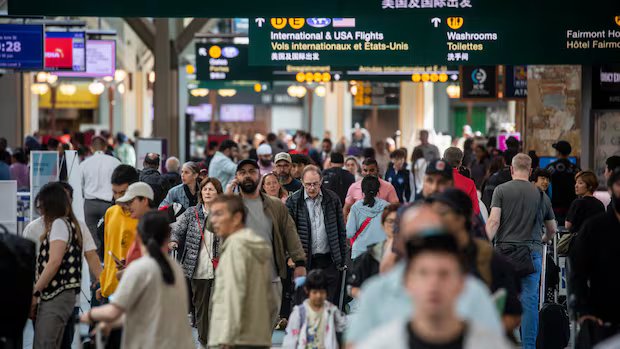

Listen to this article
Estimated 5 minutes
The audio version of this article is generated by AI-based technology. Mispronunciations can occur. We are working with our partners to continually review and improve the results.
From the rising cost of fuel to flight cancellations and even ongoing boycotts of U.S. travel, some Canadians are rethinking their summer travel plans — or preparing for the worst.
The situation, largely driven by the U.S.-Israel war with Iran, even prompted Global Affairs Canada to issue a travel warning ahead of the busy season.
“Summer is fast approaching, and many Canadians are planning to travel abroad. The situation in the Middle East is presenting challenges that travellers around the world need to be aware of,” the advisory says.
“Fuel shortages may lead to flight cancellations and disrupt access to local goods and services at your destination.”
But as Canadians gear up for their holidays, experts say there are things they can do to mitigate risks — and pay less, at a time when many people are feeling financially squeezed.

Planning an international trip this summer? The International Energy Agency warns Europe may run out of jet fuel in six weeks due to the global energy supply crunch amid war in the Middle East. Werner Antweiler, associate professor at UBC’s Sauder School of Business, spoke to BC Today host Michelle Eliot. He said people travelling to Asia and Europe, where countries rely on Middle East oil, should plan for flight cancellations while there.
From domestic trips to shelling out a bit extra for travel insurance, here’s what travel experts say Canadians should do:
Know which flights are at risk for cancellation
Major airlines, including Air Canada, have already cancelled several flight routes deemed unprofitable amid the ongoing jet fuel shortage. But not all routes are at equal risk.
“It’s important to look at which flights will be impacted,” Werner Antweiler, associate professor at UBC’s Sauder School of Business, told CBC’s BC Today last month.
According to Antweiler, long-haul transatlantic flights will likely be spared from cancellations.
“It’s going to mostly be short-haul flights,” Antweiler said. “Short-haul flights are more expensive to operate.”
When short-haul flights are cancelled, he said, it’s also typically easier for airlines to direct passengers to travel differently — by train, for example. The same can’t be said for transatlantic flights.
Give yourself more time to get to your final destination
In addition to flight cancellations and related delays, the European Union has implemented a new entry/exit system for welcoming people who don’t have an EU passport. That means it can take longer to get through passport control.
“Do not go for the one-hour connection, that is a recipe for disaster,” McKenzie McMillan, a managing partner with The Travel Group, told CBC’s Cross Country Checkup on Sunday.
“Worst-case scenario is you’re waiting at an airport for a few hours.”
Get travel insurance
Antweiler also advised Canadians who are planning to travel abroad to consider travel insurance, just in case.

Get the latest on CBCNews.ca, the CBC News App, and CBC News Network for breaking news and analysi
“It’s important to plan for the reality of getting stuck,” he said.
“Maybe getting travel insurance or looking at other ways to make sure passengers won’t be severely out of pocket. With airlines, some may compensate and others will not.”
McMillan offered similar advice, saying consumers should make sure they know what is covered in their travel insurance policies.
For example, large insurers such as Manulife currently consider the worldwide jet fuel shortage a “known event,” meaning related flight cancellations and delays likely wouldn’t be covered.
Travel domestically
Canadians itching to adventure but wary of risk, or following a tight budget, could opt to travel within the country.
“Stay within Canada. This is a huge country,” McMillan said. “You can go to very different places from where you live. There are so many opportunities to explore and enjoy.”
The Current13:15Skyrocketing airfares may be here to stay
Air travel is getting more expensive.. A global jet fuel crunch, driven by conflict in the Middle East, is pushing up costs and starting to disrupt supply in parts of the world. Airlines are already adjusting — raising fares, adding fees, and in some cases, cutting routes. John Gradek, an aviation lecturer at McGill University, explains what’s driving the spike, what it means for your summer travel plans, and why higher prices could stick around even if the crisis eases.
Plus, he said, domestic trips mean you get to use the Canadian dollar — a currency that won’t necessarily go as far in the U.S. or Europe.
Taking a road trip may be the best bet this year.
“Gas prices are quite high right now, but if you really want to take that trip this is probably where you’re going to have the most savings,” McMillan said.
He said Canadians can opt for “hidden gems” across the country if they want to avoid the steep prices in major cities, such as Vancouver or Toronto.
“Just grab a map and put the key in the ignition, and you’ll find some pretty amazing spots.”
Consider a staycation
Finally, if a trip isn’t in the budget this year, there are many things people can do locally.

Rising gas prices and jet fuel shortages have travellers rethinking their summer plans — and Ottawa Tourism hopes local operators will benefit. Mélina Lévesque reports.
Bachar Al Mazloum, a travel consultant and manager at Fairouz Travel Ltd., previously told CBC News that he’s already seeing travellers rearrange their plans.
In Ottawa, where he’s based, he expects more people to staycation, with hotspots like Parliament Hill, the ByWard Market and the Hard Rock Hotel and Casino on offer.