dailynewsnblog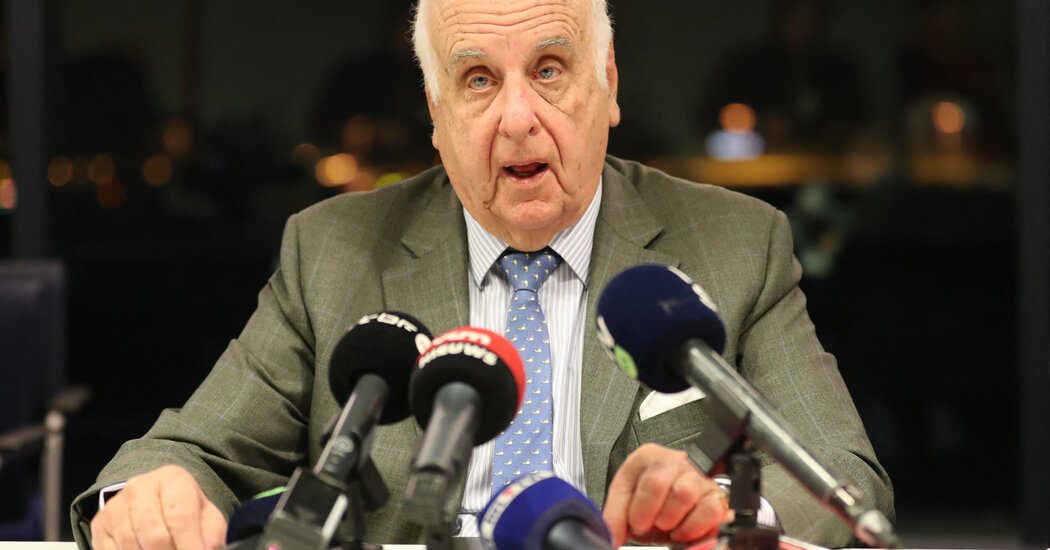
A 93-year-old former Belgian diplomat who was set to stand trial for what prosecutors said was his role in the assassination of the first Congolese prime minister, Patrice Lumumba, died on Monday.
The former diplomat, Étienne Davignon, was to face war crimes charges in connection with the 1961 killing of Lumumba, a leader in the fight against colonial rule who became a symbolic figure in Africa’s liberation movement. His death was announced by the Jacques Delors Institute, a think tank based in Paris, where Mr. Davignon served as a member of the board of trustees. The institute did not share further details.
The Lumumba family said Mr. Davignon’s death had effectively ended a quest for justice that began more than 15 years ago. In a statement, the family said it had been “denied a criminal judicial outcome in this case.”
“With his passing, these criminal proceedings are formally extinguished,” it said.
Mr. Davignon was the only surviving member of a group of Belgian officials who prosecutors said organized the kidnapping and murder of Lumumba as part of a coup against the newly elected government shortly after Congo gained independence from Belgium in 1960.
In March, after a yearslong legal battle, a Brussels court found sufficient grounds for Mr. Davignon to face charges for the unlawful detention and transfer of Lumumba, for depriving him of the right to a fair trial and for humiliating and degrading treatment.
Mr. Davignon was also to stand trial for charges linked to the deaths of two associates of Lumumba who were killed alongside him by a firing squad, Joseph Okito and Maurice Mpolo.
The family’s lawyers said the Lumumbas would now focus on bringing a civil complaint against the Belgian state. In 2001, the Belgian Parliament acknowledged moral responsibility for the role the state played in Lumumba’s death, and since then has honored the slain independence leader.
The lawyers said the aim of the complaint would be to establish the state’s “genuine legal responsibility.”
“Mr. Davignon’s death cannot erase Belgium’s legal responsibility for the assassination of Patrice Lumumba,” Wolfgang Kaleck, general secretary of the European Center for Constitutional and Human Rights and legal adviser to the Lumumba family, said in a statement. The March ruling, he said, created an “important precedent for justice regarding European colonial crimes.”