dailynewsnblog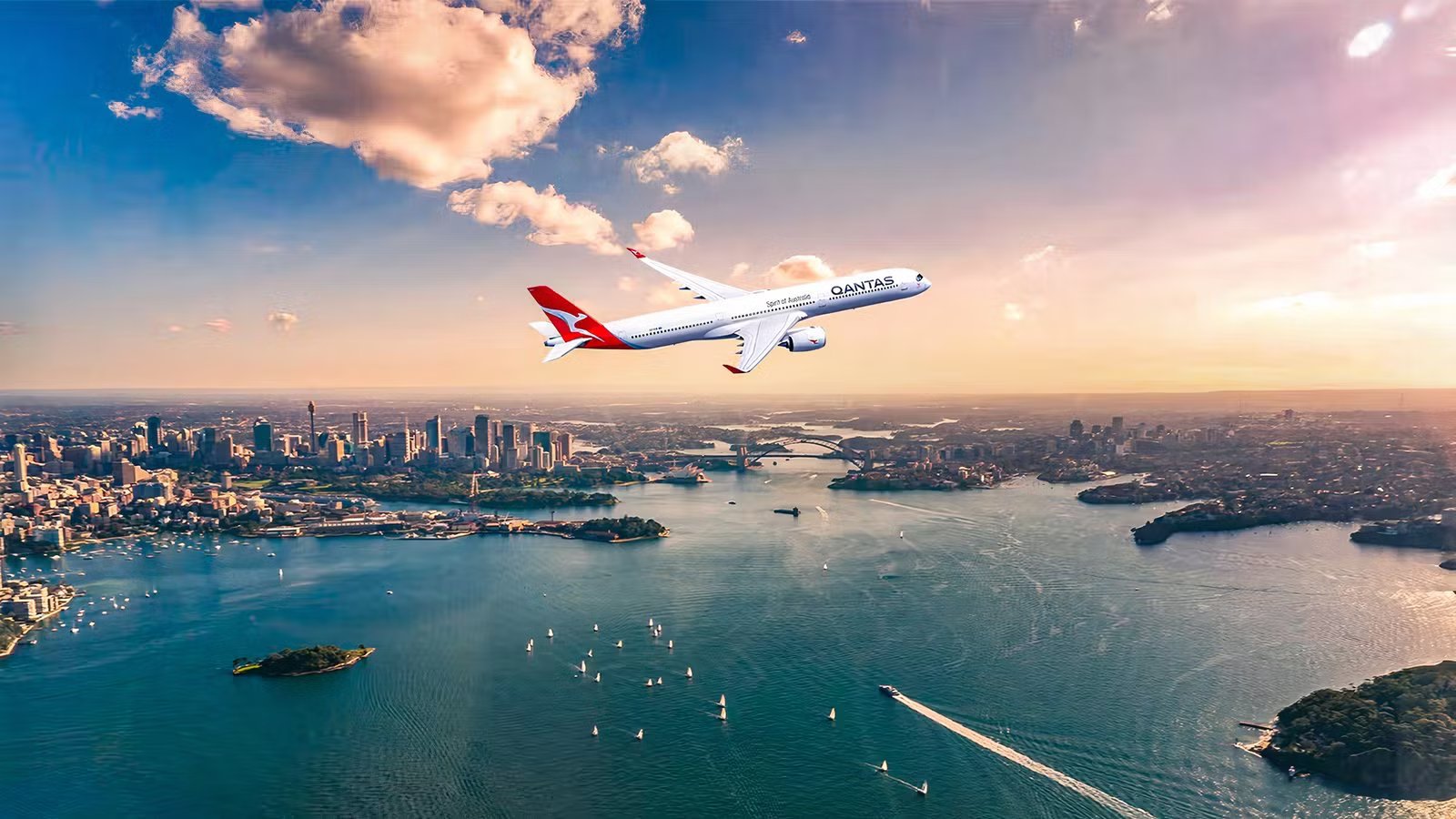
Qantas will make a great leap forward once its Qantas Project Sunrise finally launches. Specially modified Airbus A350-1000ULRs will fly behemoth non-stop routes like Sydney Airport (SYD) to London Heathrow Airport (LHR) or New York John F. Kennedy International Airport (JFK). Such routes will require the jet to remain airborne for up to 22 hours, longer than is currently the case for Singapore Airlines’ Airbus A350-900ULR.
Below, the modifications needed to achieve such an impressive flight time are detailed. This includes larger fuel tanks and a lower passenger and cargo capacity. Qantas has also had to cover crew and passenger considerations and other operational complexities.
Engineered For Maximum Fuel Capacity

Keeping a jet aircraft in the skies requires an enormous amount of fuel, particularly if that aircraft is a large widebody. A Boeing 787 uses 2,900 gallons (10,977 liters) per hour, with an Airbus A350 using 200 gallons (757 liters) per hour less. If an airline wants to fly a further distance, it needs to find a way to pack in more fuel. This isn’t just about reaching the bare minimum amount of fuel needed to complete a journey, but building in room for diversions, delays, and other in-flight emergencies.
Qantas and Airbus achieve this goal with Project Sunrise by designing an aircraft around giant fuel tanks. At the rear center, a 5,283-gallon (20,000-liter) fuel tank has been added. This is an interesting diversion from aircraft manufacturers’ usual focus, which is about maximizing passenger and cargo capacity rather than range alone.
However, a standard A350 would not be able to take off with this additional fuel, as it would bring the aircraft over its maximum takeoff weight. Airbus has increased this figure for the Airbus A350-1000ULR, while also reinforcing the landing gear to keep the aircraft safe while it’s fully loaded. The A350-1000 currently has a maximum takeoff weight of 710,000 lb (322 tonnes). The maximum takeoff weight has been increased through structural reinforcements, high-power engines, and fuel balancing upgrades to keep the jet’s center of gravity stable in flight and during takeoff. While the A350-900ULR has a deactivated forward cargo hold, it is not yet known if the same will be the case for Qantas’ bespoke aircraft.
High-Power And Efficient Engines

Increasing range isn’t just about packing in more fuel, but ensuring that the aircraft is less thirsty while also having the necessary power. The A350-1000ULR is fitted with two Rolls-Royce Trent XWB-97 engines, which are the most powerful engines ever fitted to an Airbus plane. They have a peak power output of 97,000 lbf (430kN) and a net continuous thrust rating of 83,100 lbf (370 kN). While achieving more power than both the Trent XWB-84 and XWB-94, these engines still have a 25% reduction in fuel burn over the previous generation of aeroengines.
The table below details the key specifications for the Trent XWB-97, taking data from its type certificate data sheet:
Maximum thrust | Maximum: 97,000 lbf (430kN) Continuous: 83,100 lbf (370 kN). |
|---|---|
Thrust-to-weight ratio | 5.82 |
Length | 229 inches (5,800 mm) |
Dry weight | 16,640 lb (7,550 kg) |
Rotor speed (RPM) | LP: 2700, IP: 8200, HP: 12600 |
Bypass ratio | 9.6:1 |
Pressure ratio | 50:1 |
The engine that will be used for Project Sunrise comes from good stock as a member of the Trent XWB family. Rolls-Royce writes, “With a 99.9% dispatch reliability, and having twice the customer base of the competition, the [XWB-97] engine continues to define the future of long-range performance and sustainability on the A350-1000.”
The Surprising Cost Of The Airbus A350-1000’s Fuel Consumption During Takeoff
The steep price to launch Airbus’ largest widebody into the air.
Trading Seats For Fuel

All the extra fuel on board the A350-1000ULR needs lots of space, both in terms of room and weight. To make way for the kerosene, Project Sunrise flights will carry just 238 passengers. This is an astonishing drop on the 372 seats available on a typical three-class A350-1000 and 480 on high-capacity A350-1000 configurations. The reduction is partly to make the flight time, which can be over 20 hours, tolerable to those on board. It also reduces the overall weight of the aircraft and allows the required amount of fuel to be carried.
Much like Singapore’s A350-900ULR flights, Qantas will bank on demand from premium passengers, who will be prepared to pay a high price to fly direct and quickly. The reduction in seats also reduces the need for Qantas to sell out on every flight to turn a profit.
Along with a less busy aircraft, Project Sunrise aircraft will also feature a number of innovations to improve passenger comfort. The airline has turned to revered Australian designer David Caon, who said, “We began designing this aircraft cabin five years ago, working with Airbus and Qantas to maximise space, as well as creating a tailored lighting program that will influence mood and sleep patterns. All the design and service elements will work together to significantly improve inflight comfort, convenience and health and wellbeing and help minimise the old nemesis of jetlag.”
How Qantas’ Crew Will Adapt To The Additional Flight Time

Aircraft technology continues to press on, yet the crews that make commercial aviation possible continue to be fundamentally human. Working conditions have to be adapted to make ultra-long-haul aviation possible. Adjustments include a larger fuel complement and upgraded rest areas, ensuring the cabin crew and pilots can maintain a high level of performance and safe operations.
Both of these provisions add weight to the aircraft, further reducing the amount of revenue cargo and passengers that can be on board. Yet, the measures are essential to make it possible for Project Sunrise flights to exist.
Another factor to consider for Project Sunrise flights is operational planning, which is of higher complexity given the enormous distance covered. Delays and diversions can have a significant knock-on effect on the aircraft’s ability to complete its designated route safely. Yet, the enormous range also gives Qantas better flexibility. It can use this range to avoid busy airspace and dangerous weather systems. On the ground, turnaround times may be longer, given the need to load more fuel and provisions, and ensure the aircraft is safe to remain in the sky for almost a full day.
Here’s How Much More The Airbus A350-1000 Costs Compared To The A350-900
The price difference between the two variants.
The First Project Sunrise A350-1000ULR Has Rolled Out

No Project Sunrise commercial flights have taken off yet. However, things are certainly progressing in that direction. In early April, Qantas’ bespoke A350-1000ULR, fitted with new engines, was spotted on the apron at Toulouse-Blagnac Airport (TLS). The aircraft currently bears the registration F-WZNK and the manufacturer serial number MSN 707.
The Instagram post embedded below shows images from the aircraft’s rollout.
The first A350-1000ULR airframe was completed in November 2025, and Qantas expects it will receive its first jet of the type by the end of this year. As the first airframe took shape, Qantas Group Chief Executive Officer Vanessa Hudson said, “Given Australia’s position in the world, Qantas has a long history of breaking aviation barriers. Project Sunrise will not only overcome the tyranny of distance, but it will also fundamentally change the way our customers travel the world.”
The exact date for the first Project Sunrise flight is not currently known. However, given the scheduled delivery of the first A350-1000ULR at the end of this year, the flights are expected to start during the first half of 2027. March 2027 is the most likely launch month. This additional time from the first delivery is partly because a minimum of three A350-1000ULR will likely be needed to sustain daily ultra-long-haul services.
The Other Bespoke Long-Range A350

While Project Sunrise is still on the drawing board, Singapore Airlines currently flies modified A350s to conduct the longest routes in commercial aviation. It flies the exclusive A350-900ULRs, beginning in October 2018 with flights from Singapore to Newark. This route was initially served three times per week, with a total distance of 9,000 nautical miles (16,700 km). That’s a huge 18 hours and 45 minutes of average flight time. The A350-900ULR flies to both Newark and JFK. That is because Newark is a hub for United Airlines, a fellow Star Alliance member. Flying there allows Singapore to facilitate onward connections through its partner for its customers. Meanwhile, the flights to JFK are particularly popular among corporate clients who are based in Manhattan and Long Island.
Singapore’s CEO, Goh Choon Phong, said: “Singapore Airlines has always taken pride in pushing the boundaries to provide the best possible travel convenience for our customers, and we are pleased to be leading the way with these new non-stop flights using the latest technology, ultra-long-range Airbus A350-900ULR.”
The A350-900ULR achieves this remarkable range with a modified fuel system that uses the existing center wing box to hold far more fuel than a standard A350. The -900ULR also has a premium-only configuration, offering only business and premium economy. The lack of appetite for economy seating onboard is unsurprising given the enormous flight time. The configuration also reduces weight. The plane has a total range of 9,700 nautical miles (18,000 km), with a total non-stop flight time of over 19 hours.