dailynewsnblog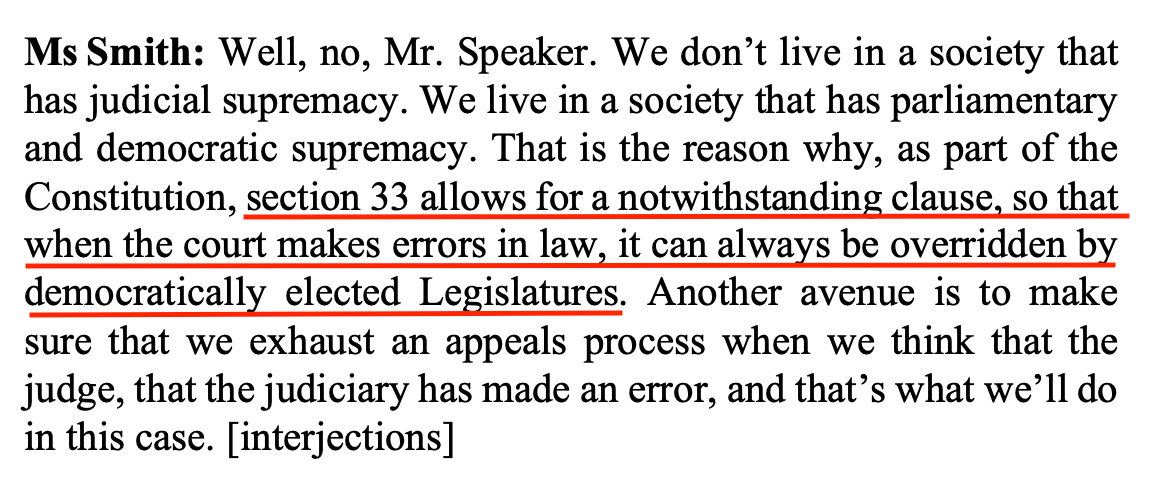
Alberta’s rump of separatists suffered a major setback last week, when a judge overturned the Chief Electoral Officer of Alberta (CEO-A) decision that set the signature gathering process for the “Stay Free Alberta” petition. If you’re interested, the full ruling is here (warning: it’s lengthy, and full of legal technical language).
I’m not going to spend a pile of time here dissecting the ruling – while I understand most of what’s written in it (I think), a deep dive would be tedious and relatively uninteresting. At the end of it all, the ruling has the net effect of rendering the entire signature gathering process that has gone on since January this year to be a legal fiction which “never happened”.
How does that work? Central to the judge’s ruling is the declaration that the decision of the CEO-A to grant the petition was “unreasonable”, and that the crown had failed to execute any kind of consultation with affected First Nations, therefore the decision itself was quashed. In doing so, the judge effectively turned the next 4 months of signature gathering into a legal ghost – the paper exists, but the authorization to gather those signatures doesn’t and therefore the signatures themselves cannot be considered.
This is unlikely to be the last we hear of this nonsense though.
The Fallout
The day the decision came down the reactions from all sides were almost immediate. The separatists declared that they would appeal the ruling, Premier Smith stood up in the legislature and mused about invoking the Notwithstanding Clause (NWC), and the First Nations (and most rational Albertans) cheered the decision.
Sure enough, the separatists filed a notice of appeal on the weekend. Oh, and they’re planning on filing a motion for this to be expedited because it’s so very important that this question be on the October referendum ballot. (It isn’t, if you ask me, but what do I know?).
I would be surprised if the court of appeal were to grant either a stay of the decision or an expedited appeal.
A stay of Justice Leonard’s decision is somewhat unnecessary here as leaving the petition in its current limbo state while the appeal goes on is fundamentally neutral relative to the issues that are before the courts here. If a stay were granted, First Nations would rightly automatically demand that the injunction against processing the signatures be reinstated instead because of the Treaty Rights issues involved here.
As for an expedited appeal goes, the issues involved in this case are significant, if not constitutional imperatives. It is unlikely in my view that the Alberta Court of Appeals is going to be overly enthusiastic about an expedited appeal when the issues reach into constitutional spaces, and there is no urgent matter such as someone’s life being at risk attached to the case. There’s an old saying: “The wheels of justice turn ever so slowly, but they grind ever so fine”. We should bear this in mind in the coming weeks and months.
Does The Notwithstanding Clause Apply?
When Danielle Smith stood up in the legislature and opined about invoking the NWC, she stated the following:

The short answer to the obvious question is “no” – Smith’s reading of the NWC here is simply flat out wrong. The NWC applies to sections 2, 7-15 of The Charter. No more. Aboriginal and treaty rights are guaranteed under S35. She can muse about it all she likes, but the blunt reality is that any attempt to apply the NWC to S35 issues will be dismissed by the courts faster than Ms. Smith can come up with her next excuse.
What’s The Rush?
One might ask why there is such a rush on for this petition? It’s pretty obvious to me, and not hard to guess. Last fall, Smith announced 9 referendum questions to be put before Alberta voters this fall. Then she rejigged the Citizen’s Initiative Act to make is easier for the separatists to get over the finish line with signatures – dropping the required number almost in half, and then adding time for them to gather signatures. At the same time, her government decided to slow-walk the Forever Canada petition which achieved its targets under the previous rules.
The simple reality, as NDP Leader Nenshi put it is that she owes the separatists a political debt:

Predictably, Smith is playing political games here, and Albertans will pay the price for it. Already, the separatists are demanding that Smith use her government’s powers to put their question on the October ballot, overriding the process under the Citizens Initiatives Act. Already the separatists are sharpening their knives to evict Smith from the premier’s chair – on social media, there are indications they are moving to assert enough control over the UCP to force Smith to put the question on the October ballot or face the same kind of ouster that Kenney did.
What Happens If Smith Puts The Question On The October Ballot?
Let’s assume that Smith decides to use her government’s power to put the separatist question on the October ballot. That will trigger several processes – none of which Smith (or the separatists) are equipped to actually do.
First, the Federal Clarity Act comes into play. There’s not a whole lot Smith can do to stop that. She can cry, stamp her feet, or even try to invoke the “Alberta Sovereignty Act”, but none of that matters at the end of the day. Smith is not going to like that.
Second, the Crown’s duty to consult kicks in, and that consultation process has to be complete before any vote takes place. Given the nature of what a separation vote would imply, I would imagine that “duty to consult” is not going to be something the government can do “performatively” and walk away from after a meeting or two.
The consultation process is going to find itself mired in court actions almost immediately. Smith will try to argue that no duty to consult occurs until after the vote – but that doesn’t line up very well with other aspects of duty to consult. You can’t “consult” once the decision has been made, which is very much the situation that would arise after a pro-separation vote outcome.
There’s a third likelihood here. The minute that Smith puts the question on the ballot, questions can be put before the courts regarding the constitutionality of the question, as well as the intent of the government’s actions in light of the previous court decisions around the separatist decision. I would not be surprised in such a situation if the courts did provide an injunction effectively removing the question from the ballot pending the outcome in these cases.
The Upshot?
It seems most likely that between now and October, there will be a roller coaster ride of court challenges, appeals, and other drama. The separatists are going to pull every stunt they can dream up, and Smith will be their willing assistant. Hold on to your hat, because the level of gaslighting that we are going to hear over the next 5 months is going to be mind boggling. Expect to hear “undemocratic” from Smith on a near daily basis when court rulings happen, and a regular amount of lies, threats and complaining from the separatists.