dailynewsnblog
An international team of researchers has reported a striking Alzheimer’s breakthrough in mice using specially engineered nanoparticles that do much more than deliver medicine. These microscopic particles act as drugs themselves, helping the brain restore its own natural cleaning system and dramatically reducing toxic protein buildup linked to Alzheimer’s disease.
The work was led by scientists from the Institute for Bioengineering of Catalonia (IBEC) and West China Hospital Sichuan University (WCHSU), together with collaborators in the United Kingdom. Their findings were published in Signal Transduction and Targeted Therapy.
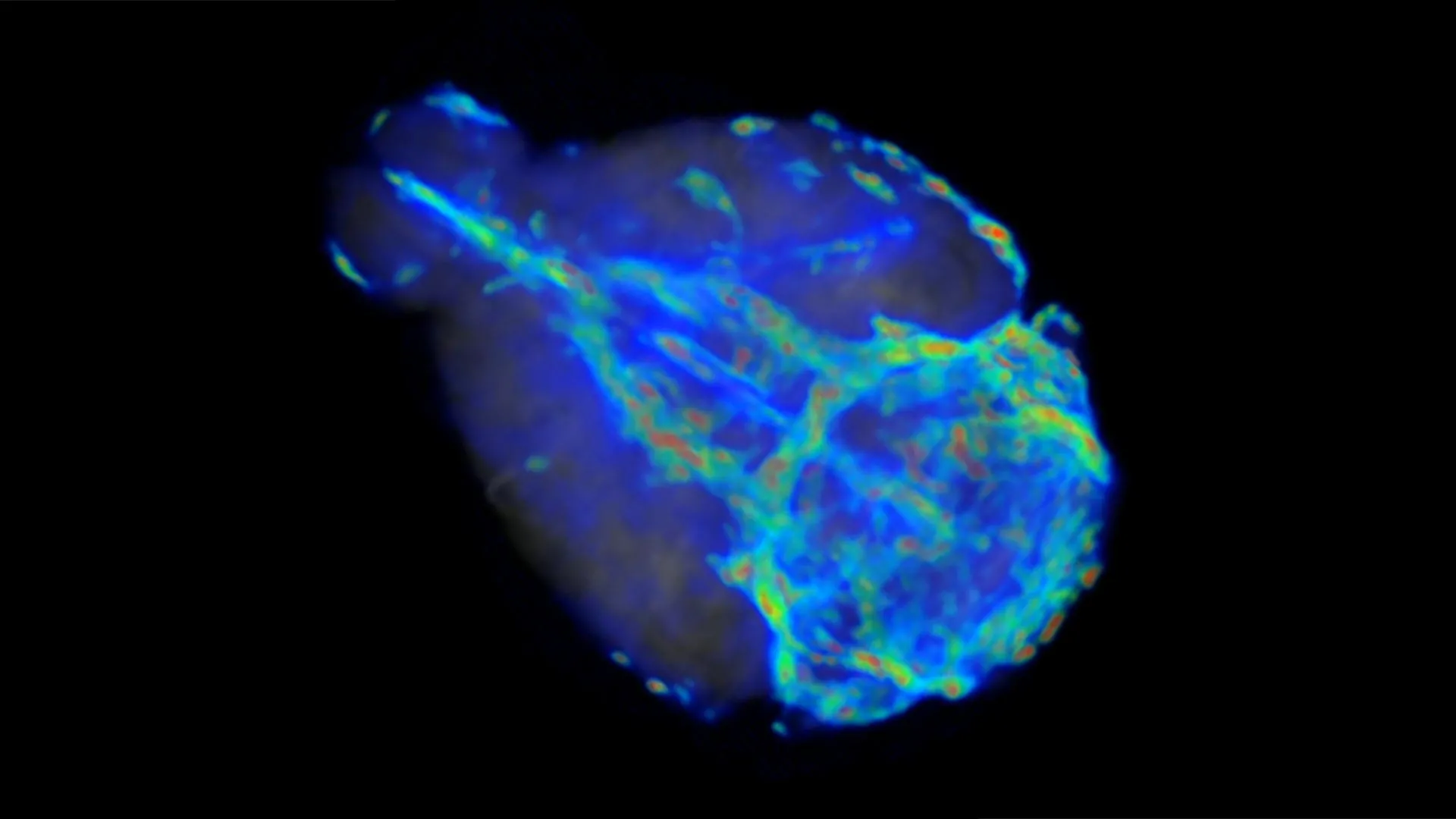
Instead of focusing directly on damaged neurons, the scientists targeted the blood-brain barrier (BBB), a protective network of cells and blood vessels that controls what enters and leaves the brain. In Alzheimer’s disease, this system gradually breaks down, allowing harmful proteins to accumulate and damaging brain function over time.
The researchers designed bioactive nanoparticles called “supramolecular drugs” to help restore this barrier and restart the brain’s ability to remove waste.
Repairing the Brain’s Cleanup System
The human brain uses enormous amounts of energy. In adults, it consumes around 20% of the body’s total energy supply, and in children the figure can reach 60%. To meet those demands, the brain depends on an extremely dense network of blood vessels. Scientists estimate the brain contains roughly one billion capillaries, with nearly every neuron connected to its own blood supply.
Growing evidence suggests these blood vessels play a far larger role in dementia than previously thought. Many researchers now believe vascular damage is not simply a side effect of Alzheimer’s disease but may actively drive its progression. Recent studies have also linked blood-brain barrier breakdown to early cognitive decline and increased buildup of toxic proteins.
Under healthy conditions, the blood-brain barrier helps clear waste products from the brain while blocking harmful substances such as toxins and pathogens. One of the most important waste proteins is amyloid-β (Aβ), the sticky material that forms plaques associated with Alzheimer’s disease.
In Alzheimer’s patients, the brain’s waste disposal system begins to fail. As amyloid-β accumulates, neurons become damaged and memory problems worsen.
Alzheimer’s Plaques Dropped Within Hours
To test the new therapy, researchers used genetically engineered mice that develop high levels of amyloid-β and progressive cognitive decline similar to Alzheimer’s disease in humans.
The animals received only 3 doses of the nanoparticles. The effects appeared quickly.
“Only 1h after the injection we observed a reduction of 50-60% in Aβ amount inside the brain,” explains Junyang Chen, first co-author of the study, researcher at the West China Hospital of Sichuan University and PhD student at the University College London (UCL).
The long-term results were even more dramatic. Scientists tracked the animals for months using behavioral and memory tests covering different stages of disease progression.
In one experiment, researchers treated a 12-month-old mouse (equivalent to a 60-year-old human) and evaluated it six months later. By that point, the animal was roughly comparable to a 90-year-old human. Despite its age, the mouse behaved similarly to a healthy animal with no signs of Alzheimer’s-related decline.
“The long-term effect comes from restoring the brain’s vasculature. We think it works like a cascade: when toxic species such as amyloid-beta (Aβ) accumulate, disease progresses. But once the vasculature is able to function again, it starts clearing Aβ and other harmful molecules, allowing the whole system to recover its balance. What’s remarkable is that our nanoparticles act as a drug and seem to activate a feedback mechanism that brings this clearance pathway back to normal levels,” said Giuseppe Battaglia, ICREA Research Professor at IBEC, Principal Investigator of the Molecular Bionics Group and leader of the study.
How the Nanoparticles Work
A major focus of the study was a protein called LRP1, which acts like a molecular transport system at the blood-brain barrier. Normally, LRP1 recognizes amyloid-β, binds to it, and moves it out of the brain and into the bloodstream for disposal.
But the process is delicate. If LRP1 binds amyloid-β too strongly, the transport machinery becomes overloaded and breaks down. If the interaction is too weak, waste removal does not occur efficiently enough. Either way, amyloid-β starts piling up in the brain.
The supramolecular nanoparticles were engineered to mimic the natural molecules that interact with LRP1. By doing this, the particles appear to “reset” the transport system, allowing amyloid-β to move out of the brain again.
Researchers say this strategy differs from many traditional Alzheimer’s therapies because it focuses on repairing the brain’s own infrastructure instead of simply attacking plaques directly.
That idea has gained momentum in recent years. Scientists increasingly view Alzheimer’s as both a neurological and vascular disease, with disrupted blood flow and blood-brain barrier damage contributing to the spread of toxic proteins.
A Different Kind of Nanomedicine
Most nanomedicine approaches use nanoparticles as delivery vehicles to carry drugs into the body. In this case, the nanoparticles themselves are the therapy.
The research team created the particles using a bottom-up molecular engineering process that allowed them to precisely control their size and the number of ligands on their surface. This precision helped the particles interact with receptors on cell membranes in highly specific ways.
By influencing how these receptors move and function, the nanoparticles improved amyloid-β clearance and helped restore healthier blood vessel activity in the brain.
Researchers say this approach could eventually complement other Alzheimer’s treatments, including anti-amyloid antibody drugs. One of the biggest problems facing current therapies is getting enough medicine across the blood-brain barrier safely and efficiently.
Other experimental technologies are also exploring ways to overcome this challenge, including ultrasound-based delivery systems, “brain shuttle” molecules, and additional nanoparticle platforms designed to cross the barrier more effectively.
What Happens Next
Although the findings are promising, the research remains in the animal-testing stage. Many Alzheimer’s therapies that worked in mice have later failed in human clinical trials.
Still, experts say the study highlights an increasingly important area of Alzheimer’s research: restoring the health of the brain’s blood vessels and waste-removal systems.
“Our study demonstrated remarkable efficacy in achieving rapid Aβ clearance, restoring healthy function in the blood-brain barrier and leading to a striking reversal of Alzheimer’s pathology,” concludes Lorena Ruiz Perez, researcher at the Molecular Bionics group from the Institute for Bioengineering of Catalonia (IBEC) and Serra Hunter Assistant Professor at the University of Barcelona (UB).
The project involved researchers from the Institute for Bioengineering of Catalunya (IBEC), West China Hospital of Sichuan University, West China Xiamen Hospital of Sichuan University, University College London, the Xiamen Key Laboratory of Psychoradiology and Neuromodulation, the University of Barcelona, the Chinese Academy of Medical Sciences, and the Catalan Institution for Research and Advanced Studies (ICREA).