dailynewsnblog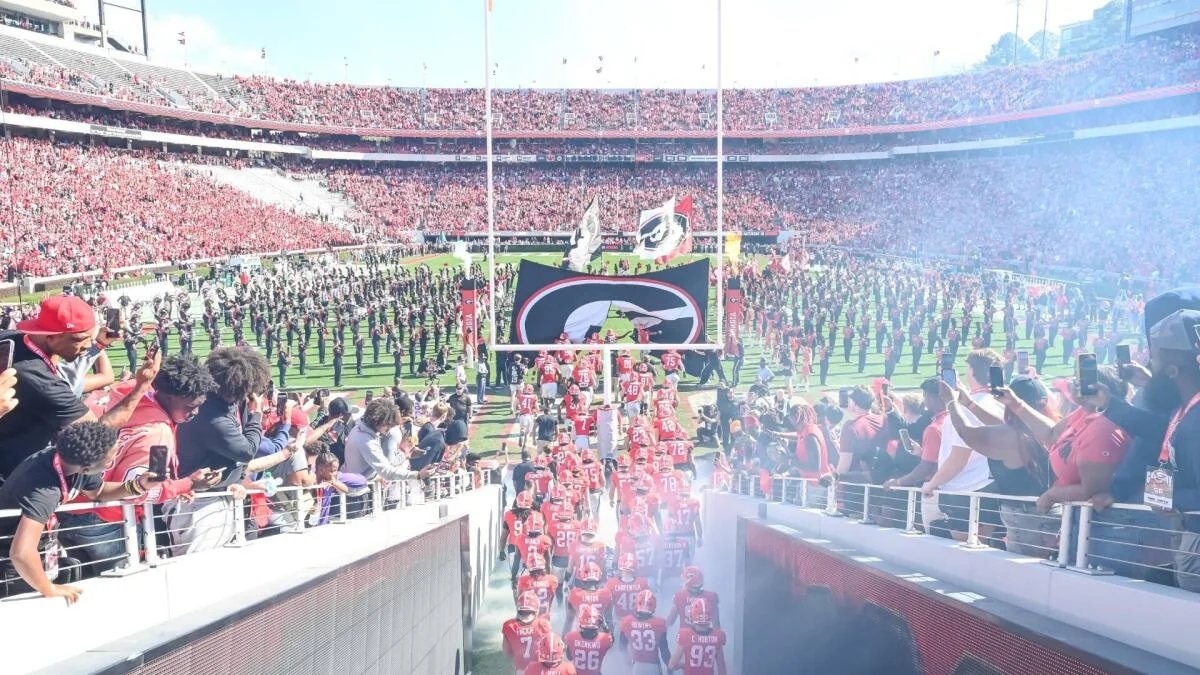
Winning a national championship requires elite talent and quality depth. Only a handful of programs entering the 2026 season can check both boxes as legitimate title contenders with complete rosters.
What separates elite rosters from good ones is the second and third waves of talent. The transfer portal has narrowed the gap, but programs that recruit at a high level out of high school while selectively supplementing through the portal are the ones building true roster insulation. Depth isn’t optional; it’s often the difference between a playoff contender and a team settling for bowl eligibility.
Another key component of a deep roster is positional balance. Plenty of teams can look dominant at quarterback or receiver but struggle along the offensive line or in the secondary. The teams that made this list also had to win in the trenches, where games are still decided when talent elsewhere is comparable.
Recent signing classes and transfer portal additions were heavily factored into these rankings, along with returning production and experience across projected two-deeps exiting spring camp.

1. Texas
Best position group: Wide receiver
Biggest offseason upgrades: Cam Coleman, WR (Auburn), Raleek Brown, RB (Arizona State), Hollywood Smothers, RB (NC State)
If there’s a team that appears capable of checking every box on the national championship checklist in 2026, it’s Texas. The buzz around the Longhorns isn’t just about star power, it’s about completeness — the rare blend of elite talent, depth and physical maturity across all three phases despite losing six starters in April’s NFL Draft.
Start with the most obvious advantage Texas will have over most opponents: quarterback play and skill talent. Sarkisian has recruited and developed at a level that gives Texas high-end production every season, and now Heisman Trophy frontrunner Arch Manning has another elite athlete to target in Coleman, who joins Ryan Wingo, Emmett Mosley V and others.
Texas also features an offensive line with multiple projected first-round picks, while Colin Simmons headlines a defense with a chance to lead the nation in havoc plays off the edge. Texas isn’t just talented — it’s structurally sound. That combination is why many evaluators believe the 2026 roster could be Steve Sarkisian’s most complete in Austin, and potentially the best in college football.

2. Ohio State
Best position group: Wide receiver
Biggest offseason upgrades: Ja’Kobi Jackson, RB (Florida), Qua Russaw, Edge (Alabama), James Smith, DL (Alabama), Earl Little Jr., S (Florida State), Terry Moore, S (Duke)
When you return a Heisman Trophy finalist at quarterback and arguably the nation’s most talented skill player, national championship expectations naturally follow. Julian Sayin and Jeremiah Smith are far from the Buckeyes’ only stars, however. Despite losing seven starters across the first two rounds of the 2026 NFL Draft — including four of the first 11 selections — Ohio State still boasts game-breaking speed throughout the roster and several players projected as future early-round picks.
Five-star freshman Chris Henry Jr. could crack the starting lineup after an impressive showing in the spring game, while linebacker Cincere Johnson — viewed by some as a carbon-copy version of Arvell Reese — is quickly adapting to Matt Patricia’s system. Defenses can’t focus on one player because Ohio State creates matchup problems at nearly every skill position, and reinforcements on the defensive side should make an immediate impact.
Few programs can match the Buckeyes’ blend of elite recruiting, NFL-ready talent and proven depth across the roster, which is why this team appears built for another serious run at a national championship.
3. Georgia
Best position group: Tight end
Biggest offseason upgrades: Ja’Marley Riddle, S (East Carolina), Khalil Barnes, S (Clemson), Isiah Canion, WR (Georgia Tech)
Georgia will not have to rely on one superstar or a single position group carrying the load this season. The Bulldogs, who finished atop last season’s 247Sports Team Talent Composite, again boast one of the nation’s deepest rosters. Their strengths begin in the trenches — where championship teams are often defined — and extend through the secondary. Former five-star recruits KJ Bolden (safety) and Ellis Robinson IV (cornerback) anchor the back end of the defense, and Georgia added more help through the transfer portal with two proven additions from other programs.
Georgia suffered a setback when transfer pass rusher Amaris Williams sustained an injury during the spring, but the linebacker position remains one of the roster’s deepest. Chris Cole could emerge as one of the SEC’s most-feared defenders, while senior Raylen Wilson provides proven production and leadership.
Georgia may lack experience along the offensive line, but the Bulldogs have the size, talent and versatility needed to handle the SEC’s physical demands. That sophomore-heavy group also gives the offense flexibility to win in multiple ways, whether by controlling games on the ground or protecting returning starter Gunner Stockton.
Georgia has consistently produced elite tight end play under Todd Hartley, but this season’s group could be among the program’s best. Hartley may struggle to divide snaps given the depth at the position — led by senior Lawson Luckie, Elyiss Williams and redshirt freshman Ethan Barbour, who impressed during the final spring scrimmage. Last season marked Georgia’s worst tight end production in five years, due in large part to wide receiver Zachariah Branch serving as the focal point of the passing attack — he led the team in targets, receptions, receiving yards and touchdowns.
That dynamic changes this season with Branch now in the NFL and several unproven wide receivers expected to step into larger roles within the two-deep.
Bulldogs’ TE production
Year | Players (3-TE rotation) | Total catches, yards | TDs |
2025 | Oscar Delp, Luckie, Williams | 42 for 536 | 6 |
2024 | Delp, Luckie, Ben Yurosek | 60 for 781 | 7 |
2023 | Brock Bowers, Delp, Luckie | 82 for 1,007 | 10 |
2022 | Bowers, Darnell Washington, Delp | 96 for 1,457 | 10 |
2021 | Bowers, Washington, John Fitzpatrick | 72 for 1,119 | 14 |
4. Oregon
Best position group: Defensive line
Biggest offseason upgrades: Koi Perich, S (Minnesota), Carl Williams IV, S (Baylor), Iverson Hooks, WR (UAB), Michael Bennett, OT (Yale)
No wonder Dante Moore decided to run it back at Oregon. With weapons around him like tight end Jamari Johnson, the thunder and lighting combo of Jordon Davison and Dierre Hill Jr. in the backfield and big-play ability on the outside, Moore’s numbers could dwarf a campaign last fall that led to him being a projected top-5 selection.
Oregon’s expected to start seniors across the board along the defensive front and linebacker positions, giving Dan Lanning the most talented unit he’s had in Eugene. Pair veterans like Matayo Uiagaleleli, A’Mauri Washington and Teitum Tuioti inside the front seven with lockdown corner Brandon Finney Jr. and you have a high-end defense at all levels that could be the Big Ten’s best.
With Evan Stewart returning from injury — along with rising sophomore sensations Dakorien Moore and Jeremiah McClellan — the Ducks are so deep at receiver that Hooks has often been overlooked this offseason as a portal acquisition. He enjoyed a breakout 2025 season with 87 receptions for 1,065 yards and 10 touchdowns. Another speedy option for Moore in the passing game means this Oregon attack should be high-powered, even after veteran play-caller Will Stein left for the Kentucky vacancy.
5. Notre Dame
Best position group: Secondary
Biggest offseason upgrades: DJ McKinney, CB (Colorado), Tionne Gray, DL (Oregon), Quincy Porter, WR (Ohio State), Mylan Graham, WR (Ohio State),
Expectations in South Bend feel significantly higher than usual. This roster has star power, depth and — most importantly — balance. Notre Dame no longer looks like a team built solely on toughness and tradition. The Irish are faster on defense, more explosive offensively and far more athletic across the board than they were just a few seasons ago.
Marcus Freeman and his staff have recruited at an elite level while supplementing key needs through the transfer portal without sacrificing chemistry. Quarterback play has raised the offensive ceiling, where C.J. Carr has emerged as a dynamic playmaker. Around him, the Irish again feature one of the nation’s top offensive lines — a staple in South Bend — along with multiple playmakers at running back despite losing first-round picks Jeremiyah Love and Jadarian Price.
Defensively, Notre Dame may be as talented as any team in the country. The front seven has size, power and NFL upside, while the secondary features long, versatile defensive backs built to handle today’s spread offenses. Few teams can match the talent Notre Dame has at cornerback with Leonard Moore and Christian Gray, both of whom played pivotal coverage roles in the national championship game against Ohio State two seasons ago.
6. Miami
Best position group: Wide receiver
Biggest offseason upgrades: Darian Mensah, QB (Duke), Cooper Barkate, WR (Duke), Damon Wilson II, Edge (Missouri), Jamal Merriweather, OG (Georgia), Omar Thornton, S (Boston College)
After reaching last season’s national championship game, most programs would naturally brace for regression. Miami may be one of the few teams in the country positioned to do the opposite. There is a growing belief that the Hurricanes’ 2026 roster is deeper, faster and more complete than the group that made last season’s title run.
That is a credit to Mario Cristobal’s blueprint for the program. Miami has recruited like a national heavyweight for several years, and the payoff is beginning to show throughout the roster. Mensah replaces Carson Beck at quarterback after helping Duke win the ACC last season, and he will be reunited with one of his preferred targets in the passing game.
Any concerns about Miami’s pass rush following the departure of two first-round NFL Draft picks have eased with the addition of Wilson, along with the expected development of Marquise Lightfoot and Ahmad Moten. If there is one lingering question exiting spring, it is the offensive line after the loss of several veteran leaders. However, five-star freshman Jackson Cantwell looked the part during spring practices, and Miami’s staff is confident seniors Matthew McCoy and Ryan Rodriguez, among others, can fill those talent voids seamlessly.

7. USC
Best position group: Running back
Biggest offseason upgrades: Jontez Williams, CB (Iowa State), Zuriah Fisher, Edge (Penn State), Alex VanSumeren, DL (Michigan State), Terrell Anderson, WR (NC State)
Lincoln Riley is fresh off his first No. 1 recruiting class at USC, a group that ranks No. 5 in the country when combined with several transfer portal additions. The headliners include five-star offensive tackle Keenyi Pepe, edge rusher Luke Wafle and tight end Bowman, all of whom earned spots in the two-deep as true freshmen during the spring. USC returns 15 starters this season — most among Power Four contenders — including nine on offense.
Riley’s system consistently produces high-level quarterback play, and Jayden Maiava threw for 24 touchdowns and nearly 4,000 yards during his second season under Riley’s guidance. Defensively, this roster has taken a significant step forward. USC improved its depth along the defensive front, added more disruptive edge talent, and built a secondary capable of matching up physically rather than simply trying to survive. That progression will matter against elite conference competition.
Running backs Waymond Jordan and King Miller are both capable of surpassing 1,000 yards if the offensive line performs as expected, and USC will lean heavily on the ground game after losing its top two wide receivers to the NFL. Tanook Hines and Anderson are expected to take on larger roles in the passing attack.
8. LSU
Best position group: Quarterback
Biggest offseason upgrades: Sam Leavitt, QB (Arizona State), Jordan Seaton, OT (Colorado), Princewill Umanmienlen, Edge (Ole Miss), Eugene Wilson, WR (Florida), Ty Benefield, S (Boise State)
Lane Kiffin is preaching patience, but there is little of it in Baton Rouge. His track record is straightforward: put the best 11 players on the field, maximize offensive output, and play aggressively in space. LSU, however, demands something faster, sharper and more efficient this season to be a playoff contender. Blending Kiffin’s philosophy with LSU’s talent base raises the program’s ceiling to one of the highest in college football.
Kiffin got off to a slow start in finding a quarterback before signing Leavitt, the top-ranked player in this cycle, along with USC transfer Husan Longstreet and Elon’s Landen Clark. Landing more than two dozen transfers was the biggest factor in LSU earning the top-rated class in 247Sports’ Composite rankings, but Kiffin also secured a pair of program-changing five-star freshmen in pass rushers Richard Anderson and Lamar Brown.
Those two prep standouts will be impact players in time, but this year, LSU will largely rely on its reshaped roster built through the transfer portal under its first-year coach. Programs like Florida State, Ole Miss and Texas Tech have all shown year-over-year improvement through high-end portal classes, but this LSU haul feels different. Kiffin is aiming to make that success sustainable over time.
9. Indiana
Best position group: Offensive line
Biggest offseason upgrades: Nick Marsh, WR (Indiana), AJ Harris, CB (Penn State), Joe Brunner, OG (Wisconsin), Josh Hoover, QB (TCU), Turbo Richard, RB (Boston College)
There’s no such thing as blind optimism for a program coming off a national championship. Yes, the Hoosiers are replacing a school-record nine NFL Draft picks, but Curt Cignetti is a proven operator in this space. Indiana has shifted from a fragile breakout story in 2024 as a first-time playoff entry to a structurally sound program with staying power. Cignetti and his staff have prioritized depth, physicality and experience across both lines of scrimmage, giving Indiana a foundation that doesn’t collapse when a star like Heisman winner Fernando Mendoza leaves early.
The quarterback transition is real, but it has also been anticipated. Indiana’s offensive success will not hinge on one player. The system is quarterback-friendly, not quarterback-dependent, and Hoover is an ideal fit after multiple years of starting experience in the Big 12 at TCU.
Indiana will have a chance to really separate itself from the pack on defense. The Hoosiers have impact pass rushers, including two additions from Kansas State, veteran linebackers Rolijah Hardy, Isaiah Jones and Kaiden Turner and a secondary loaded with versatility and range. Cornerback Jamari Sharpe and safety Amare Ferrell are All-American candidates.
10. Alabama
Best position group: Secondary
Biggest offseason upgrades: Terrance Green, DL (Oregon), Devan Thompkins, Edge (USC), Kedrick Bingley-Jones (Mississippi State), Racin Delgatty, OL (Cal Poly), Kaden Strayhorn, OL (Michigan)
2026 recruiting class: No. 6
Freshmen signees Xavier Griffin (EDGE), EJ Crowell (running back) and Jorden Edmonds (cornerback) are future difference-makers, but this season’s calling card for a program itching for a return trip to the CFP starts in the secondary with several former five-stars leading the depth chart. Zabien Brown at cornerback is a projected 2027 first-rounder with senior safeties Bray Hubbard and Keon Sabb not far behind.
Kalen DeBoer’s quarterback room is green in terms of experience, but the talent is undeniable with Austin Mack and 2025 five-star option Keelon Russell continuing to battle it out. At his best, Ryan Coleman-Williams is a gamebreaker at wideout. Alabama needs big plays from him this season to help keep defenses honest and get an inconsistent ground game going with Daniel Hill, Kevin Riley and AK Dear.
After watching a pair of expected starters along the defensive front transfer to Ohio State, Alabama appears to have found suitable replacements at both spots with Thompkins and Green from Power Four programs. The Crimson Tide edged out Texas A&M, Michigan and Oklahoma here for the No. 10 spot.