dailynewsnblog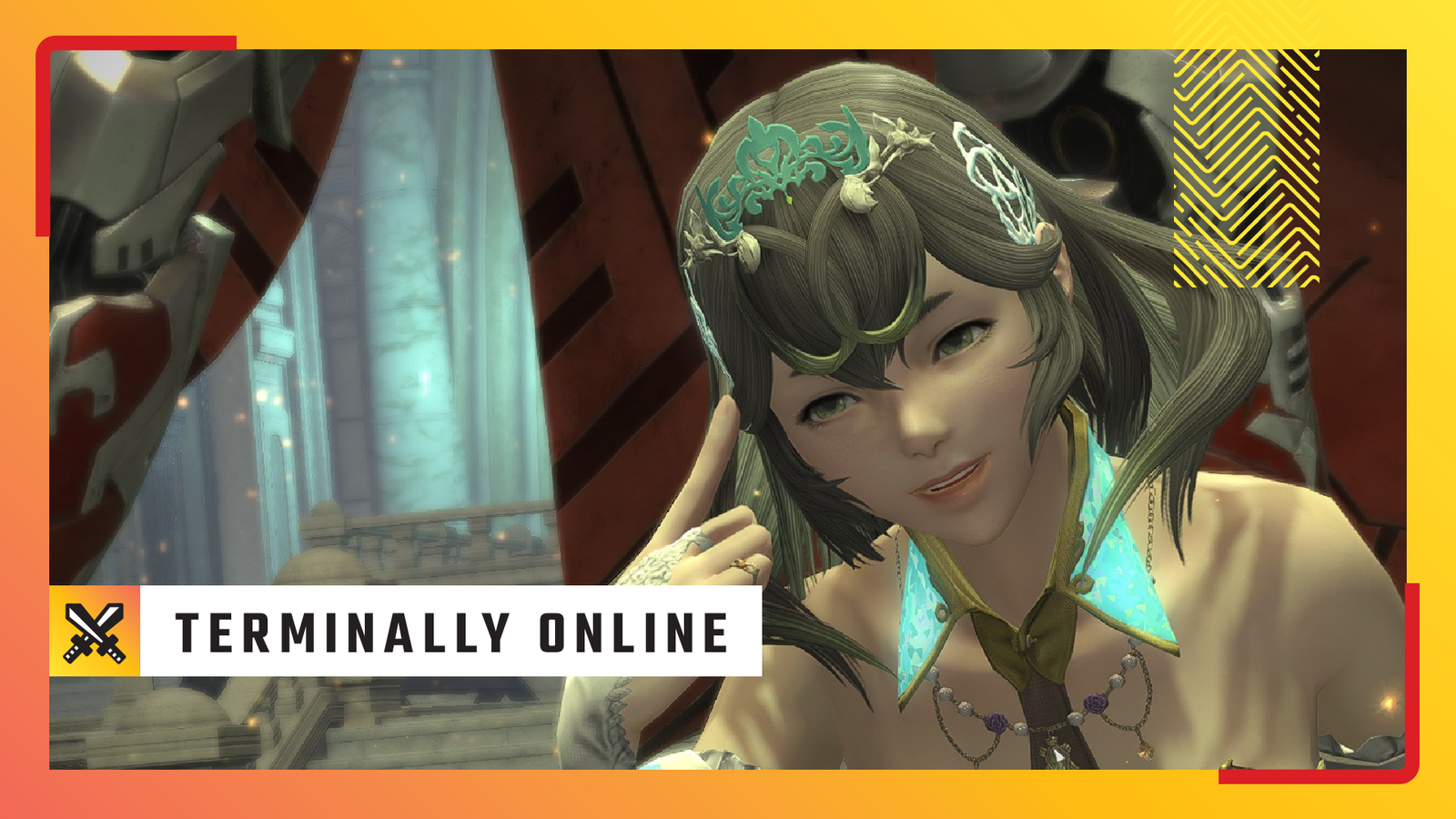
Terminally Online
This is Terminally Online: PC Gamer’s very own MMO column. Every other week, I’ll be sharing my thoughts on the genre, interviewing fellow MMO-heads like me, taking a deep-dive into mechanics we’ve all taken for granted, and, occasionally, bringing in guest writers to talk about their MMO of choice.
I’m thinking about Final Fantasy 14: Evercold’s keynotes, and something in them’s been rattling around in the back of my skull—during them, Hikaru Tamaki (who was affectionately coined as Mr Prime live on stage)—revealed that the design team was considering making the new version of Dragoon, which’ll be arriving in the expansion, have a 90% damage reduction buff while using its new Sky High action.
But it’s also led to one of the biggest criticisms of the game: Homogenization. Every tank plays the same, every healer plays the same, every DPS hits its burst windows at two minutes. It’s something that the developers are directly taking aim at. Whether they will is another question, as my colleague and fellow FF14-head Mollie Taylor rightfully pointed out earlier this week.


But it got me thinking: What did perfectly balancing those jobs in that way do? Who did it serve? And there are a few good arguments in favour of that. Even in a purely PvE context, MMOs aren’t balanced like singleplayer games. They’re social activities, and class balance matters not just for competition, but for cooperation.
If your class or job is underpowered, people aren’t gonna want to take you on diddly squat in higher-end content; Learning how to master a class can feel like a waste of time if some guy on the flavour of the month out-damages you with two buttons; And MMOs are grindy, which means jumping to those new classes can take multiple hours.
Heck, even if you’re just a filthy casual, it can feel pretty crappy to see your name in the muck at the bottom of damage meters. If there’s something MMO players don’t like, it’s a sense of inefficiency.
So why is FF14 moving away from that and tipping the scales? Why do people still play classic WoW servers, where Feral druids, for instance, had to grind out inventories full of Manual Crowd Pummelers if they wanted to be fully-optimised because of a weird interaction with their weapon scaling? Why did Star Wars: Galaxies die by trying to bring its professions in line?
Because perfect balance is bad for MMOs. That’s the hand-on-heart truth.
What makes you special
One of the main draws of the MMO is the idea of inhabiting a character within a wider world—and inside of that draw, being able to exist in a space in a community where your contribution is valuable. This, as we all know, is an unattainable fantasy and only possible in videogames.
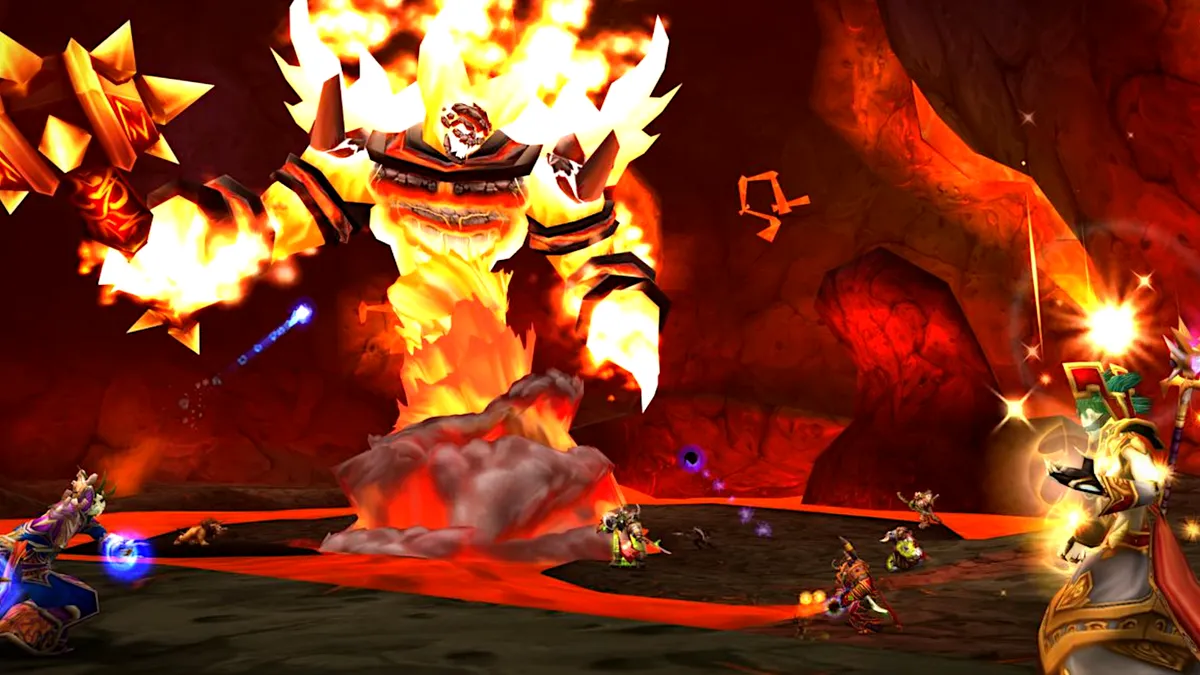
Anyway, the memories that stick with me aren’t the ones where I had an internal itch for justice scratched by the meticulous numbers balancing of a developer team—they’re when I saw certain classes being unique. WoW understood this very well back in the day.
Hunters could kite raid bosses halfway across the continent, rogues could pick locks in dungeons to bypass lengthy attunement questlines, warlocks could summon players to raids, which meant something before the advent of LFR and dungeon finder.
These things are still present in modern WoW, sure, but they’re less relevant. You don’t need to bring a rogue to unlock a shortcut in a Mythic+ dungeon if you want a fast time. Hell, sometimes five bears can cut it.
City of Heroes is another example I like to trot out, because it’s even more granular, down to not just your class choice, but your selection of “powerset”—having a kinetics character on your crew gave you a massively impactful roster of buffs unmatched by other powersets. Some archetypes and builds were such team players that they were basically useless on their own—while others could be custom-built to solo challenges meant for full teams.
Being able to provide a specific service, or bring a certain ability? That made you feel special. The iron grip of the holy trinity is probably inescapable, sure—but that doesn’t mean it has to puncture every aspect of play.
The worry is, of course, what I mentioned above: That certain unique skills or talents or abilities might invalidate some classes for some raids or dungeons—and I am painting a very rose-tinted picture here. It’s cool that, say, fire mages in WoW were useless in Molten Core, but better in Naxxramas—right until you have to respec or regear them.
But I honestly think that’s a price worth paying, especially if you can build intentionally around it.
Built different
Evercold’s also taking steps to accommodate this new philosophy, which is great, because FF14’s already got the foundations of a game that can support more whackadoodle job design.

In the game, you can play every job on the same character, switching between them just by equipping a new weapon. You still need to level them up and gear them individually, but that doesn’t take all too long in the grand scheme of things—it’s something you’re able to do passively just by ticking boxes on your roulettes.
With Evercold, Square Enix is taking that one step further by letting players “sync” their highest item level to other jobs. If you want to fine-tune your stats and get best-in-slot gear, you’ll still have to grind for it—but if you suddenly need to swap jobs to bring a better-suited one to a boss, you’ll be able to have a statistically viable version of that. Just a little weaker than a specialist.
In other words, if it ends up that certain jobs excel in certain fights, it’s basically not the end of the world—players won’t be given an unreasonable amount of work to have a swiss army knife of viable picks ready to go at any time.
Much of the interesting friction and complexity of these older games was almost an accident.”
In much the same way I feel about tab-targeting MMOs, where it feels as though MMO developers could improve the system that’s already there rather than trying to reinvent the wheel, I feel as though class balancing teams could take on all their knowledge of modern MMO design and apply them to this “purposefully imbalanced” template, too.
Much of the interesting friction and complexity of these older games was almost an accident, and they left unviable classes in the dirt for months, if not years. Modern-day balance and design schedules are both far more reactive and are done with deeper understanding of their own systems. Developers are more transparent, posting breakdowns of their choice-making. Even if those breakdowns are sometimes a little baffling, at least they’re doing it.
I think there’s a world in which a developer finds the right version of that oldschool, Star Wars Galaxies-esque formula—where every class, profession, or job has something it excels at, but needs help from others—that’ll actually stick with modern audiences. And I think that MMO will be better for it.
Y’know. If a new MMO can actually be developed and made in the first place. Which isn’t a sure thing.