dailynewsnblog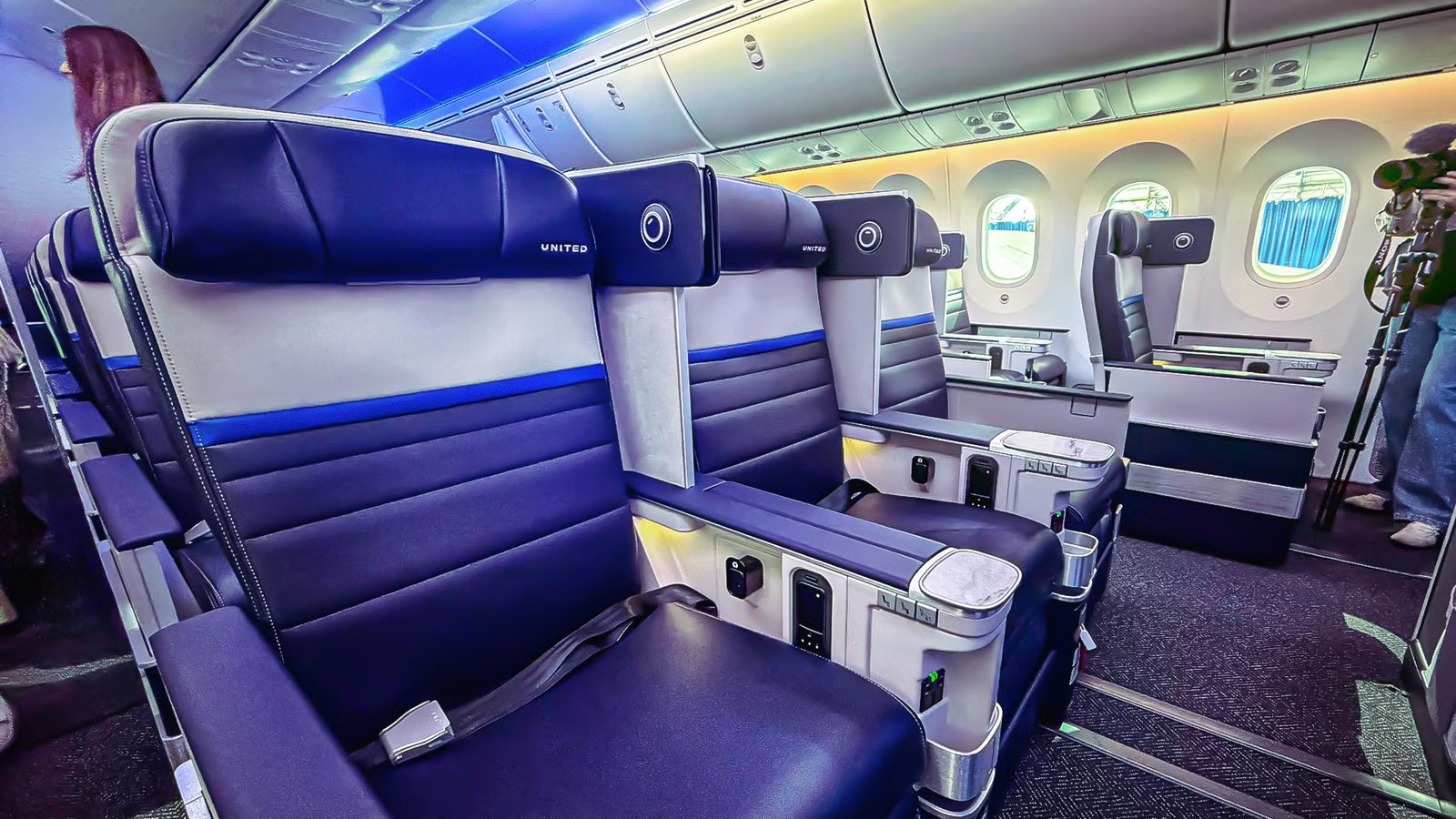
 United Airlines is well underway with ramping up its premium offerings. Through what it has dubbed its “Elevated” interior aboard the airline’s all-new Boeing 787-9 Dreamliners, United has allocated almost half of the available capacity to premium passengers. As such, 99 of 222 seats are left for Premium Plus and Polaris business class passengers, the highest proportion of any US carrier, according to the airline.
Aside from introducing two new business class suites, United has also used the upgrade to refresh its Premium Economy seats. Aimed at improving privacy and entertainment, and at incorporating more modern features, this comes at a time of heated competition among airlines to attract premium-paying passengers. So, how does United Airlines’ new premium economy product stack up against the best around the world?
Premium Plus Upgrades

Aboard United’s newest 787-9s, passengers will find 35 Premium Plus seats, arranged in a 2-3-2 configuration across five rows. Alongside eight and 56 United Polaris business class Studio suites and regular suites, respectively, the premium-heavy layout makes for the highest number of such seats aboard any aircraft in United’s fleet, per the airline. That said, finding oneself aboard one of the new Dreamliners would be unlikely as it stands, with the airline having debuted its latest delivery just last month on its San Francisco to Singapore route.
Premium Plus seats themselves have been granted “elements normally reserved for United Polaris customers” under the upgrade, the airline noted in a press release upon unveiling its Elevated interior last year. These include “soft-touch materials, quartzite cocktail tables, and a 16-inch 4K OLED screen.” This complements improvements made at both the most prestigious end of the aircraft, business class, all the way down to economy, with passengers across all fare classes set to see upgrades.
Back in premium economy, Bluetooth, wireless charging capabilities, and dedicated water bottle and headphone holders are among a string of features United lists as added for convenience. Privacy dividers fitted to seats’ headrests have also been introduced, the airline notes, with a reading light incorporated as a final touch.
Not Just The Hard Product

On the hard product alone, one might not be blamed for wondering if United may well have been looking to bring its premium economy up to par with the wider industry, rather than attempting to position itself first. Indeed, a slightly bigger screen and some extra storage space might not be enough to fool most.
That said, it is also in the soft product where United has looked to gain a leg up against rivals. As of May 2025, United had “invested more than $150 million in total food and beverage improvements” alone over the course of the year so far. While part of a broader plan to improve menus across the wider company, the improvements are said to have been designed to complement its Elevated upgrades.
“The special food and beverage offerings that will be onboard Elevated aircraft build on the work already underway to enhance the dining experience for all United customers,” it wrote. This was said to include wine offerings, more regional menus rotating on a monthly basis, new breakfast breads, updated mid-flight snack baskets, new drink options, and so on. International passengers would then stand to benefit from broader entrée choices, new desserts, and “a coursed appetizer” served prior to lunch or dinner, according to United.
The US Airlines With The Most Premium Economy Seats Per Aircraft In 2026
United Airlines currently takes the lead, but Delta and United continue to offer passengers compelling premium economy products.
About Average On Seat Space

Aside from all the bells and whistles, airlines look to entice premium-paying passengers with, seat pitch and width are really where most travelers’ minds will go when determining which option is best. In terms of United’s Elevated premium economy, passengers are granted 38 inches (96.5 cm) and 20 inches (50.8 cm) of pitch and width, respectively. Recline, another arguably vital factor for lengthy flights, then comes in at six inches (15 cm).
What this means is that United’s fresh take on the premium economy seat itself, in which pitch and recline remain unchanged from its existing offering and width has been increased by one inch (2.5 cm), actually places it well within the competition in terms of passenger space.  Singapore Airlines and Qantas offer the same amount of legroom with 38 inches (96.5 cm) of pitch, for instance.
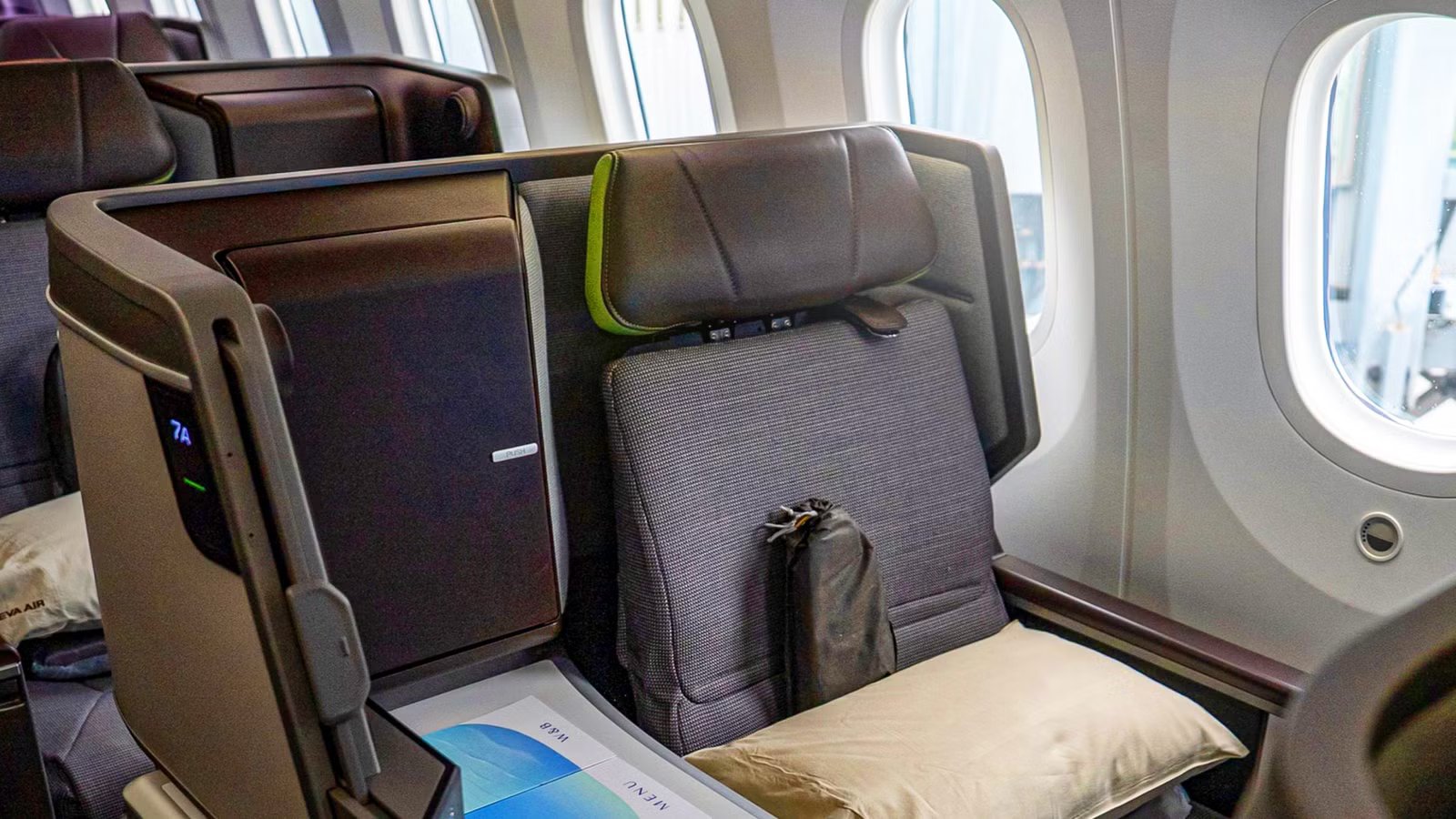
Of course, better seats for space can be found. At the most generous airlines, like EVA Air, passengers could find themselves on a seat with up to 42 inches (106.7 cm) of pitch. Coupled with the equivalent of eight inches (20.3 cm) of recline, which does not eat into the room of the passenger behind, the Taiwanese airline’s premium economy seat is actually arguably among the best in the industry, outdoing United’s new offering on key matters of space in this case.
Lufthansa Allegris And Other Key Rivals

That is not to say that United’s Elevated Premium Plus seats should be written off. One day, the premium-heavy configuration aboard its 787-9s could pay dividends. With the airline currently expecting 30 such jets to join its fleet by 2027, who is to say that so many premium seats at its disposal could not lead to undercutting, thereby allowing it to capture passengers who would otherwise have opted for rivals?
In this sense, United realistically only has to worry about those with which it is in direct competition. Singapore, as mentioned, matches United on premium economy seat pitch. Cathay Pacific and  Lufthansa then both offer more, at up to 40 and 39 inches (101.6 cm and 99.1 cm) respectively. The former offers this aboard its Airbus A350, while the latter’s slightly more spacious seat is part of its own refreshed, premium-heavy interior design.
Introduced in May 2024, Lufthansa’s “Allegris” will ultimately sit in direct competition with United’s Elevated aircraft as the airlines vie for premium transatlantic demand. Some 28 premium economy seats feature on Lufthansa’s Allegris-fitted 787-9s, while its A350s have space for 24 such passengers. Highlights of these, listed by the airline, include a hard-shell design to prevent passengers from being disturbed by those in front, along with wireless charging, leg rests, and complimentary toiletry bags, to name a few.
Best In The US?

On space alone, United’s new premium economy seat is outdone by several transpacific and transatlantic rivals. Service may well be a different matter after the hefty investment mentioned above, but whether the improvements make the product definitively better than peers is tough to quantify, given each passenger’s personal preferences, and time will most likely tell how the upgrades are received.
Perhaps most importantly for United, is how the update positions it against those closer to home in the premium market. Namely, can United now claim the title as the best for premium economy travel among itself,  Delta Air Lines, and
  American Airlines?
US “Big Three” airlines’ premium economy seat dimensions:
Airline/Seat dimensions | United Airlines (Elevated) | Delta Air Lines | American Airlines |
Seat pitch | 38 inches (96.5 cm) | 38 inches (96.5 cm) | 38 inches (96.5 cm) |
Seat width | 20 inches (50.8 cm) | 19 inches (48.2 cm) | 18.5-19 inches (47-48.2 cm) |
Seat recline | 6 inches (15 cm) | “Up to” 7 inches (17.8 cm) | Around 7 inches (17.8 cm)* |
*Taken from review as no figure from the airline could be found
As the table above shows, the standard seat dimensions within the trio’s respective premium economy cabins are actually very similar. Recline appears better at Delta and American, while the new seats are wider in turn at United, but only marginally. Historically, Delta has trumped its United States-based peers in premium economy rankings, so whether United’s refreshed offering can upset tradition, we will see.
A Solid Effort To Maximize Revenue

United’s fresh premium economy offering looks impressive on the surface, particularly through the addition of privacy dividers between the seats. However, several airlines offer similar services, and United appears to be in line with international peers in terms of its offering, rather than ahead. That said, as airlines rush to capture premium passengers and squeeze as much revenue as possible from every available square foot, United appears to have drastically improved what it can offer, both through a refreshed hard product and a wider focus on food and service.
As Upgraded Points’ Nick Ellis writes: “After spending time on board the new 787-9 Elevated, it’s clear United means business […] In the past, United had a reputation for delivering on the hard product, but falling short when it came to the experiential aspects of flying, such as service and food […] Now, not only does it look to have promising hard products across all cabin classes, but it looks like it may be ready to deliver on the parts that let it down in the past.”