dailynewsnblog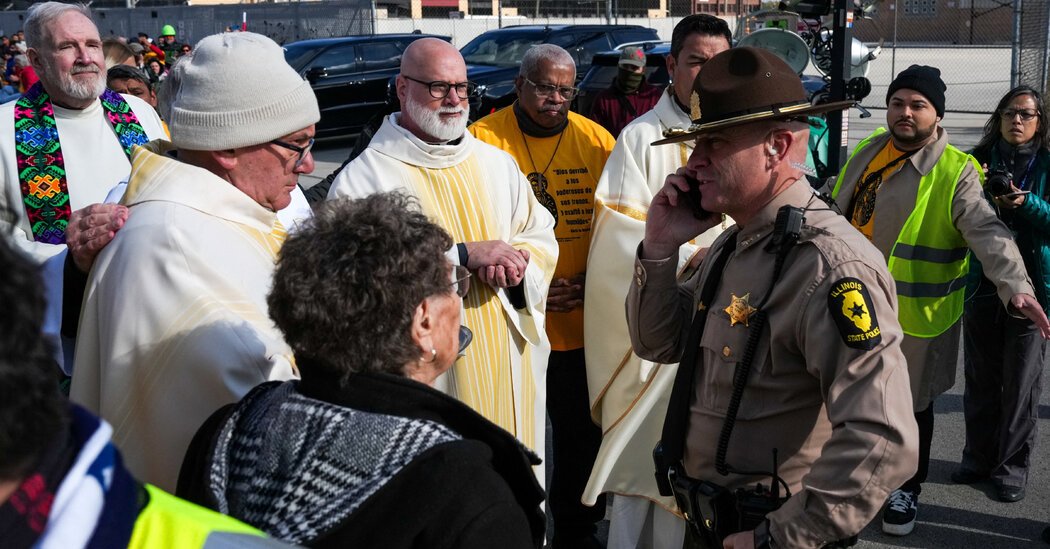
Catholic clergy members have secured the right to visit a Chicago-area immigration processing center to provide daily ministry and pastoral support to detainees, according to an agreement reached this week between a religious nonprofit group and the Trump administration.
The deal comes about six months after several Roman Catholic clergy members in an Illinois-based Catholic advocacy group, the Coalition for Spiritual and Public Leadership, filed a lawsuit accusing federal immigration authorities of unlawfully barring them from ministering to detainees at the Immigration and Customs Enforcement facility in Broadview, Ill.
The group said that Catholic nuns and clergy members had been visiting the facility every Friday morning for more than 10 years to offer prayer services. Blocking that access, they argued, violated their First Amendment rights and two federal laws, including one that prohibits the government from imposing a burden on the ability of a person in custody to exercise their religion.
“Spiritual care, pastoral care and accompaniment is critical, especially in the first few hours a person is detained,” Michael Nicolas Okinczyc-Cruz, the coalition’s executive director, said in a phone interview. “Those can be the most painful and frightening.”
The new agreement, filed on Thursday in the United States District Court for the Northern District of Illinois, states that members of the clergy can visit the facility to provide pastoral services every day between 8 a.m. and 11 a.m., or 1 p.m. and 4 p.m. Mr. Okinczyc-Cruz said he was hopeful that the agreement would be permanent.
Federal agents had begun rolling back clergy members’ access to the ICE facility last September as officers flooded the Chicago area as part of the Trump administration’s immigration crackdown.
Immigration authorities cited “safety and security concerns and the transitory nature” of the facility as reasons they had denied access, according to the lawsuit. The Department of Homeland Security did not immediately respond to a request for comment on Friday.
Paul Keller, a Catholic priest who visited the facility on Friday, said he was pleased that volunteers could come in every day to offer services to detainees who requested them. He said one priest spoke to an immigrant women for more than two hours on Friday.
“To my mind, it’s emergency room treatment,” he said. “Someone is there right when the trauma has happened to attend to the immediate emotional and spiritual wounds.”
Broadview was not the only ICE facility where faith leaders said they had been denied access. In Minneapolis, a group of clergy members also sued after being barred from a local ICE facility. And members of the clergy in Los Angeles also said they had been denied access to an ICE facility.
The issue garnered national and even international attention after the U.S. Conference of Catholic Bishops issued a rare statement last year rebuking the Trump administration’s deportation campaign, and lamenting the lack of access to pastoral care in detention centers.
Pope Leo XIV, the first pontiff from the United States, also told reporters last year that the authorities should allow pastoral workers to attend to the needs of detained migrants.
“Many times they’ve been separated from their families for a good amount of time,” he said. “No one knows what’s happening, but their own spiritual needs should be attended to.”
In February, a federal judge ordered the Trump administration to allow clergy members access to the Broadview facility on Ash Wednesday, which marks the beginning of Lent, the most sacred time of the year for the Roman Catholic Church.
The following month, the judge, Robert W. Gettleman, issued an order granting clergy members access from April 2 to 5, the final days of Holy Week and Easter.