dailynewsnblog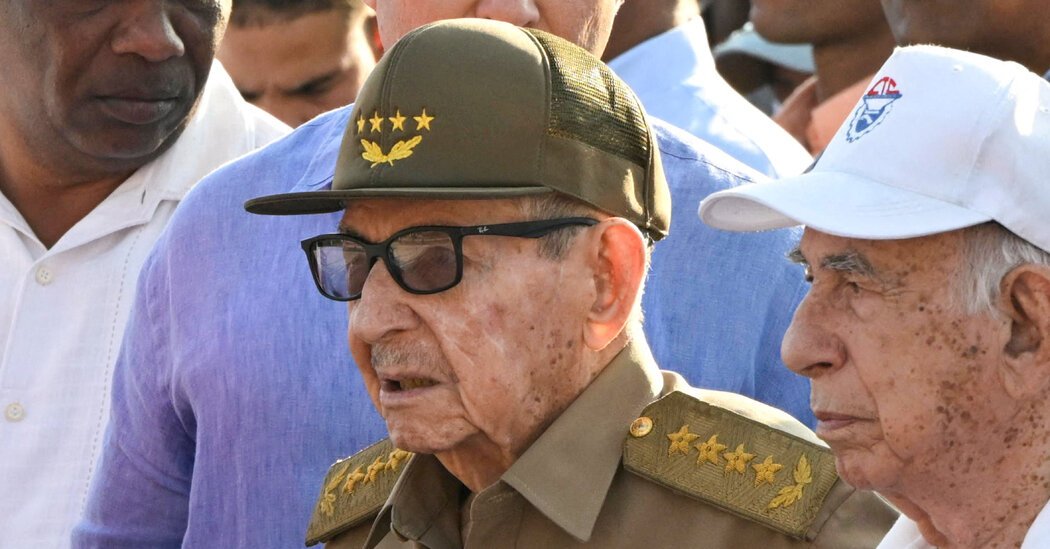
In the early 1990s, tens of thousands of Cubans were taking to the sea aboard rickety handmade rafts in a perilous quest for a new life in the United States. Pilots from Brothers to the Rescue, a Cuban American humanitarian aid group, made it their mission to save them.
On the afternoon of Feb. 24, 1996, eight volunteers left a small airport north of Miami aboard three Cessnas. Only one plane made it back.
The Cuban military scrambled MiG fighter jets and blew two of the planes out of the sky, killing four people, including three American citizens, and setting off international outcry. The MiG pilots were recorded on radio traffic rejoicing.
“They were pulverized in the sky in international airspace in broad daylight before the eyes of the world,” said Sylvia G. Iriondo, who was a passenger on the third plane. “It was a heinous crime committed against defenseless and unarmed small planes.”
The killings remain one of the most significant tragedies in the nearly 70-year history of the Cuban exile community in Miami. For three decades, Cuban American lawmakers, exile activists, survivors and family members of the victims have called for criminal indictments against Raúl Castro, who was Cuba’s defense minister at the time and later became president.
In what is perhaps the worst kept secret in South Florida, federal prosecutors in Miami are working toward securing an indictment of Mr. Castro, who is no longer president but remains a key decision maker in Cuba, according to several people familiar with the matter.
The number of defendants and the exact charges are still under discussion, but it could include drug trafficking charges and accusations connected to the ill-fated Cessnas, the people said.
A criminal case in an episode of such public heartbreak would raise the stakes in ongoing secret negotiations between the two countries and bring relief to Cuban Americans who have long sought justice.
“We’re looking forward to this,” Ms. Iriondo said.
Brothers to the Rescue was founded in 1991, during an extraordinary migration and economic crisis in Cuba. Cuba’s economy was in ruins after the collapse of the Soviet Union, and people were desperate to leave by any means possible.
In the summer of 1994, some 35,000 people fled aboard rafts, tires and any other ramshackle vessel, most of them barely seaworthy.
José Basulto, a pilot, former C.I.A. operative and veteran of the failed Bay of Pigs invasion, founded the Brothers to the Rescue. He raised millions of dollars to purchase small planes and regularly took flights over the Straits of Florida in search of people lost at sea. He would then summon help from the U.S. Coast Guard.
But migration agreements between the Clinton administration and Cuba’s communist government largely ended the rafter crisis. According to the accord, Cubans caught at sea would be turned back.
Brothers to the Rescue, the Cuban government has long asserted, ceased having a reason to exist.
The group turned to not just looking for migrants stranded at sea but sometimes to poking then-President Fidel Castro by flying over Cuba or even dropping leaflets containing excerpts from the U.N. universal declaration of human rights. In 1995, the Federal Aviation Administration announced that it was investigating the organization for violating Cuban air space.
Ms. Iriondo, who took her first flight with the group the day of the attack, said there were “certainly” no leaflets dropped that trip.
But to the Cuban government, Mr. Basulto was a provocateur and terrorist, firing a cannon from an offshore boat in 1962 at a Cuban hotel said to be frequented by Fidel Castro, he acknowledged under oath.
As a pilot, he had been warned not to cross the 24th parallel, a line about 40 to 60 miles north of Cuba’s coast. While still part of international waters and airspace, Cuba considers the area stretching to the line its defense zone. Cuban airspace extends 12 miles off its coast.
On the day the planes were shot down, Mr. Basulto had filed a flight plan with the F.A.A., planning a five-hour trip to the edge of that line.
He announced himself to Havana’s air traffic control, saying he would cross the 24th parallel and fly north of Havana for several hours. He sent warm greetings.
“Roger, sir,” Cuban air traffic control responded, according to transcripts later made public. “We inform you that the area north of Havana is activated. You are taking a risk by flying south of 24.”
At 2:58 p.m., Mr. Basulto responded: “We know that we are in danger each time we fly into the area south of 24, but we are ready to do so as free Cubans.”
At 3:20, Mr. Basulto remarked that it was a beautiful day. “Havana looks just fine from up here,” he said.
A minute later, Brothers to the Rescue pilots spotted fighter jets.
“They’re going to shoot at us?” Ms. Iriondo was recorded saying.
Without following customary protocols under international aviation conventions of issuing a direct warning of “imminent destruction” or escorting the civilian aircraft out of the area, the first plane was shot down at 3:21 p.m., 18 miles from Cuba’s shore, according to a report by the InterAmerican Commission on Human Rights.
Killed were Carlos A. Costa, 29, a pilot, and his passenger, Pablo Morales, 29.
Mr. Morales was a former Cuban rafter who himself had been saved by Brothers to the Rescue and went on to volunteer for the group. He was the only one of the four men killed who was not an American citizen.
Seven minutes later, the second plane was destroyed, more than 30 miles from Cuba’s shore.
The second plane had been piloted by Mario Manuel de la Peña, 24, who was in his last semester at Embry-Riddle Aeronautical University. His passenger, Armando Alejandre, 45, was a Vietnam veteran who worked as a consultant for a local transit authority.
The MiG pilots rejoiced. “Cojones, we got him!”
“This one won’t screw with us anymore,” the pilot said, according to the audio transcripts.
Mirta Mendez, Mr. Costa’s older sister, said she remembers warning her brother about the perils of working with Brothers to the Rescue, but her brother needed the flight hours to be certified as a pilot and enjoyed saving people, she said.
“I remember telling him, ‘listen, stop flying,’” Ms. Mendez, 69, who lives in a suburb of Miami, said. “His words to me were: “‘I am an American citizen. I do not break the law, and they cannot do anything to me.’”
The bodies of the four men were never found.
The Cuban government has long maintained that Brothers to the Rescue had plotted armed excursions into Cuba and that Mr. Basulto was a terrorist, which the organization has denied.
Cuba’s diplomatic mission had filed several complaints about the group with the U.S. State Department.
Cuban diplomats on Friday did not respond to messages seeking comment on the potential indictment of Mr. Castro.
“That organization had carried out premeditated acts, which were not civil in nature and which violated both international law and Cuba’s sovereignty,” Ricardo Alarcón, Cuba’s foreign minister at the time, told the United Nations shortly after the killings. “They were also related to very serious crimes against the Cuban people.”
He claimed people had used airplane models like the type used by Brothers to the Rescue to commit acts of sabotage, such as burning sugar cane fields and dropping “biological substances.”
Mr. Basulto could not be reached for comment Friday, but in an interview this year, he said U.S. prosecutors had all they needed to file charges against Mr. Castro.
“U.S. authorities have all the documentation, including radio transmissions between the MiG pilots who shot our airplanes,” said Mr. Basulto, now 85. “Bring Raúl Castro to court, bring him physically here.”
In 2003, a U.S. grand jury indicted two Cuban fighter pilots, who were brothers, and their commanding general on murder charges. The three men were never extradited.
In an interview on Cuban television shortly after the killings, one of the pilots, Lt. Col. Lorenzo Alberto Pérez, said he had dipped his wings to warn the planes, but since they did not respond, he followed orders and shot them down.
Prominent Cuban exiles had prodded federal officials for years to indict Mr. Castro.
“The community’s been asking for the last 30 years to get this done,” said Marcell Felipe, a wealthy businessman who chairs the American Museum of the Cuban Diaspora. “But there’s always a political reason why it doesn’t.”
Members of Congress wrote to the Department of Justice in February requesting it consider indicting Mr. Castro. The letter cited a news report of an audio recording of a conversation in which Mr. Castro could supposedly be heard discussing giving the orders to shoot down the aircrafts.
The families of the slain airmen sued the Cuban government in U.S. federal court, and in 1997 were awarded a $187.6 million judgment. The Treasury Department released some funds from frozen Cuban assets to make a partial payment.
Marlene Triana, Mr. Alejandre’s widow, said that she was reluctant to talk about a possible indictment before anything was made official.
“We’ve been talking about this for a long time now, and nothing ever actually happens,” she said.
“It’s about time someone finally had the guts to do it,” she added. “Miracles do happen, so let’s keep our hopes up.”
@Patricia Mazzei and David Adams contributed reporting from Miami.