dailynewsnblog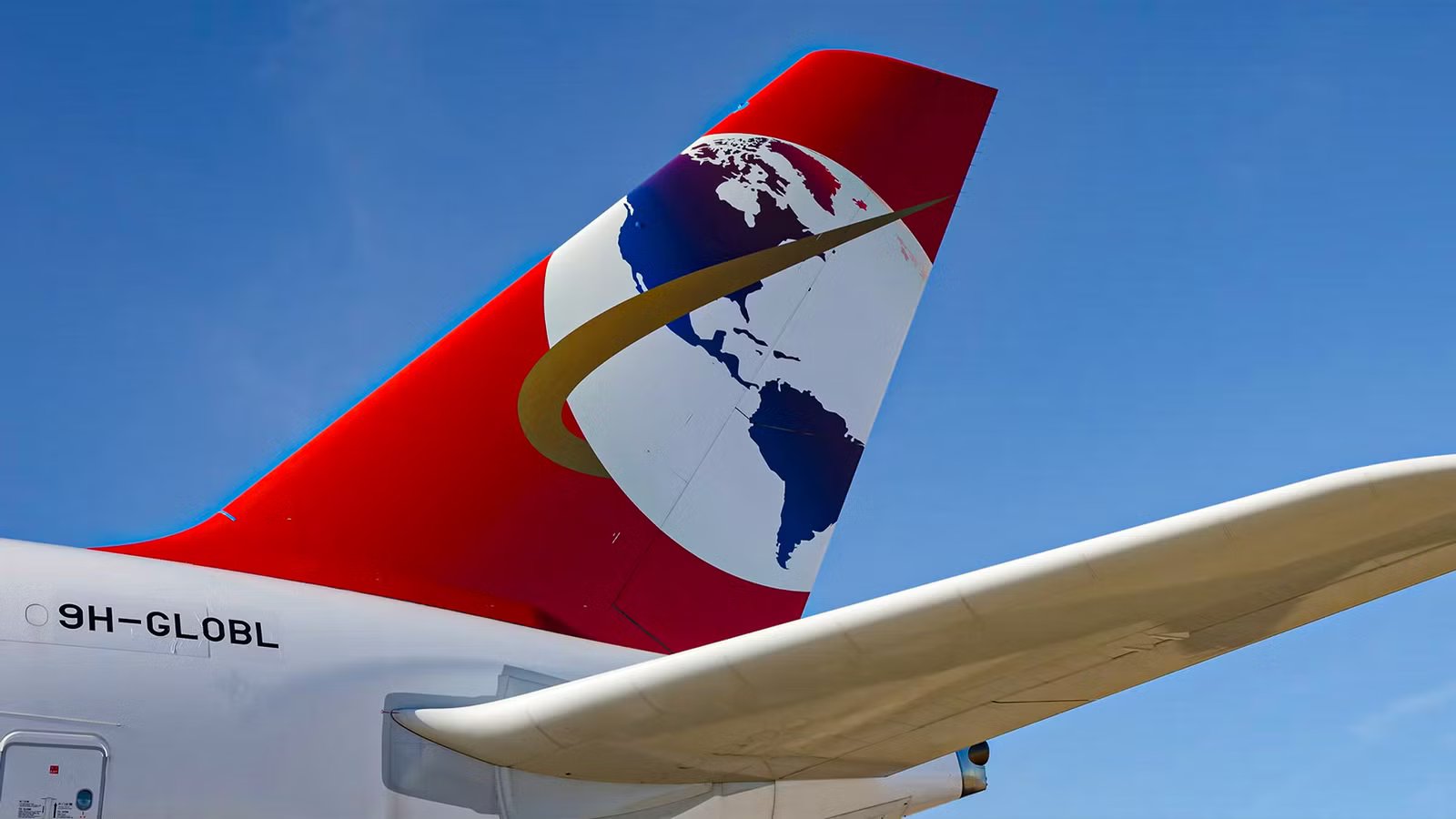
The Airbus A380 comeback story is as much about mechanical resilience as it is about economic audacity. Legacy carriers are returning A380s to service because they have no other choice, facing terminal slot constraints and chronic Boeing 777X delays. Meanwhile, a scrappy UK startup is voluntarily choosing the superjumbo as its launch aircraft. This raises a critical question for the industry: do the economics of the world’s largest passenger jet actually work for a newcomer, or is this the most expensive gamble in modern aviation?
The venture, spearheaded by Global Airlines, aims to bridge the Atlantic with a fleet of refurbished giants, targeting high-traffic routes between the United Kingdom and New York. Acquiring aircraft from desert storage rather than ordering new, more efficient twins, the airline is betting that the passenger experience and sheer volume of the A380 will outweigh its massive operating costs. As we enter 2026, this strategy stands in stark contrast to a global industry that has largely shifted toward smaller, more versatile aircraft.
Can 500 Seats Be Filled Consistently?

The acquisition of MSN 120, an 11-year-old airframe formerly operated by China Southern Airlines, is where the story of this ambitious venture begins. This specific aircraft had been languishing in desert storage since December 2022, a state that requires extensive mechanical rejuvenation before it can safely cross the Atlantic with passengers. The transition from the dry heat of California to the humid, high-cycle environment of transatlantic operations is a massive technical undertaking for a startup without a legacy maintenance infrastructure.
Bringing an aircraft of this scale back to life involves far more than a deep cleaning and a fresh coat of paint. Engineers must meticulously inspect every hydraulic line, seal, and avionics component that may have degraded during its time in storage. The A380 is a notoriously complex machine, and for a new airline like Global, the absence of a pre-existing spare parts inventory means every minor mechanical snag could lead to significant operational delays or the need to source components from the expensive secondary market.
The aircraft currently retains its original China Southern configuration, featuring a total of 506 seats divided across three classes. This high-density layout is a core part of the gamble, as the airline must consistently find a way to fill these seats on routes already saturated by established carriers. The sheer size of the A380 provides a unique marketing advantage for Global Airlines, but it also presents a daunting mathematical challenge of finding over 500 passengers for every single departure.
Making The Superjumbo Accessible?

Filling 506 seats on every departure is the economic factor that separates Global Airlines from its twin-engine competitors. A Boeing 787 or Airbus A350 can break even with significantly fewer passengers, whereas the four-engine A380 requires a massive volume of ticket sales just to cover the fuel burn of its quad-engine configuration. This reliance on high load factors makes the startup vulnerable to seasonal fluctuations in demand, particularly during the winter months when transatlantic leisure travel typically softens.
The competitive landscape between the United Kingdom and New York is one of the most crowded in the world, dominated by legacy carriers with deep loyalty programs and extensive hub networks. To compete, Global Airlines introduced an introductory economy fare of £778 ($1,053) for a return trip, attempting to undercut the pricing of established giants like  British Airways and Virgin Atlantic. However, maintaining this price point while operating an aircraft that consumes nearly twice the fuel of a modern twin-jet requires an aggressive volume strategy that leaves very little room for error in daily operations.
The presence of the A380 at New York JFK is not a new phenomenon, but the arrival of a new entrant using the type shifts the market dynamic. In 2026, JFK remains a fortress for the superjumbo, hosting 1,757 scheduled A380 flights throughout the year. For Global Airlines, success depends on whether travelers will choose the nostalgia and space of the double-decker over the frequency and flexibility offered by airlines running ten or more daily flights with smaller aircraft.
Back From The Desert: How 190 Airbus A380s Became Airlines’ Most Valuable Asset In 2026
This is why some airlines still love the Airbus A380 in 2026, despite production ending years ago.
Stepping Into A New Role

The decision to utilize the A380 is a response to the extreme slot constraints at major international hubs that have plagued many airline networks globally. At an airport like  New York JFK, where landing windows are strictly rationed and nearly impossible to acquire, an airline must maximize the number of passengers it carries on every single departure. Using a 506-seat aircraft, Global Airlines can transport the same number of travelers in a single flight that would otherwise require two or three departures with smaller narrowbody jets, helping the startup win the capacity battle within a single slot.
This strategy is further supported by the ongoing delays in the Boeing 777X program, which have forced the entire industry to rethink its retirement schedules. At present, the 777X, the only twin-engine jet capable of approaching A380 capacity, is not expected to enter widespread service until 2027, so for now, there is a temporary vacuum in the high-capacity market. Global Airlines is stepping into this gap with both feet, utilizing airframes that were discarded by other carriers to provide a level of capacity that legacy airlines are currently struggling to maintain with their aging fleets.
Focusing initially on Glasgow and Manchester before expanding to London Gatwick, the startup is targeting a segment of the market that has often been overlooked by the London-centric legacy carriers. These regional airports offer a lower cost base and a passenger demographic that is highly sensitive to direct flights, potentially allowing the A380 to thrive outside the intense slot battles at Heathrow. If the airline can prove that the A380 can turn a profit from northern hubs, it may provide a blueprint for other niche carriers to utilize the superjumbo in a post-777X world.
Nowhere Near As Efficient As Others

Keeping a four-engine aircraft in service is becoming increasingly difficult to justify as the 2026 jet fuel crisis continues to drive prices to record highs. An Airbus A380 consumes nearly twice as much fuel as the Airbus A350-1000 on the same route, so for a startup like Global Airlines, which lacks the hedging power and bulk-fuel contracts of a legacy carrier, this creates a high-pressure environment where every empty seat in the 506-seat cabin represents a direct financial drain.
Recent data from the 2026 energy market suggests that fuel now accounts for 20-40% of a flight’s operating costs. Naturally, this spike puts immense pressure on Global’s business model, which relies on offering competitive fares while maintaining a four-engine fleet. The sheer physics of the A380 remains an expensive constant in their financial ledger, something inescapable despite the grandeur of the project.
The airline’s acquisition of an 11-year-old frame from China Southern allowed for a lower initial capital outlay, but the higher maintenance costs associated with older airframes are now coming due. The superjumbo’s unique wet systems and quadruple Rolls-Royce Trent 900 engines require a level of technical oversight rare outside the world’s largest maintenance facilities. With daily services expected, the stability of global energy prices will likely determine whether this risky bet pays off or becomes a case study for future startups to learn from.
Simple Flying Quiz
Easy (15s)Medium (10s)Hard (5s)
Making The Flight The Destination

WIth intense competition for slots at Heathrow, where legacy carriers like British Airways have spent decades consolidating their grip on the New York corridor, Global Airlines has looked elsewhere. Focusing on northern hubs, Global is betting on a leisure-first demand profile, capturing travelers who would otherwise have to transit through London or Amsterdam.
The regional strategy here allows the airline to differentiate itself by offering a direct, high-capacity link to New York JFK without the overhead costs of a major London operation. In early 2026, the airline slashed its introductory economy fares for return trips during a flash sale, a move that successfully filled the initial proof-of-concept flights.
Price is the natural driver for leisure travelers, but the experience of flying on an A380 provides a secondary marketing hook that smaller jets lack. Global Airlines is leaning into this, promising a return to the ‘Golden Age of Travel’ with elevated service and champagne for all classes. Making the flight itself to the destination, they hope to bypass the commodity-driven price wars that typically define the transatlantic market, though doing so at scale remains a monumental task.
Now Is The Right Time?

As of May 2026, the persistent supply chain issues affecting the production of new long-haul jets have created a capacity gap that only the superjumbo can fill. For Global Airlines, the risk isn’t just in the fuel burn or the maintenance costs, but also in the timing, as they race to establish a loyal customer base before the next generation of more efficient aircraft finally arrives in large numbers.
Where Global Airlines is making a real statement is its view that the A380 is no longer just a legacy aircraft, but a strategic tool for market entry. Bypassing the traditional route of starting with smaller planes and slowly scaling up, Global Airlines has achieved instant brand recognition and a significant capacity advantage.
The survival of this business model will likely depend on whether Global Airlines can successfully secure its own Air Operator Certificate (AOC) and move away from its current reliance on ACMI partners. If the reported interest from Saudi investment funds materializes, the airline could see a massive infusion of capital that would allow it to expand its fleet to the four aircraft originally envisioned.