dailynewsnblog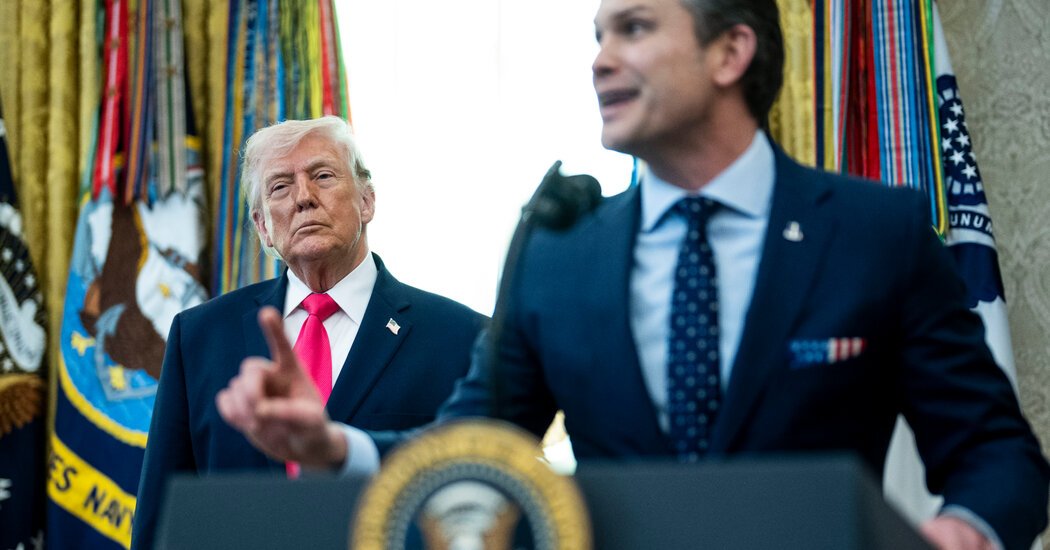
President Trump returned from China on Friday facing major decisions on Iran, as his top aides have drafted plans for a return to military strikes if Mr. Trump decides to try to break the impasse with more bombs.
Mr. Trump has yet to make a decision on his next steps, the aides say. Officials from interested countries have been trying to patch together a compromise that would prompt Iran to reopen the Strait of Hormuz and allow Mr. Trump to declare victory and try to convince skeptical American voters that the expensive and deadly military foray into Iran was a success.
But Mr. Trump reiterated to reporters aboard Air Force One soon after he left Beijing on Friday that Iran’s latest peace offer was unacceptable.
“I looked at it, and if I don’t like the first sentence I just throw it away,” he said.
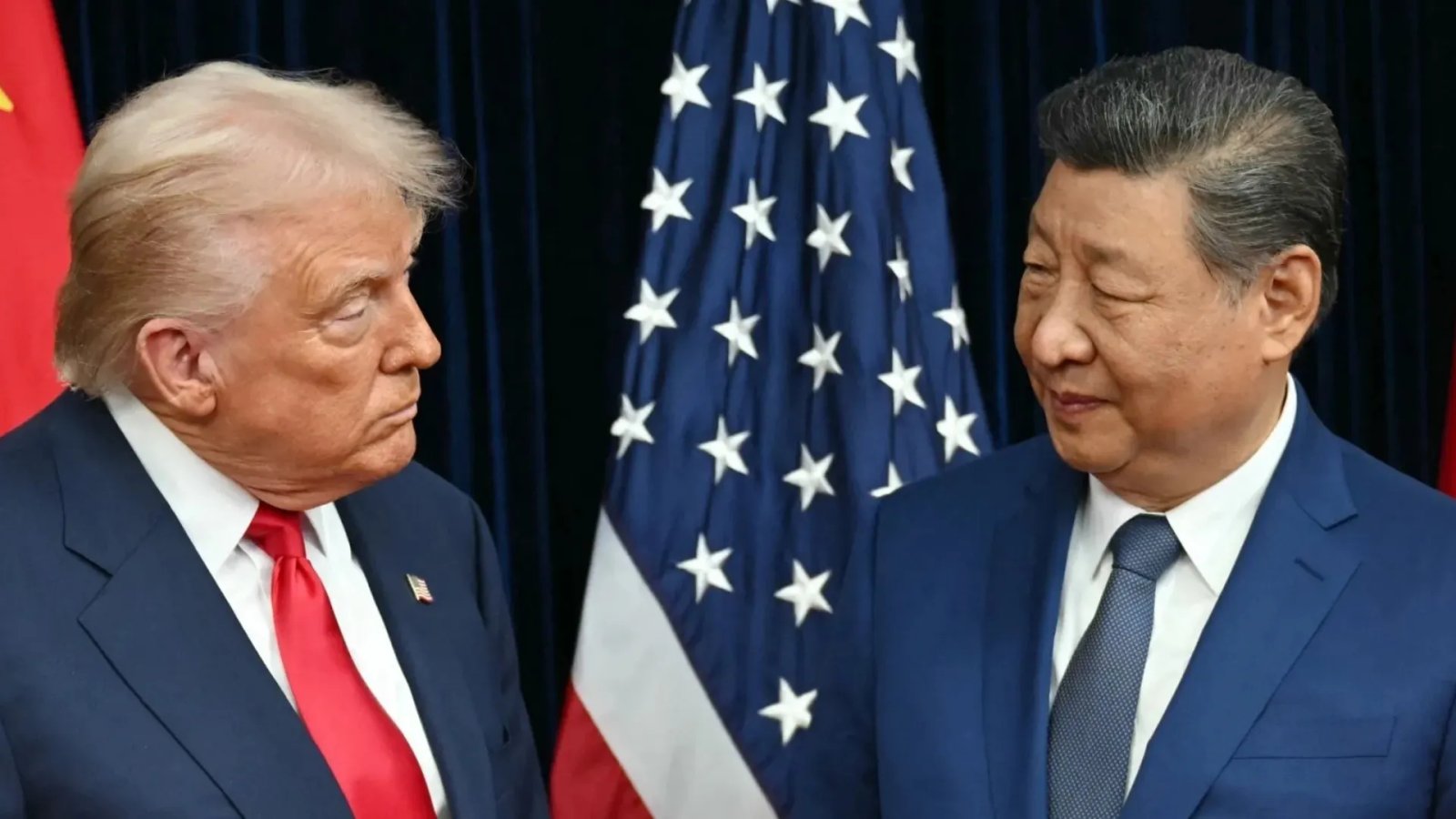
Mr. Trump said he discussed Iran with President Xi Jinping of China, a strategic partner of Tehran that depends on oil and gas shipped through the strait. But he said he did not ask Mr. Xi to pressure Iran, and full details of their discussions have not yet emerged.
Mr. Trump faces cross currents on the war. Although it has become a political liability for him and he has often seemed eager to move on, the president has not achieved what he has often presented as the war’s ultimate goal: preventing Iran from ever obtaining a nuclear weapon.
The Pentagon is planning for the possibility that Operation Epic Fury — which was paused when the president declared a cease-fire last month — will pick up again in the coming days, even if under a new name.
“We have a plan to escalate if necessary,” Defense Secretary Pete Hegseth told lawmakers during congressional testimony this week. Mr. Hegseth also said there are plans to pack up and go home, returning the surge of more than 50,000 troops assigned to the Middle East now to more standard deployments.
Two Middle East officials, who spoke on condition of anonymity to discuss operational matters, said the United States and Israel are engaged in intense preparations — the largest since the cease-fire took effect — for the possible resumption of attacks against Iran as early as next week.
“They’re either going to make a deal or they’re going to be decimated,” Mr. Trump said on Tuesday before leaving for China. “So, one way or another, we win.”
If Mr. Trump decides to resume military strikes, options include more aggressive bombing runs at Iranian military and infrastructure targets, U.S. officials said.
Another option would put Special Operations troops on the ground to go after nuclear material buried deep underground, they said. Several hundred Special Operations forces arrived in the Middle East in March in a deployment meant to give Mr. Trump that option, the officials said.
As specialized ground troops, they could be used in a mission aimed at Iran’s highly enriched uranium at the Isfahan nuclear site. But such an operation would also need thousands of support troops, who would likely form a security perimeter and could be drawn into combat with Iranian troops.
That option, military officials acknowledged, would come with big risks of casualties.
Iranian officials have already said that they are preparing for a return to hostilities.
“Our armed forces are ready to deliver a well-deserved response to any aggression; mistaken strategy and mistaken decisions will always lead to mistaken results,” Mohammad Bagher Ghalibaf, the speaker of Iran’s Parliament, posted on social media on Monday. “The whole world has already figured this out. We are prepared for all options; they will be surprised.”
Any renewed attack on Iran would likely pick up where the fighting left off before Iran and the United States reached an 11th-hour cease-fire on April 7. In the run-up to that agreement, Mr. Trump had threatened to start wiping out Iran’s “whole civilization” if it did not allow commercial shipping to pass safely through the Strait of Hormuz.
The president had for days vowed to order the U.S. military to systematically destroy every bridge and power plant in Iran if its government did not reopen the Strait of Hormuz to oil tankers. U.S. military officials said the targets picked out had a direct link to operations of Iran’s Islamic Revolutionary Guards Corps. But the laws of war forbid the deliberate destruction of civilian infrastructure as a means of coercing a government.
Since the cease-fire began, top Pentagon officials and military leaders have said the United States has used the monthlong bombing hiatus to rearm their warships and attack planes in the region.
Gen. Dan Caine, the chairman of the Joint Chiefs of Staff, told a Senate defense subcommittee this week that military officials “retain and continue to hold a range of options for our civilian leaders.” He declined to divulge what potential military action Mr. Trump could order.
At a Pentagon briefing on May 5, General Caine said that more than 50,000 troops, two aircraft carriers, more than a dozen Navy destroyers and scores of warplanes “remain ready to resume major combat operations against Iran if ordered to do so. No adversary should mistake our current restraint with a lack of resolve.”
But military officials acknowledge privately that winning may be a tall order. The U.S. military, they say, has done a good job of hitting targets it assigned itself, including Iranian ballistic missile launch sites, Islamic Revolutionary Guards Corp munitions depots and other military infrastructure placements. But Iran has regained access to most of its missile sites, launchers and underground facilities, according to U.S. intelligence agencies.
Iran has also restored operational access to 30 of the 33 missile sites it maintains along the Strait of Hormuz, which could threaten American warships and oil tankers transiting the narrow waterway, The New York Times reported this week.
Some 5,000 Marines and around 2,000 paratroops with the Army’s elite 82nd Airborne Division are in the region awaiting instructions, officials said. These troops could be used in an effort at getting to Iran’s nuclear material at its Isfahan atomic site, including securing the perimeter to try to protect the special operators tasked with going in, if such an operation was greenlit, military officials said.
The troops could also be used in an effort to take Kharg Island, a hub of Iranian oil exports, though the military would need more boots on the ground to hold it, officials said.
Ronen Bergman contributed reporting from Tel Aviv.