dailynewsnblog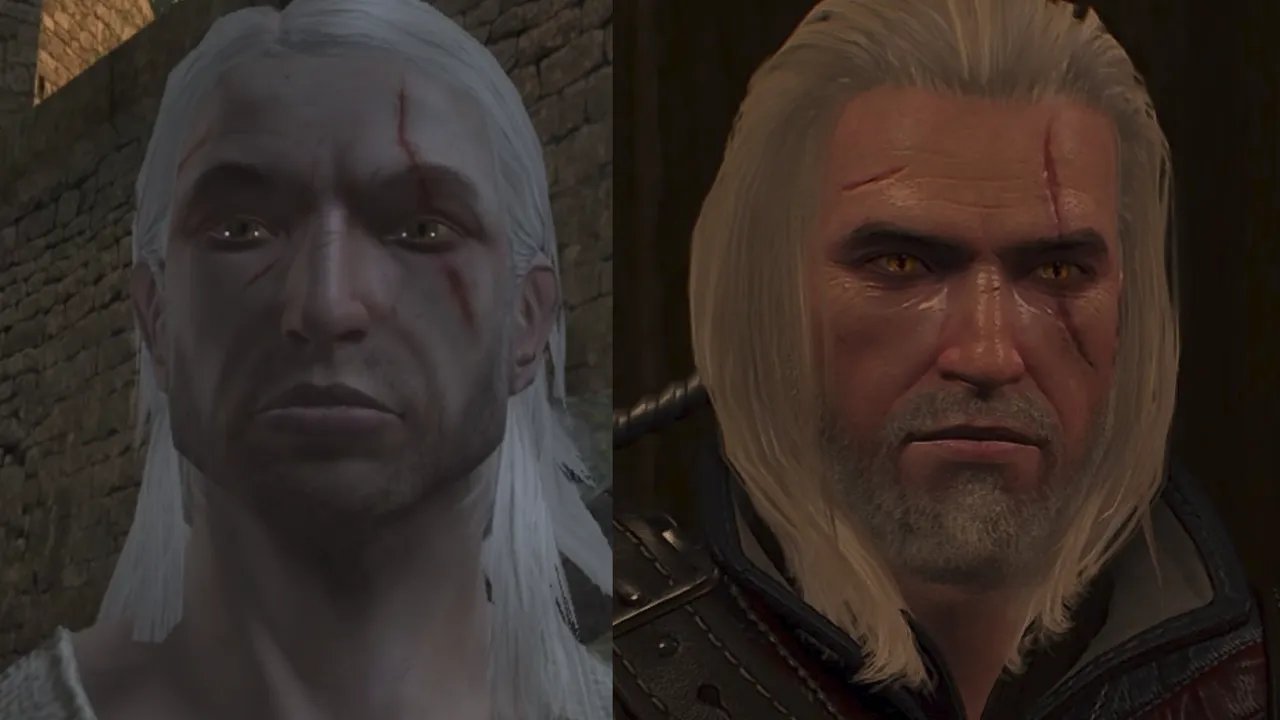
Nostalgia is a strong motivator for today’s generation of gamers, and that’s something developers have tapped into over the last few years, with waves of remasters and sequels being released across classic titles. These returns to familiar settings and worlds emphasise how today’s games have pushed graphics beyond the limits of what we once thought possible… but can that polish compete with the magic of jumping into a fresh world for the first time?
To test this firsthand, we booted up some legendary games – as well as their current counterparts – to see how well the originals hold up, and to determine how far the series have come graphically since they first hit the market.
Getting stuck in with graphics
To experience the newer games in all their hi-fidelity glory, we utilised an Ultimate Tier GeForce NOW subscription. This service provides the performance of a high-spec gaming setup over just an internet connection – whether you’re playing on a laptop, phone, Smart TV or Steam Deck – by sending your inputs to NVIDIA’s data centres to be reflected in the game.
After a quick account setup and app download, we were given access to an RTX 5080 Superpod, which we were assured would be able to handle whatever graphical settings we threw at it. It was then time to select our games, old and new. GeForce NOW boasts a huge library of titles, with more than 2000 of them Ready-to-Play instantly, and a further 2000+ apps and games available with a brief installation on the NVIDIA server side.
The Witcher
First up, we revisited The Witcher, which arguably redefined the RPG genre by introducing dialogue options that had real implications for the fates of characters. Diving back into Kaer Morhen activated long-dormant neurons, and the familiar clanky animation and far-too-sensitive movement sparked too many fond memories of our early days with Geralt to count. However, after fighting back against the forces attacking the Witchers’ keep, switching over to The Witcher 3: Wild Hunt was a revelation.

Obviously the textures looked far better, happily sitting around 115 FPS at 1080p in the Ray Tracing Ultra setting on the RTX 5080. This meant DLSS was enabled in the quality preset, with all settings cranked to Ultra+. What really stood out to us was the improvements to character animations — rather than snapping between positions, characters breathed and shifted in a way that made them feel more alive. Close-up shots during dialogue showed the tiny details in clothing textures and the subtle movements of hair, all assisted by RTX ray-traced lighting to increase the immersion.
Battlefield – 4 vs 6
Next, we turned to an FPS giant and 2013 staple: Battlefield 4. After maxing-out the graphics settings, we loaded into a random conquest server to see how it held up. Playing on a 4080-grade GeForce NOW pod, we hit over 200 FPS and enjoyed smooth gunplay across beloved locations like Siege of Shanghai.
But swapping over to Battlefield 6, we quickly realised how much things have changed in the space of a decade. After spending a good five minutes just trying to avoid sniper rounds, we took this still that really demonstrates how far graphical fidelity has come. The detail on the trees, even from afar, is excellent, and the terrain textures feel far more organic and real. On max settings with a 5080 SuperPod, we enjoyed a consistent 120 FPS capped, and far beyond this when uncapped. And if you want even more frames to play with, Battlefield 6 also has the benefit of Multi Frame Generation with DLSS 4.5.
Oblivion – Original vs Remastered
Finally, we returned to the original Oblivion, and were immediately transported back to a simpler time where our biggest worries were trying to get out of a torchlit virtual prison. While the art direction is charming – and when streaming, we actually achieved consistently high FPS throughout – the original Oblivion is definitely a product of its time. On a technical level, it feels more than a little out of date by today’s standards.
Loading up the same scene in the Remaster with everything maxed out, it was immediately apparent how much work had gone into the upgrade. Improved lighting, fresh character models, and world details like the crooked stone walls all contribute to creating a much more realistic, moody and grounded atmosphere. Ray-tracing at 1440p did see us fall slightly under our 120 FPS target, but enabling 2x Frame Generation then provided a seamless performance boost without sacrificing responsiveness.
If you’d like to try out GeForce NOW for yourself, be it to revisit your favourite classics or jump into their shiny reimaginings, you can sign up for a Free account or Day Pass and give it a go without committing to a full subscription. All you need is a compatible device and a 25 Mbps download speed for 1080p at 60 FPS.
You can access NVIDIA’s GeForce NOW from the GeForce NOW website or the Play Store, depending on your device. System requirements and recommended internet download speeds can be found here.