dailynewsnblog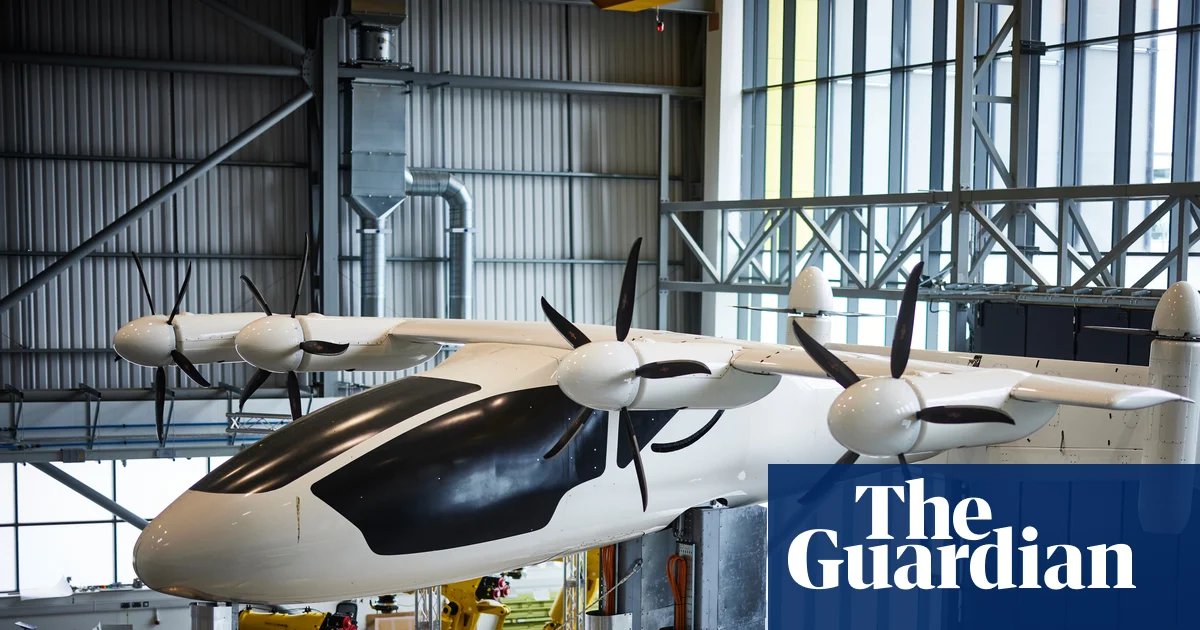
The announcement that King’s College London is to absorb Cranfield University came as a surprise but not a shock to England’s higher education leaders, who have been braced for sudden announcements about job cuts and course closures.
But for staff and students at both institutions the news will have come as a shock, particularly at Cranfield, the smaller, highly focused postgraduate technology and management college that has its own airport.
Like many other UK universities in recent years, Cranfield has suffered financially, buffeted by changes in funding, taxation and immigration. In 2024-25 it reported a deficit of £8m before tax, compared with a £29m surplus the year before, which it blamed on a significant decline in international student recruitment.
Prof Dame Karen Holford, Cranfield’s vice-chancellor, said she expected the combined university to grow as a result of the merger, helped by a boost in international league tables from totalling up KCL and Cranfield’s research output.
“There’s no doubt the higher education sector is facing enormous challenges, that’s for sure … it’s just been wave after wave of financial hits due to government policy,” Holford said, noting changes to the international student visa rules and higher national insurance staff costs.
“At Cranfield we’re a postgraduate specialist institution, so we were hit very hard early on by the removal of [international students’] dependants visas, but we took action straight away. When you are a postgraduate institution, you have to recruit every year, there’s not that three-year cycle or cushion as with undergraduate courses, so we had to act quickly, we reshaped, we cut courses. So this merger is not predicated on further financial restructuring or job losses or anything like that. It’s actually a merger for growth.”
Holford said she understood why – in a financial climate where Russell Group universities such as Edinburgh and Nottingham are making big cuts in jobs and courses – staff may be nervous. But she argued that King’s and Cranfield had complementary strengths.
“Everywhere you look across the two institutions, we do things that they don’t, and they do things that we don’t. They are very policy focused, whereas we’re focused on industry. We’ve got world-renowned expertise in technology, in engineering and management, and longstanding partnerships with industry. They’ve got the interdisciplinary breadth and depth, and the global reach, and so we realised that together we could be more than the sum of our parts,” Holford said.
Because of its size and lack of undergraduates, Cranfield does not appear in most international league tables, while King’s ranks 31st in the influential QS world university rankings. A provisional ranking for a combined KCL-Cranfield projects it to be 21st, close to Yale University.
Prof Shitij Kapur, who will remain vice-chancellor of the combined King’s College London once the merger is completed, said current and incoming students would see no immediate changes.
“This is part of a journey which, if all goes well, will result in a merger in 2027, so things continue exactly as they are, perhaps with positive anticipation for King’s and Cranfield’s incoming students,” Kapur said.
“These things happen in stages – because of the regulatory environment, we have to be very clear to students what they are getting almost nine to 18 months before they get it, so we will be very careful and cautious about that. But we can naturally expect that in the first year or so there will be enhancement to [students’] experience with the possibility of new resources and facilities.
“It will be staged and programmed; students will absolutely know what they are getting well ahead of any change being made. For now, for students, it’s business as usual, with positive anticipation, and then in a programmed fashion more interdisciplinary options.”
Kapur noted that King’s already had five campuses in London, including its home on the Strand, and that Cranfield’s sites would allow King’s the chance to grow physically in key disciplines.
“When you are a university in historic buildings in the middle of London, next to the best art galleries in the world, there are limits to what you can do in engineering and technology,” he said. “Our space may be limited but our ambition for the future is not.”