dailynewsnblog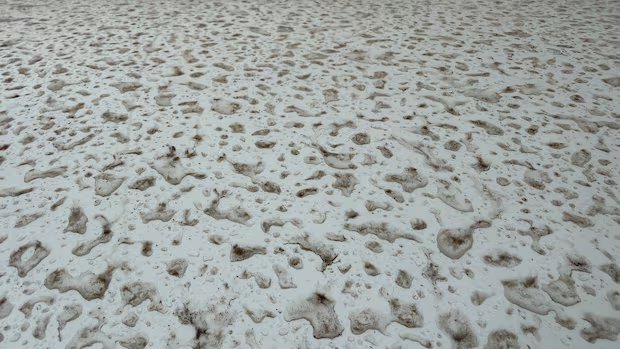

Listen to this article
Estimated 3 minutes
The audio version of this article is generated by AI-based technology. Mispronunciations can occur. We are working with our partners to continually review and improve the results.
If you were hoping for rain to wash away the post-winter grit and grime, you might be confused after the storm that just rolled through southern Manitoba.
Instead of drops of clear water, Thursday’s storm brought showers of dark, mucky rain that left parked vehicles looking like they had just driven down a dirt road.
Environment Canada issued blowing dust and wind warnings for large parts of southern Manitoba, and Saskatchewan, Thursday afternoon.
The national weather agency said blowing dust was expected to last most of the day until the wind dies down later Thursday evening.
Strong winds out of the west, with gusts up to 90 kilometres per hour, are expected to reduce visibility in some locations and cause poor air quality.

Dirty rain is caused when winds whip dust up into the air, where it mixes with rain before falling back down to the ground, University of Manitoba climatologist Alex Crawford said.
“That might be in the cloud itself. It might be as the raindrops are falling down and kind of intercept that dust on the way down,” he said in an interview on CBC Manitoba’s afternoon radio show Up to Speed with host Chloe Friesen.
“And then that splashes on your car, on your house, on anything else, any other surface that might be outside, and when that rain eventually evaporates, it’s going to leave behind that dust.”

Atmospheric pressure is one way climatologists measure the strength of a storm, with lower pressure correlating with stronger storms, Crawford said.
Thursday’s storm had a pressure of 981 hectopascals, which he said is lower than about 90 per cent of the storms Winnipeg sees around this time of year.
Although strong winds are a necessary component for dirty rain, Crawford doesn’t believe that is the main cause of Thursday’s storm. Using a weather tracking app called Windy, Crawford said he could follow the wind patterns from Wyoming to Winnipeg.

“If you look south of the border, the entire western United States has been in a drought for a while now,” particularly in places such as eastern Wyoming and western Nebraska, he said.
“And the storm we had coming through was so big that it was able to funnel some of that dust cloud all the way up here to Winnipeg.”
Although dust in the air can cause problems for some people, particularly those with breathing problems, Crawford said dirty rain doesn’t pose any significant risk.
“It’s no more dangerous than if you have dust in the atmosphere normally,” he said.