dailynewsnblog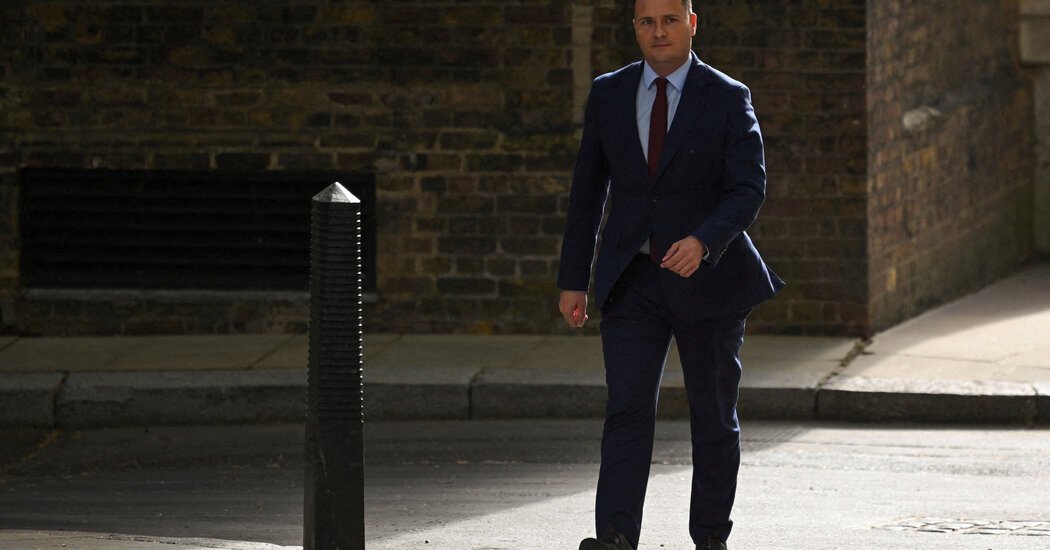
The day began in Britain with Prime Minister Keir Starmer in serious political peril, facing the likelihood that Wes Streeting, his health secretary, would resign and challenge him for the leadership of the Labour Party, and the country.
Mr. Streeting did resign, but by Thursday evening, the political momentum had shifted to another rival altogether.
Andy Burnham, a popular mayor of Greater Manchester, announced that he would run in a special election for a seat in Parliament. If he wins, Mr. Burnham is expected to try to oust Mr. Starmer from No. 10 Downing Street.
“Much bigger change is needed at a national level if everyday life is to be made more affordable again.,” Mr. Burnham said on X. “This is why I now seek people’s support to return to Parliament: to bring the change we have brought to Greater Manchester to the whole of the UK and make politics work properly for people.”
Together, the moves by Mr. Streeting, who is to Mr. Starmer’s right, and Mr. Burnham, to his left, were the most significant declarations of no-confidence in the prime minister since the party was plunged into turmoil one week ago by devastating losses in elections across the country. Close to 100 Labour lawmakers and several junior government ministers have called on Mr. Starmer to step aside.
But the timeline for any contest appears to have lengthened. Mr. Streeting did not announce an immediate leadership challenge, suggesting that he had not yet gathered enough support from his colleagues — he would need the endorsement of 81 Labour lawmakers — to trigger a contest.
And there was another twist. Angela Rayner, who served as Mr. Starmer’s deputy prime minister and is seen as a third possible rival, said she had been cleared of any wrongdoing after she failed to pay the correct tax rate on an apartment.
All three had searing criticism of the prime minister.
“Where we need vision, we have a vacuum. Where we need direction, we have drift,” Mr. Streeting wrote in his resignation letter, which he posted to X. “The heavy-handed approach to dissenting voices diminishes our politics.”
Mr. Streeting called for a wide-ranging debate inside the party to replace Mr. Starmer, who is 22 months into a five-year term in office. Mr. Streeting said a leadership contest should be a “battle of ideas, not personalities or petty factionalism,” and that a wide range of candidates should participate.
He said his record as health secretary offered reasons to stay in his post, but, addressing Mr. Starmer, added that “having lost confidence in your leadership, I have concluded that it would be dishonorable and unprincipled to do so.”
In a letter released by the prime minister’s office Thursday afternoon, Mr. Starmer thanked Mr. Streeting for his service but did not address the possibility of a leadership challenge that could pit the men against each other. Instead, Mr. Starmer focused on his rivals in other parties.
“Our opponents are more dangerous than ever before. They are a real threat to the values we care about,” he said, adding that “it is incumbent on all of us to rise to what I see as a battle for the soul of our nation” and to “turn the page on the chaos that was roundly rejected by the British people at the last general election.”
Mr. Streeting’s actions escalated months of rising doubts about Mr. Starmer’s leadership into a political crisis for the prime minister and his team. On Tuesday, the prime minister had vowed to fight any challenge to his leadership and dared rivals in his cabinet to run against him if they had the nerve to do so.
Under the party’s rules, a challenger needs the endorsement of 20 percent of all Labour members of Parliament, which equates to 81 Labour lawmakers at present.
In his resignation letter, Mr. Streeting hinted that he expected a leadership contest to take place, but did not say he had the support for it to happen.
“It is now clear that you will not lead the Labour Party into the next general election,” he wrote. He said a party contest to change prime ministers “needs to be broad, and it needs the best possible field of candidates. I support that approach and I hope that you will facilitate this.”
His reference to the “best possible field of candidates” was seen by many political observers as a reference to Mr. Burnham.
On Thursday evening, Josh Simons, a Labour member of Parliament, said he was giving up his seat to make way for Mr. Burnham. Party rules say leadership candidates must be members of Parliament, which means that the mayor would have to run in a special election and win, a process that could take weeks or months.
Mr. Burnham quickly said he would run for the seat vacated by Mr. Simons, though he did not explicitly say he would challenge the prime minister if he was elected.
Other rivals inside the party could also jump into a contest.
Al Carns, a former marine who is now in Parliament and is viewed as another possible candidate, wrote in The New Statesman on Thursday that “we do not need more slogans, strategies, press releases or commissions. We need action.”
Ms. Rayner is a popular politician on the left of the Labour Party and has been viewed in the past as a possible leadership candidate. But she has not said directly that she intends to challenge Mr. Starmer and she voiced her support for Mr. Burnham earlier this week.
In a statement after the party’s dire election results last week, she said that “Labour exists to make working people better off. That is not happening fast enough, and it needs to change — now.”
On another day, the Labour Party might have been celebrating a spate of good news: Ms. Rayner’s announcement that she had been cleared of wrongdoing; data showing the party’s target to cut waiting times in the National Health Service had been met; and figures showing the British economy had grown faster than expected — albeit it from a low base.
But the possibility of a leadership clash once again plunged the Labour Party into a place they assured voters they would not be — a chaotic power struggle of the kind that consumed the Conservative Party for its final years in power.
When he was elected in the summer of 2024, Mr. Starmer promised stability and calm.
But saddled by a sluggish economy, the prime minister flip-flopped on a series of policy approaches, earning a reputation for weakness and indecision. He was fiercely criticized for months for appointing Peter Mandelson to be ambassador to the United States despite knowing of Mr. Mandelson’s relationship with Jeffrey Epstein, the convicted sex offender.
It was last week’s elections that accelerated the political crisis for the prime minister. Labour candidates were defeated in local municipal elections across England and were trounced in contests for the devolved parliaments in Scotland and Wales. Taken together, it was the worst set of local elections for Labour in more than 100 years.