dailynewsnblog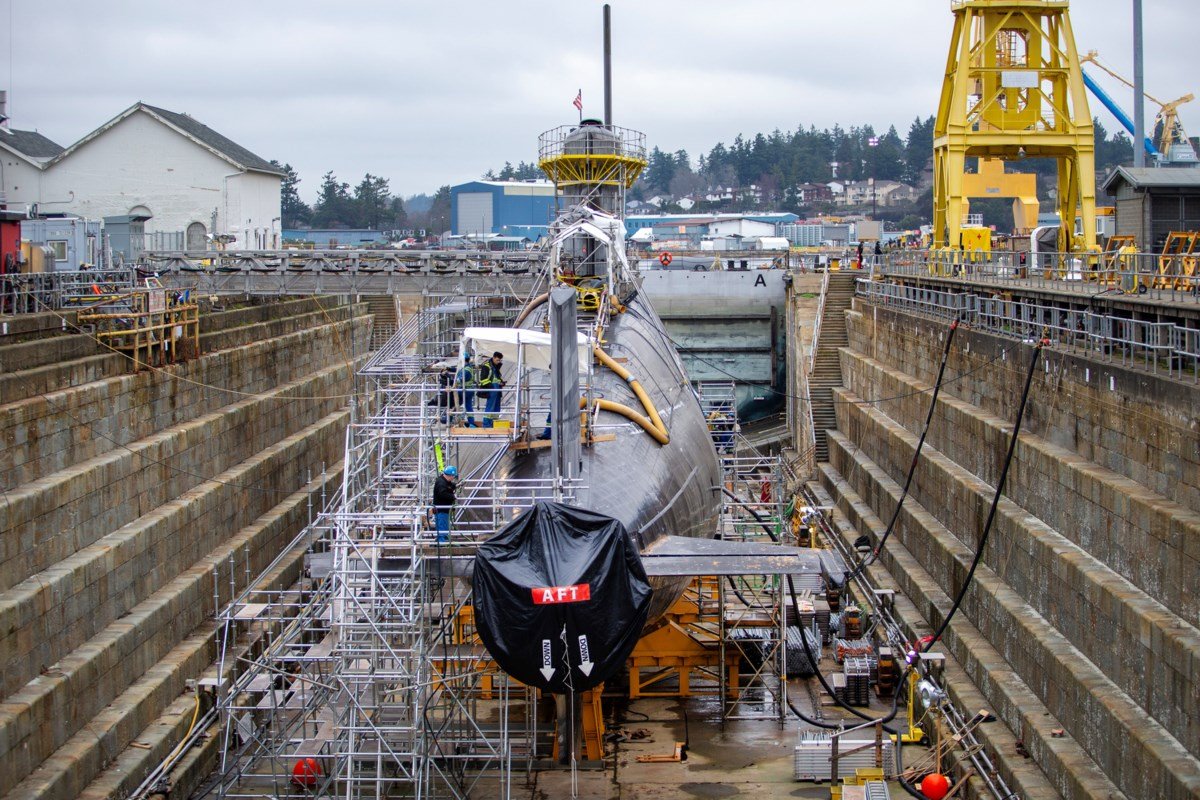
West Coast industry’s role in submarine supply chain set to deepen with major fleet expansion
B.C. companies are preparing for decades of new work as Ottawa moves closer to selecting a supplier for Canada’s next submarine fleet.
Canada has announced plans to purchase up to 12 “conventionally powered, under-ice capable” submarines to replace its aging Victoria-class fleet. The federal government is expected to select a winning bid this summer from finalists in Germany and South Korea.
The deal is expected to boost not only the Canadian navy, but also B.C. companies involved in submarine repair, sustainment and specialized marine manufacturing, according to industry experts.
“We’re the only shipyard in Canada that does the deeper maintenance and repair and overhaul for submarines today,” said Dave Hargreaves, senior vice-president of strategy, business development and communications for North Vancouver-based Seaspan ULC.
“It’s very exciting for the navy, for us and for everybody that there’s going to be this submarine fleet that is new and very capable.”
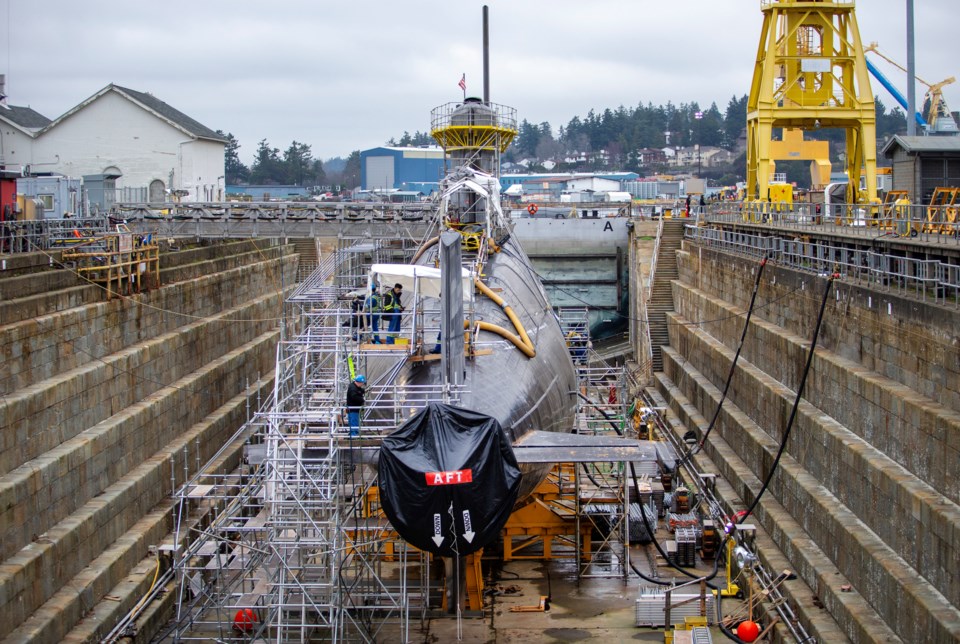
While B.C. does not manufacture submarines, it is home to the primary maintenance hub for Canada’s submarine fleet. When Canada’s four serving Victoria-class submarines require deep maintenance, repair or overhaul, they are transferred to Victoria Shipyards, a Seaspan subsidiary on Vancouver Island.
The roughly 1,000-person team handles everything from steel and engine replacement to sensors, weapons systems and hull repairs. A full repair or overhaul can take two to four years, according to Hargreaves.
“These are now very old submarines, and they’ve been extremely challenging to maintain,” Hargreaves said of the vessels Canada acquired from the U.K. in the early 2000s.
Submarine sustainment requires highly specialized skills because of the level of quality assurance involved, Hargreaves said. The vessels are densely packed with complex systems, making repair work significantly more demanding than conventional ship maintenance.
The new submarines, expected to be larger, more sophisticated and more capable than the current fleet, will require additional training for workers, including initial training with the submarine builder, said Hargreaves, adding that Seaspan has a team working on this transition for more than two years.
“Even though it won’t take as long to maintain the new submarines because they’re like a new car, there’s a lot more submarines that are going to be in and out of maintenance on a regular basis.”
The Canadian navy has revealed plans to build a new submarine maintenance facility in Victoria under a government-owned, contractor-operated model that Seaspan expects to play a major role in operating.
“We would definitely grow the overall workforce in time,” Hargreaves said.
“Once they pick the winner, we can engage with the winner at a deeper level and move forward.”
Ottawa’s submarine strategy aims to create what industry refers to as a “sovereign sustainment” capability, allowing Canada to maintain and support its submarines domestically rather than relying heavily on foreign suppliers. The federal government has required bidders to include Canadian suppliers and industrial content in their proposals.
This is creating opportunities for B.C. marine suppliers seeking to integrate into global defence supply chains, including EMCS Industries Ltd., a Vancouver Island-based company that supplies systems used to prevent marine growth and corrosion inside ships.
The company, founded in 1955 with 12 employees and global clients across the marine industry, recently signed a teaming agreement connected to the submarine bid of Hanwha Ocean, one of the finalists from South Korea.
“If Hanwha Ocean are successful in winning the bid, then we will participate in assembling the [marine corrosion protection] product that is going on the submarines,” said Trevor Tasker, executive chairman of EMCS Industries Ltd.
“It’s a very, very big deal for us if we won this because it would be at least seven years of work in building the submarines—our part of it anyway, but then the maintenance of these things is at least another 50 years.”
The company estimates the work could increase its revenue by roughly 25 per cent and lead to additional hiring. Two of its technicians are already in South Korea receiving training tied to the partnership.
Tasker said 99 per cent of EMCS’s products are sourced in Canada, including copper, aluminum, gaskets and spacers, and he hopes the partnerships will help expand the company’s role in naval and commercial marine projects in Asia and Europe, as it works to reduce reliance on the U.S. market.
“We’re obviously not the cheapest because we don’t go offshore for a cheap product, but this is not something you can cheap out on. It’s just too important,” he said.
“The business is not going to come to you. You’ve got to go and find it. You’ve got to go and build relationships overseas because that’s the only way.”
[email protected]
x.com/xiong_daisy