dailynewsnblog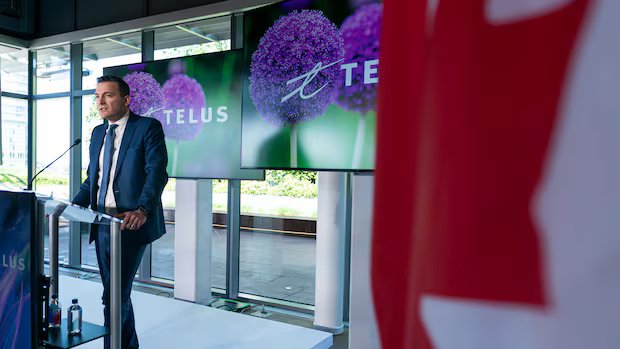

Listen to this article
Estimated 5 minutes
The audio version of this article is generated by AI-based technology. Mispronunciations can occur. We are working with our partners to continually review and improve the results.
Vancouver and Kamloops will be home to a new data centre cluster under a planned partnership announced by the federal government and Telus.
Speaking in Vancouver on Monday, AI Minister Evan Solomon said the project would expand Canada’s “sovereign compute capacity” while helping domestic commercial and academic interests to compete in the global AI economy.
The proposal involves expanding Telus’s existing Kamloops facility and constructing two new data centres in Vancouver through Ottawa’s Enabling large-scale sovereign AI data centres initiative.
“We are taking concrete action to build sovereign AI capacity here in Canada, so Canadian innovators, researchers and businesses have access to the compute they need, while keeping Canadian data, intellectual property and economic advantage on Canadian soil,” Solomon said.
Telus says the Kamloops project and the first Vancouver project, located at the former Hootsuite headquarters in Mount Pleasant, will come online later this year. A second facility at 150 West Georgia Street is planned for 2029.
The project will begin with an 85 megawatt power draw, scaling up to 150 megawatts by 2032.

Telus will build a new AI data centre in B.C., under the federal Enabling Large-Scale Sovereign AI Data Centres initiative, Minister of Artificial Intelligence and Digital Innovation Evan Solomon announced on Monday. The project ‘reflects the kind of ambitious infrastructure that we need as a country,’ Solomon said.
Telus president and CEO Darren Entwistle touted the project as a green initiative.
According to Telus, the facilities will run on 98 per cent clean hydro power and recycle enough waste energy to heat 150,000 homes. Telus says the projects will also use 90 per cent less water than a traditional data centre, and that it is working on plans to incorporate recycled water from B.C. Place stadium.
“We are sending a clear message to the world: Canada will lead the AI revolution with uncompromising technological power and unparalleled climate leadership,” Entwistle said.
The project has the backing of the B.C. government, which rolled out its own AI data centre power policy in January.

B.C.’s Interior is set to become the centre of an ambitious AI-assisted data centre project, with the opening of the first “Bell AI Fabric data centre. The corporation intends to set up six such facilities across B.C. CBC’s Shelley Joyce toured the first data centre to gain insight into how corporations are using AI to assist hard-to-reach areas of the province.
The B.C. policy requires companies to compete for a tranche of electricity capped at 400 megawatts for the next two years, with preference for projects that provide data sovereignty, environmental benefits and First Nations participation.
“I think everyone knows the conversation about data centres is happening everywhere, some good and some challenging,” Jobs and Economic Growth Minister Ravi Kahlon said.
“What you’ve proposed here today, I think you are a beacon of hope for all communities that understand that we need this compute power, but they want to see it be done in a thoughtful and ethical and environmentally friendly way.”
The City of Vancouver is also throwing its support behind the proposal, with Mayor Ken Sim calling the data centres “world-class facilities.”
‘Build-first regulate-later model’
While the new proposal won high praise from political leaders gathered in Vancouver on Monday, the prospect of new data centres in B.C. has already proven divisive.
Plans to build a new facility in Nanaimo have sparked local pushback, with opponents warning it will churn through tens of thousands of litres of water per day.
B.C. Green Party Leader Emily Lowan accused lawmakers of using a “build-first regulate-later model,” and said she wants a moratorium on new data centres in the province until stronger regulation and environmental policies are in place.

Critics of B.C.’s new competitive bid process for AI and data centres looking for electric grid access worry the extra step will drive away businesses and jobs. Matt MacInnis, the president of Electrical Contractors Association of B.C., said the province should offer more power to those companies.
“We’re seeing them override and bypass community concerns specifically about the drain on the fresh water supply. We’re seeing this in Nanaimo on the island as well,” she said.
“Local watershed groups in Kamloops as well are sounding the alarm on the acute drain this is going to have … they’re at great risk because they go through the worst of our drought cycle, extreme heat.”
Lowan said she was “incredibly skeptical” of Telus’s environmental claims about the proposed data centres.
She said it’s hard to know what’s true when projects of this type are fast-tracked without comprehensive environmental impact studies.
“I hope that it starts a public conversation about the speed at which government acts on private interest projects over public interest,” she said.
“Why is it that an AI data centre can suddenly bypass environmental regulation, community consultation, and it still takes us a decade to build basic public transit?”
Concerns about data centre power and water use have become a flashpoint in communities across North America as tech companies seek to expand their operations to keep up with AI’s growing power need.
One 2023 study estimated that generating between 10 and 50 medium-sized responses with AI chatbot ChatGPT used half a litre of water, while a separate study by the International Energy Agency, estimated data centres used 140 billion litres of water globally just for cooling in 2023.