dailynewsnblog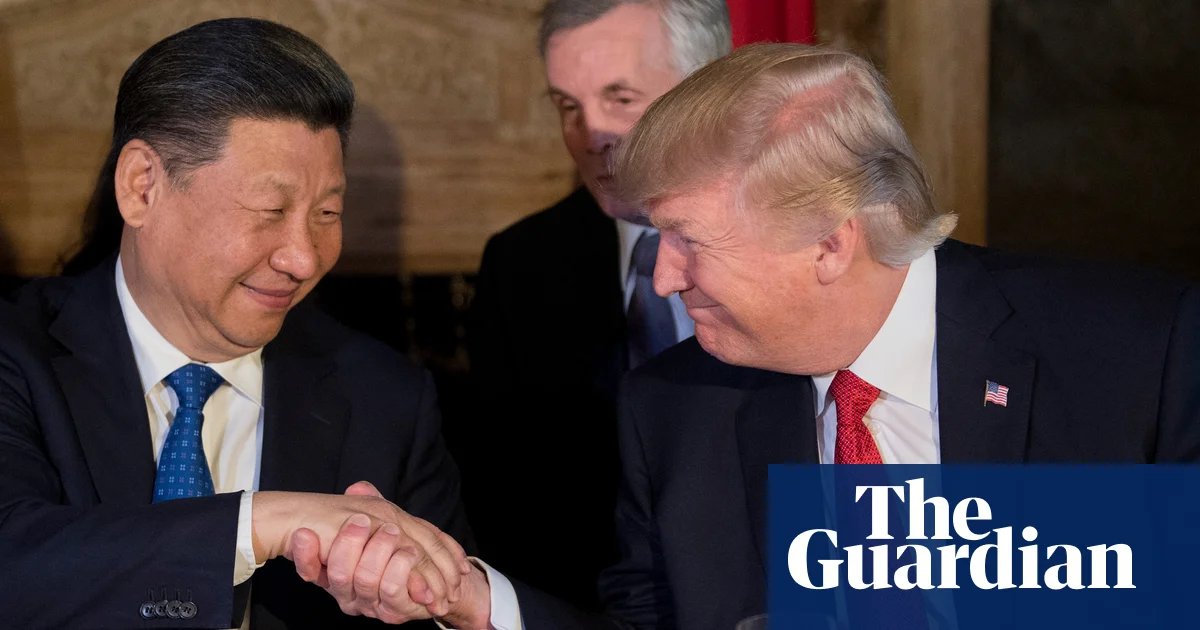
Donald Trump is heading to China this week. If his guest list is any clue, he wants to discuss technology with Xi Jinping, though perhaps after the war in Iran.
On Monday, news broke that outgoing Apple CEO, Tim Cook, as well as SpaceX and Tesla CEO, Elon Musk, would join the US president. Other guests from the tech sphere include Meta’s recently appointed president, Dina Powell McCormick; Sanjay Mehrotra, CEO of computer memory maker Micron; Chuck Robbins, CEO of longtime telecom giant Cisco; and Cristiano Amon, CEO of semiconductor maker Qualcomm, according to a White House official.
Jensen Huang, Nvidia’s CEO – who is close to Trump but criticized the US’s limitations on chip sales to China in an April interview, saying that he didn’t want a “loser mentality” to cost the US its edge in AI – will not be joining the president. A major deal on semiconductors seems less likely without the world’s most important chip maker, though an announcement from Micron seems possible.
In Cook, Trump likely also wants to bring a friendly, familiar face to high-stakes negotiations. Apple’s iPhone 17 has proved enormously successful in China, boosting the company’s quarterly earnings to their highest point ever. Apple still manufactures most of its products in China, though it has moved a significant percentage of those operations to India and Vietnam. In Apple’s announcement of Cook’s retirement, the company highlighted his diplomatic skills and said his responsibilities would include dealing with leaders around the world, so visits like this may become a mainstay of his schedule in the future.
Whether Trump’s trip will foster a flurry of tech deals, as his Middle East visit did in May 2025, will have to be seen. But while Trump trots out the US’s best and brightest business people – products of his hands-free policy for fostering technological innovation – his administration is taking cues from China’s more stringent approach to AI. China’s laws require AI companies to submit their models to Beijing for review on both security and political sensitivity grounds. The stringent policies prohibit not only threats to national security but also the generation of content that Beijing finds objectionable.
In the same vein, the White House is getting more involved in the work of frontier labs in the US. Trump is mulling an executive order that would require AI companies to submit their newest models for White House review. The administration has already announced deals with a growing number of big players in the field for national security reviews of their latest releases, including Google DeepMind, Microsoft and xAI last week. The reviews will be conducted by the Center for AI Standards and Innovation (CAISI), part of the US Department of Commerce. The Pentagon’s standoff with Anthropic continues in court over the startup’s qualms about military usage and the bureau’s designation of the company as a supply chain risk. Vice-president, JD Vance, has requested that Anthropic not expand access to its powerful cybersecurity-focused model Mythos beyond its initial list of partners, according to the Wall Street Journal.