dailynewsnblog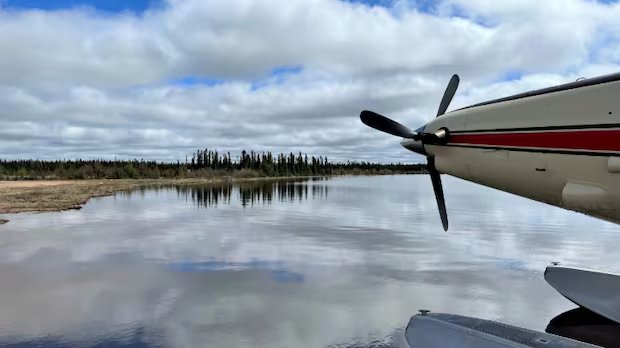

Listen to this article
Estimated 4 minutes
The audio version of this article is generated by AI-based technology. Mispronunciations can occur. We are working with our partners to continually review and improve the results.
A “bear incident” near a remote northern airstrip in Saskatchewan on Friday resulted in the death of a 25-year-old man, the province’s Ministry of Community Safety said on Monday.
The government said the investigation is in its early stages and released no more information. Saskatchewan RCMP said its Wollaston Lake detachment received a call about a sudden death at 6:30 p.m. Friday.
The government said the death happened near Points North, which is located about 700 kilometres northeast of Saskatoon.
“There have been a very, very small number of fatal bear attacks on people in Saskatchewan,” said Douglas Clark, a professor in the school of environment and sustainability at the University of Saskatchewan.
“But that doesn’t mean that there haven’t been close calls,” he said in an interview. “And it doesn’t mean there haven’t been situations where risk to people is elevated through having a close interaction with a bear.”
Clark, a former park warden who specializes in human-bear conflict, endorsed the use of bear spray in areas like the far north where bears are active. He said he’s used bear spray on black bears and just had an encounter with a “predatory” bear last fall.
Black bears are usually more curious than anything.– Dante Tabacu, owner of Pilot’s Lodge
Points North includes a landing strip next to a body of water where floatplanes can land. The airstrip facilitates air freight service and trucking for northern Saskatchewan, the Northwest Territories and Nunavut.
The bear was euthanized on scene and taken to the Western College of Veterinary Medicine in Saskatoon for a necropsy, the government said. The ministry’s statement did not identify the exact location of the attack.
Clark said the necropsy will try to find evidence to shed more light on the incident.
The government reminded people to keep their distance if they encounter a bear and refrain from trying to scare the animal. People are further advised to detour widely around the bear and calmly back away. People should speak in low tones and avoid looking directly at the animal.
“Simply giving the bear physically the idea that you’re not going to be an easy meal — that’s often enough to deter a bear,” Clark said.
The Conservation Officer Service and the Wildlife Human Attack Response Team are investigating and working with the RCMP and the Saskatchewan Coroners Service.
People are advised to call 911 if they encounter a bear. They are also advised to call the poachers hotline at 1-800-667-7561.
On Friday morning, the province issued a reminder that bears are emerging from their dens with the arrival of spring and to take precautions.
The Points North Group of Companies declined comment when reached Monday morning. The company website describes Points North Landing as a base camp for exploration companies.
Dante Tabacu operates Pilot’s Lodge, which offers bear-hunting excursions from a remote northern camp and uses services, including air travel, at Points North Landing.
Tabacu said there’s still snow on the ground in the area and not much food for the bears, which are hungry after hibernating in the winter. Black bears populate the area where he offers hunting opportunities, but the government did not identify the species involved in the attack.
“Black bears are usually more curious than anything,” Tabacu said in an interview Monday. “But they’re usually not too aggressive towards humans.”
The incident is the fourth known fatality resulting from a bear encounter in the province’s history.
The last such death happened in 2020 when Stephanie Blais, 44, was killed near her family’s cabin north of Buffalo Narrows.
The first known bear mauling deaths in the province happened when two men were killed in separate incidents near Nipawin Provincial Park in 1983.
In 2005, 22-year-old student Kenton Carnegie was killed near Points North in what was believed to be a rare fatal attack by wolves.