dailynewsnblog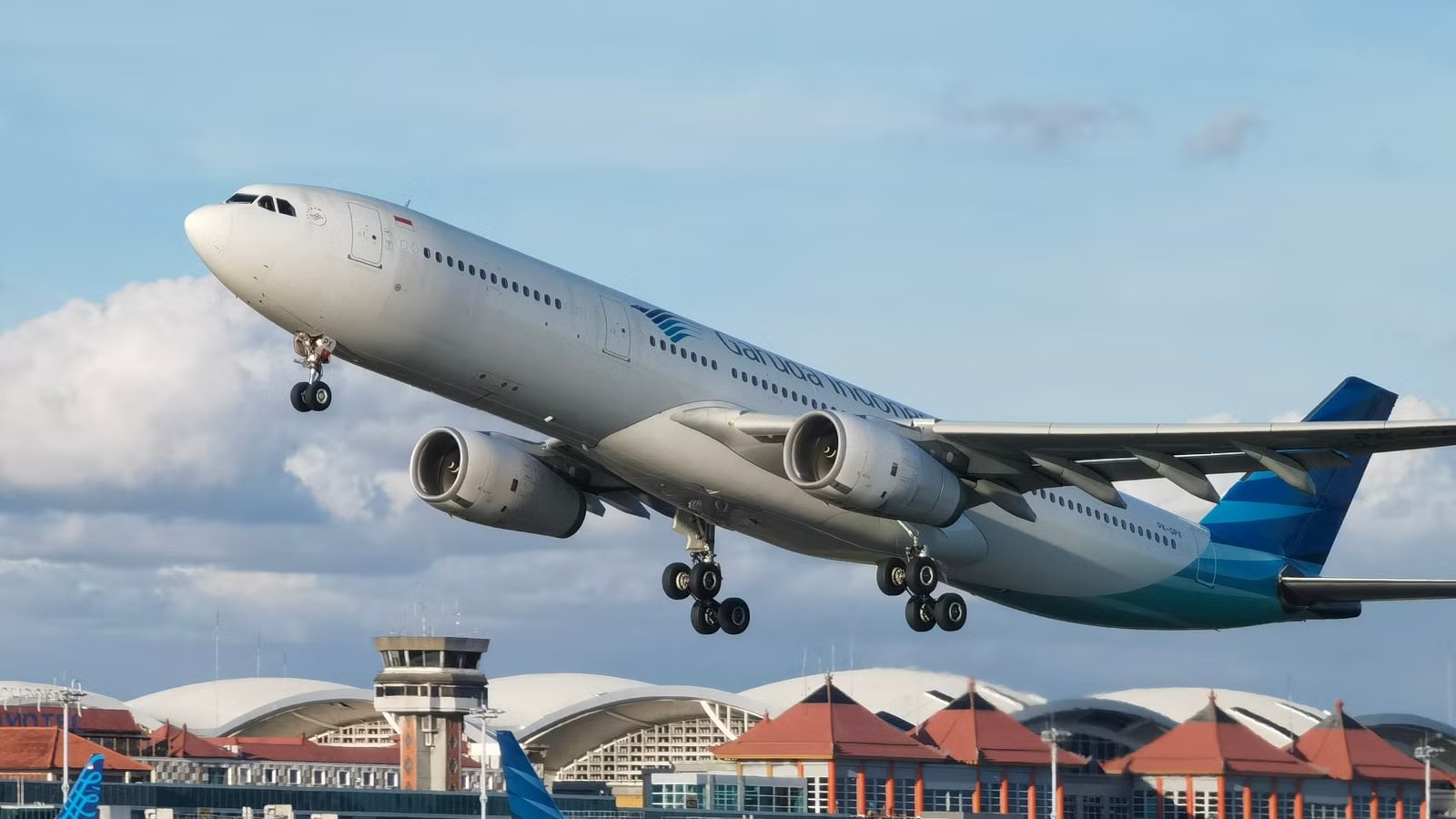
A Garuda Indonesia Airbus A330-900neo spent nearly four hours flying repeated holding patterns over southern India during a recent flight from Jeddah to Medan, drawing widespread attention online. Flight GA4208, operated by aircraft PK-GHI, was flying pilgrims home to Indonesia on May 8 when an unexpected airspace restriction dramatically altered the journey. Instead of continuing directly toward Indonesia, the widebody jet circled repeatedly near India before finally resuming its route. According to flight tracking reviewed on FlightRadar24, the aircraft completed roughly 24 laps while waiting for clearance to continue.
The unusual flight path quickly spread across aviation social media after screenshots and tracking data were shared by aviation enthusiast accounts, including posts highlighted by One Mile At A Time and on X. The Airbus A330neo remained airborne for approximately 12 hours and 39 minutes, far longer than the route would normally require. While holding patterns are common in commercial aviation, spending hours circling at cruise altitude is highly unusual for a long-haul passenger flight. The event sparked speculation online before reports clarified the reason behind the delay.
Missile Test Airspace Restrictions Forced The Aircraft To Wait

The primary reason for the extended holding pattern was a temporary closure of airspace over the Bay of Bengal. Reports cited by One Mile At A Time indicated that India had restricted sections of airspace due to an Agni-6 missile test, preventing aircraft from crossing normally available routes. Rather than diverting to an alternate airport, the crew elected to remain airborne while awaiting the corridor’s reopening.
Flight tracking data showed the aircraft flying repeated loops south of India for hours before finally continuing southeast toward Indonesia. The A330neo had departed Jeddah as scheduled but became trapped by the sudden restriction as it approached the region. Because the closure affected one of the most direct pathways between the Middle East and Southeast Asia, rerouting options were limited and operationally challenging.
Why The Crew Likely Chose To Keep Flying

Although spending hours in a holding pattern may sound extreme, aviation analysts noted that remaining airborne may have been the most efficient option available. Diversion airports can create major operational complications, especially for long-haul pilgrimage flights carrying hundreds of passengers. An unexpected landing could have introduced issues with fuel planning, airport slots, crew duty limitations, immigration procedures, and passenger handling.
Another question that some might ask is why didn’t the pilots fly around the restricted area? Basically, long-haul reroutes are not as simple as “turning left and going around.” International flights operate on pre-approved airways coordinated between multiple air traffic control regions. When India closed part of the Bay of Bengal airspace for the reported missile test, alternative routes likely became heavily congested very quickly. Nearby corridors north of India and around Sri Lanka may already be saturated with rerouted traffic, limiting available slots for additional aircraft.
The Airbus A330-900neo is also specifically designed for long-range efficiency. Garuda Indonesia introduced the type to modernize its long-haul fleet, with the aircraft offering significantly lower fuel burn than older widebodies. The airline originally planned to use the A330neo on routes connecting Indonesia with Europe and the Middle East, making it well-suited for extended endurance situations like this one.
PK-GHI itself is one of Garuda Indonesia’s newer-generation Airbus widebodies. The aircraft type features Rolls-Royce Trent 7000 engines and improved aerodynamics compared to earlier A330 variants. Garuda’s A330neo fleet is typically configured with 24 business-class seats and 277 economy-class seats, enabling the carrier to operate dense medium- and long-haul routes efficiently.
Which Are The Busiest Airbus A330neo Routes In The Middle East?
With more A330neos entering service, the busiest routes in the Middle East are set to get busier over the course of 2025.
Extended Holds Are Rare — But Not Unprecedented

While 24 holding loops are highly unusual, extended airborne delays occasionally happen when geopolitical events, military activity, or sudden airspace closures disrupt major international corridors. Since the beginning of heightened geopolitical tensions in several regions, airlines have increasingly faced last-minute reroutes and unexpected operational constraints. Flights between Europe, the Middle East, and Asia are particularly vulnerable because many routes rely on narrow, highly coordinated air corridors that avoid multiple war zones.
Long holding patterns can also become preferable when fuel reserves remain adequate and reopening times appear relatively short. Modern airliners are dispatched with contingency fuel specifically for unexpected delays, although few scenarios involve remaining airborne for nearly four additional hours. In this case, the crew ultimately succeeded in continuing to Medan without diverting, avoiding further disruption for passengers onboard.
The event ultimately became another example of how military activity and airspace management can unexpectedly reshape commercial aviation operations.