dailynewsnblog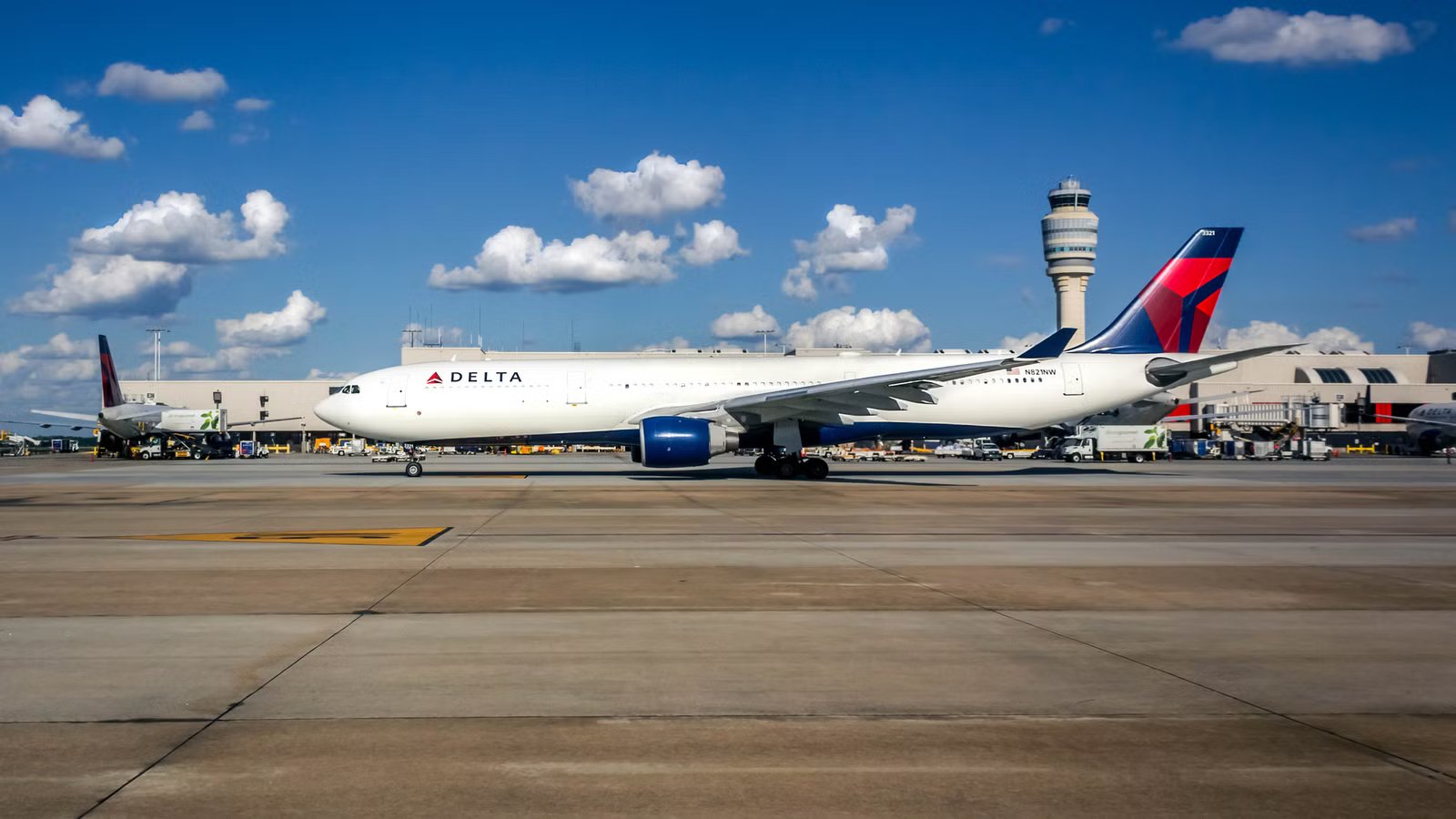
A Nigeria-bound  Delta Air Lines Airbus A330 was forced to return to Atlanta after spending nearly eight hours in the air over the Atlantic Ocean on May 9. Flight DL54, operating from
  Hartsfield-Jackson Atlanta International Airport (ATL) to
  Lagos Airport (LOS), turned around mid-flight due to what the airline described as “operational issues.” The aircraft eventually landed back in Atlanta after passengers endured a lengthy transatlantic journey that ended exactly where it began.
The unusual diversion quickly drew online attention after flight-tracking data showed the aircraft making a U-turn over the Atlantic. According to AirLive reports, the Airbus A330-200 had already been cruising eastbound for several hours before the crew decided to terminate the flight and return to the United States. The incident also reportedly disrupted Delta’s services to Lagos, leaving numerous passengers stranded.
Delta DL54 Returned To Atlanta Mid-Flight

Flight DL54 departed Atlanta at approximately 17:42 EDT on Saturday evening for the airline’s regularly scheduled service to Lagos. The aircraft involved was an Airbus A330-200, one of Delta’s aging widebody aircraft frequently deployed on long-haul international routes. Flight tracking information indicated that the jet climbed to 33,000 feet and continued normally across the Atlantic for several hours.
However, roughly halfway through the journey, the crew initiated a turnaround over the Atlantic Ocean. Instead of continuing toward West Africa or landing at the nearest airport (which could be in the Azores), the aircraft reversed course and headed back to the USA. After nearly eight hours airborne, the Airbus landed safely back at ATL later that night.
One passenger described the experience as deeply confusing after travelers realized the aircraft was no longer heading toward Nigeria. According to AirLive, Delta informed passengers that the diversion was due to “operational issues,” though the airline did not publicly disclose further technical details.
Passengers Faced Extended Delays And Confusion

The lengthy diversion created significant frustration for passengers traveling between the United States and Nigeria. Several travelers spent nearly an entire workday on board the aircraft before ultimately returning to their original departure airport. For many passengers, the disruption did not end upon arrival back in Atlanta.
Reports also indicated that Delta later canceled a subsequent Lagos-bound service, further compounding the travel chaos. Some passengers allegedly experienced limited communication regarding rebooking options and accommodations. The disruption highlighted the operational complexity involved when long-haul international flights encounter problems far from suitable diversion airports.
Airlive also reported that the aircraft maintained a standard eastbound routing for approximately three and a half hours before the turnaround decision was made. That meant the crew likely evaluated multiple operational and fuel-planning factors before deciding to return to Atlanta rather than divert to another destination.
Transatlantic diversions involving widebody aircraft are relatively uncommon but can become extremely costly for airlines. Flights between the United States and West Africa require careful fuel management, crew duty planning, and coordination with international ground handling providers. Once an aircraft passes certain points over the Atlantic, returning to the departure airport can sometimes become the most operationally practical option.
Delta’s Atlanta-to-Lagos route covers more than 5,000 nautical miles (9,260 kilometers) and typically takes approximately 10 to 11 hours to complete. Flight-tracking information shows that the service is commonly operated by the Airbus A330-200, a type that has been a core part of Delta’s long-haul fleet for many years.
The Airbus A330-200 remains an important aircraft in Delta’s international operations despite the carrier increasingly modernizing its fleet with newer Airbus A330-900 and Airbus A350 aircraft. Several of Delta’s A330-200 jets were originally delivered to Northwest Airlines before the two carriers merged in 2008, making parts of the fleet more than two decades old.
Floor Panel Heater Issue Forces Delta Air Lines Airbus A330-300 To Divert To DFW
An unusual sight in DFW as a Delta A330 had to divert, although the aircraft was quickly repaired.
Not The First Long-Haul “Flight To Nowhere”

Delta’s eight-hour Atlantic turnaround is far from the only case of a long-haul aircraft spending hours airborne before returning to where it started. In February 2023, an Air New Zealand Boeing 787 operating one of the world’s longest flights from Auckland to New York turned around over the Pacific and flew all the way back to New Zealand after an electrical fire shut down Terminal 1 at New York JFK Airport. The aircraft spent roughly 16 hours in the air before landing back in Auckland because diverting to another location in the United States would have stranded it and disrupted the carrier’s network for days, as noted by ABC News.
A similar “flight to nowhere” occurred in September 2023 when a  Lufthansa Boeing 747-400 operating Flight LH712 from Frankfurt to Seoul reversed course over Kazakhstan after a technical issue developed several hours into the journey. Rather than continue toward South Korea or divert to another airport, the airline chose to return the aircraft to its Frankfurt maintenance base, where specialized engineers and replacement aircraft were available. The jumbo jet ultimately landed back in Germany around nine hours after departure.
British Airways has also experienced multiple long-haul turnbacks involving aircraft returning to their point of origin after many hours airborne. One widely reported case involved a London Heathrow-to-Tokyo service in 2016 that spent approximately six hours in the air before turning around over Siberia due to a technical issue. Passengers eventually arrived back in London later than they would have reached Japan on a normal flight, as noted by Condé Nast Traveler.
Another  British Airways “flight to nowhere” involved a Boeing 787 service to Mexico City in December 2025 that remained airborne for nearly 10 hours before returning to Heathrow. Aviation analysts noted that airlines often prefer to return to a major hub because maintenance infrastructure, spare crews, replacement aircraft, and passenger support systems are concentrated there.
These unusual reversals are typically driven by operational practicality. If a technical issue emerges before the aircraft reaches its “point of no return,” airlines may determine it is safer and less disruptive to return to a hub airport where maintenance teams, spare parts, customs support, and onward passenger reaccommodation are readily available.