dailynewsnblog
Supermassive goes sci-fi horror, with a refreshingly cerebral, slowburn take on its usual popcorn thrills. It’s let down by perfunctory stealth and an overfamiliar plot, but a stellar cast helps make it all worthwhile.
Stop me if you’ve heard this one (or something like it) before: the Earth is dying, and humanity’s last hope is a lone inhabitable planet, light years from home. A crack crew of humanity’s finest is assembled for an eight-year space mission to survey the planet, but when they finally awaken from their four-year cryoslumber, an unknown organism has infiltrated their ship, turning their voyage of hope into a paranoid nightmare. And does the mega-corporation funding this whole endeavour know more than it’s letting on? Of course it does. Directive 8020 builds its story like a sci-fi horror best-of that only feels marginally less derivative the longer it goes, and while it also marks a welcome advancement for developer Supermassive’s Dark Pictures Anthology formula in certain respects, it sadly never quite comes into its own.
Perhaps the first big surprise in Directive 8020 is its comparatively grounded, naturalistic tone. Previous Dark Pictures games have felt a little arch, playing like a giddy pastiche of classic horror tropes, which has always been part of the fun. Directive 8020, by contrast, feels like a deliberate shift away from the campy, crowd-pleasing thrills of its predecessor toward something more sophisticated and cerebral in tone.
And that starts with its remarkably patient build up, as Supermassive introduces three distinct groups of the starship Cassiopeia’s crew over the course of several, only modestly eventful hours. That creates plenty of space for conversation and character work as you jump back and forth between each playable crewmate. By the time their stories finally converge and the threat they face truly begins to assert itself, they’re more than mere alien murder fodder, and I was genuinely invested in each one.
It’s a relaxed approach that Directive 8020 adopts for the bulk of its eight-or-so-hour run-time. Gone are the relentless jumpscares of previous games, making way for a subtler, more insidious – and increasingly existential – type of horror. Even the series’ foundational interactive movie trappings, railroading you from one set-piece to the next, feel like they’ve been dialled back. This is still a game of handsomely produced cutscenes that abruptly come to a halt in order to present you with a choice – one that frequently sends the elaborate branching narrative hurtling down a new path. And it’s still heavy on the rapid-fire QTE events that can mean the difference between life and a death as events escalate and increasingly grisly fates threaten to befall the crew. But it feels like the balance has shifted more toward traditional third-person video-gamey business: exploration, light puzzling, and stealth. That helps give the steadily mounting horror, as the Cassiopeia’s blandly functional interiors slowly transform into an infernal vision of twisted flesh, plenty of space to breathe.
Directive 8020’s predecessor, The Devil in Me, took a similarly bold stab at shaking up the series’ formula, of course, but here Supermassive sheers off the messy excess of that game – the convoluted inventory business, the flabby meandering – into something that feels tighter and more focused. Supermassive manages to keep things moving by maintaining a nice balance between its various building blocks. And there’s a clever addition in its text-message-style comms system, enabling the studio to explore the relationships between characters and introduce further choice points without interrupting the flow of its more immersive third-person sequences. The trouble is, in stripping away so much of the series’ winking pastiche and distinctive personality (Pip Torrens’ wonderful Curator and his knowing interludes have been jettisoned here, as have staple mechanics like premonitions), Directive 8020’s story has to stand on its own, opening itself up to closer scrutiny. And the nagging feeling is it borrows too much, too blatantly, that’s simply been done better elsewhere.
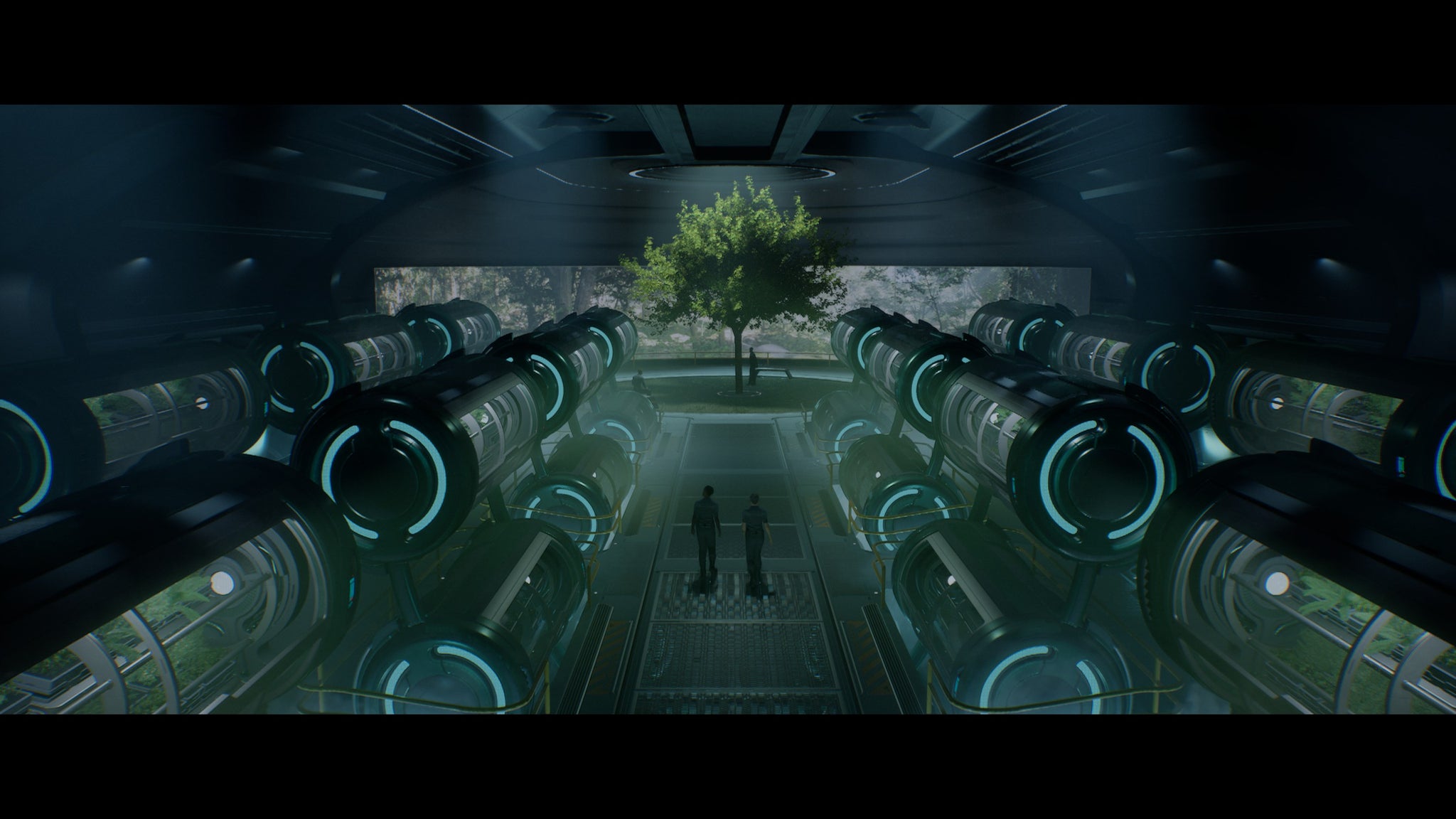
Unlike its predecessors, Directive 8020 isn’t just playing around in the sub-genre sandbox; it’s directly summoning the spectre of some of the most iconic films ever made. Alien is an obvious touchpoint, but it’s also heavily indebted to the body horror aesthetics and paranoid terror of The Thing. I could rattle off half a dozen other likely inspirations too, but that would probably give too much away. Supermassive does eventually pull its grab-bag of bits into something quite interesting. There’s a fun bit of meta justification for Directive 8020’s malleable structure, for instance, and some satisfying narrative symmetry as various motives are revealed. And it adopts all sorts of story tricks in an effort to keep things spry, from flashbacks and flashforwards to an episodic structure (complete with rather contrived cliffhangers). But with such a pervasive sense of overfamiliarity, it struggles to generate much intrigue for most of its runtime. And when paired with that slowburn approach, Directive 8020 just never quite kicks into gear.
And that’s equally true of its flagship new mechanic, stealth. Sometimes, Directive 8020’s third-person sequences simply require you to walk from A to B (although there’s usually an opportunity to explore away from the main path to hunt for collectibles). Sometimes, Supermassive folds in some light puzzling, often involving scanning a room to locate hidden powerlines so you can reroute electricity and open doors. Occasionally, you’ll need to furiously escape something angry, but it’s the rather perfunctory stealth that takes centre stage.
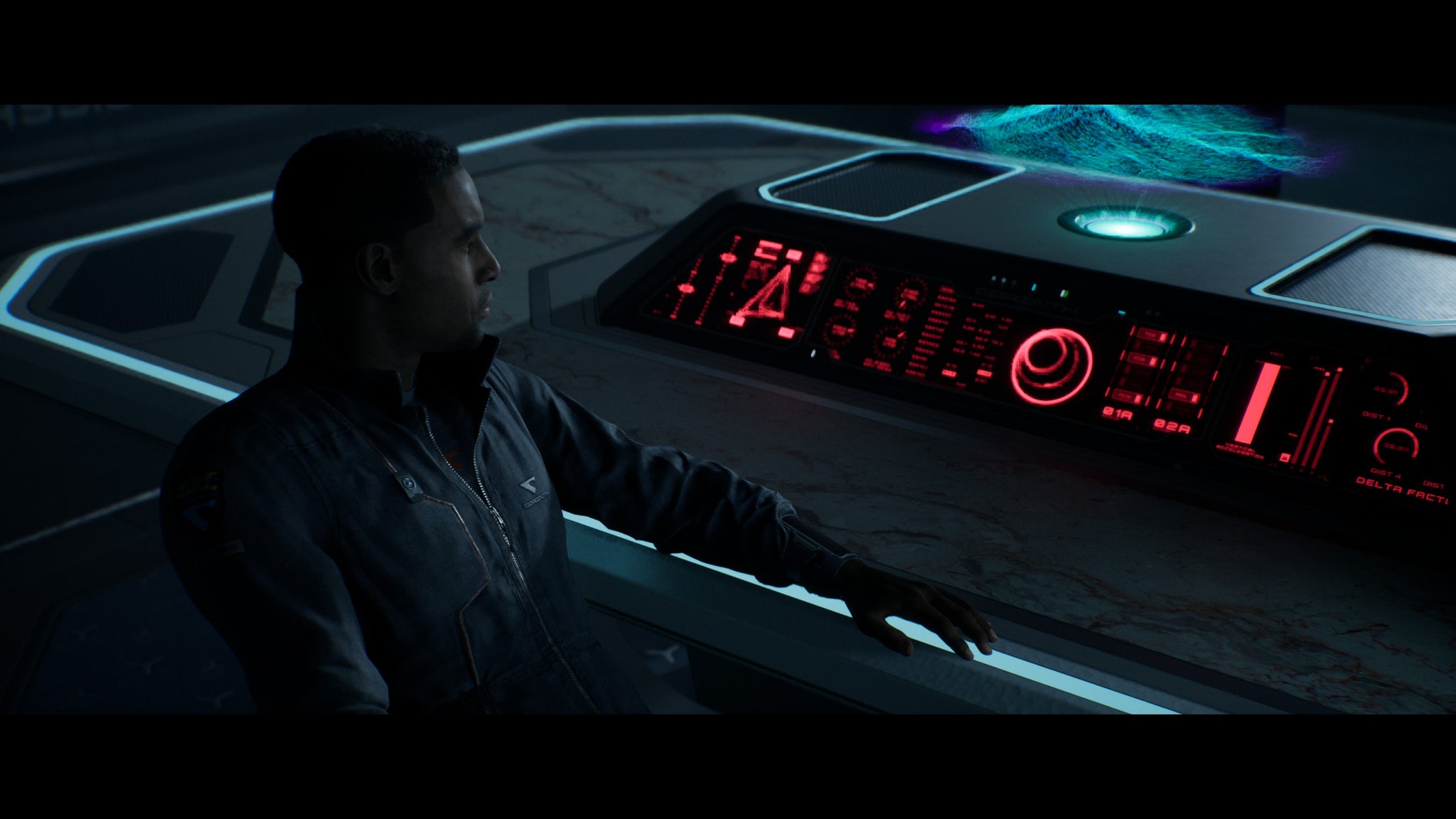
In the early hours, stealth mostly involves sneaking around the shadowy interiors of the Cassiopeia as feral crewmates give chase, and later you’re up against twisted abominations. But in practical terms, there’s little difference. Enemies follow the same tiny patrol paths, moving predictably back and forth while they bark the same handful of phrases, only shifting positions as you cross invisible thresholds. And the margin for error is broad enough that there’s rarely any real sense of threat or tension – at least none that isn’t provided by the art and sound teams, frantically wringing each encounter for all they’re worth as hellish red light slices through the thick shadows and sirens blare.
To put it into perspective, I didn’t die once in the stealth bits; rather, most of my deaths were caused by misreading the unhelpfully stylised QTE button prompts. If stealth engenders any sense of uncertainty and fear, it’s usually because the busy environments frequently obfuscate your opponent, meaning you’re constantly forced to ping your radar to locate them, smothering the screen in wireframe. Which does start to undermine the atmosphere.
There’s some effort to complicate the basic rhythms of hide and seek, and puzzle elements – again of the powerline variety – do eventually begin creeping in here too. And while that does go some small way toward heightening the tension as you’re forced out of cover, there’s so little genuine risk, and so little deviation from one encounter to the next (noisy broken glass is introduced as a mechanic then almost immediately abandoned; there’s no attempt to incorporate the specialisations suggested by each crew member’s role) that it eventually all starts to feel a little one-note.
It’s not that Directive 8020’s simplistic stealth is offensively bad, it’s just a little dull – which is easy enough to tolerate for the most part, when you know you’re only a couple of minutes away from another story bit, another exploration bit, another decision point. It does, however, become more problematic in the home straight when, right as the story demands taut escalation, the sheer number of unwaveringly similar back-to-back stealth moments really starts to drag things down. Honestly, it feels like it’d be far more impactful with most of its final act encounters trimmed.
But despite all this, I still had a good time with Directive 8020. For all its predictability, there’s an engaging rhythm driving the narrative forward, and some genuinely effective moments – a wonderfully intense first-person crawl through some air ducts, for instance – where a mix of tight choreography and stellar artistry significantly elevate the so-so game design. It’s also perhaps Supermassive’s best stab at a branching narrative yet, avoiding the disjointed staccato pitfalls of earlier games – and the fact you’re now able to revisit previous Turning Points and explore alternate pathways at any time in Explorer mode is as fascinating as it is liberating. But if Directive 8020 has a true secret weapon – one that helps turn a modestly interesting game into a genuinely compelling one – it’s the stellar cast, every single performer giving it their absolute all.
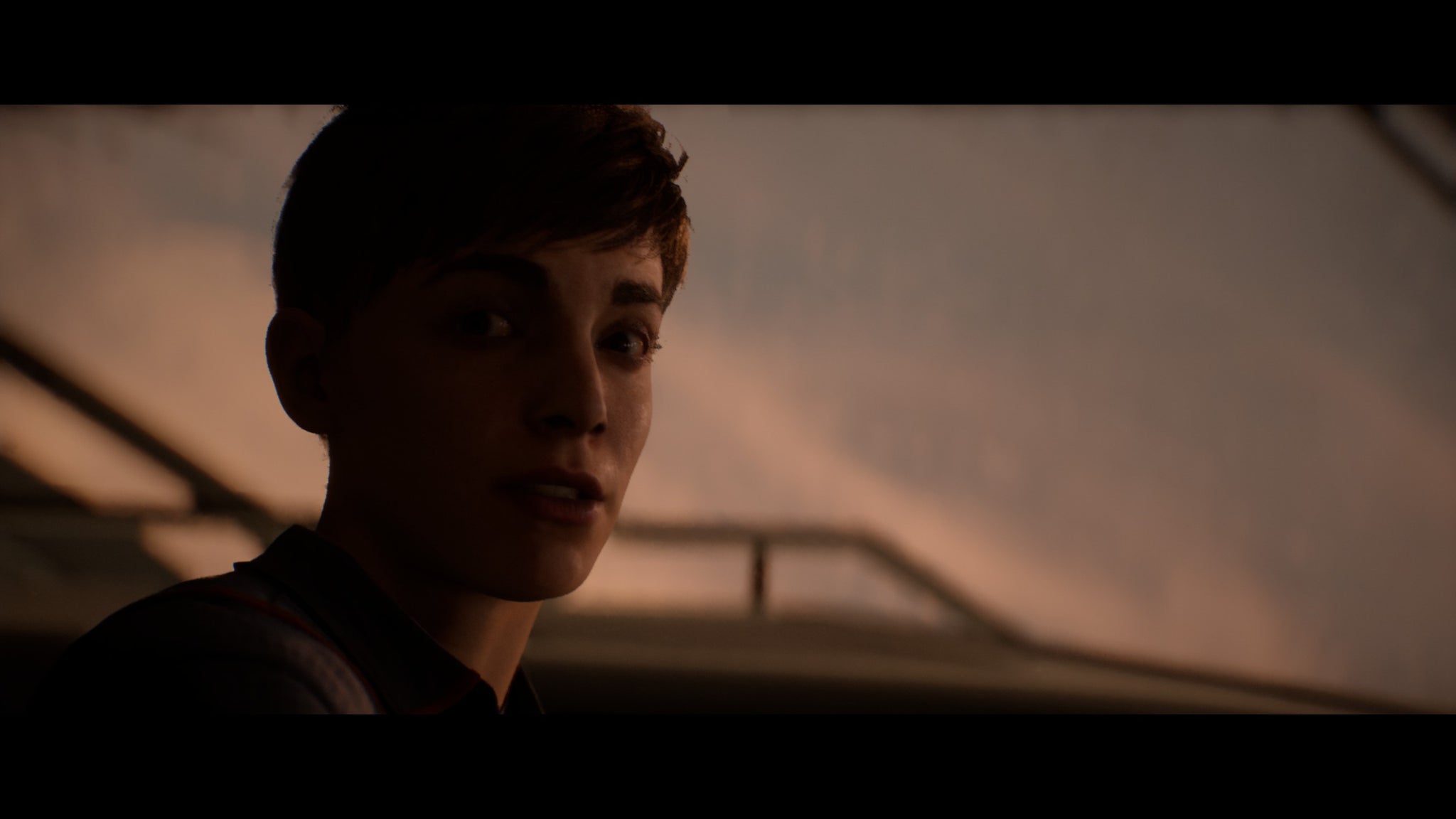
For all its skull-splitting body horror, the naturalistic performances bring a wonderful sense of warmth and camaraderie to the crew of the Cassiopeia. Anneika Rose as Pari Simms is perhaps the standout, managing to be the emotional heart of the game despite an early exit, and Lashana Lynch as Brianna Young is a similarly memorable presence. But every performer (ably assisted by some strong facial animation work that only very occasionally slips into the flappy mouthed realms of uncanny) is superb, buoying the sometimes lacking material through its choppier moments. These are characters I found myself caring about quickly, and I was genuinely a little sad to see them go. Oh, and if you’re wondering why so many of the face models look familiar, well, there’re some intriguing hints about that too.
Directive 8020 is a strange one then. I genuinely admire Supermassive’s drive to do something a bit different with its anthology series, and the introduction of new playstyles and a more sophisticated, cerebral tone is refreshing too – although I’m not sure this’ll be as much of a co-op crowdpleaser as its predecessors, shorn of those popcorn thrills. In some ways, Directive 8020 feels like a game of missed opportunities, and a bunch of almost-theres. But sometimes Supermassive’s ambition pays off. It’s a touch too long, it’s a little too one-note, and I wish it could have pushed a little harder to find its own identity as it charted so much well-trodden ground. But its existential chills are effective, it’s got an earnest spirit, and a phenomenal cast that genuinely made me care. If Supermassive keeps pushing its horror series, I suspect great things are in store.
A copy of Directive 8020 was provided for this review by Supermassive Games.