dailynewsnblog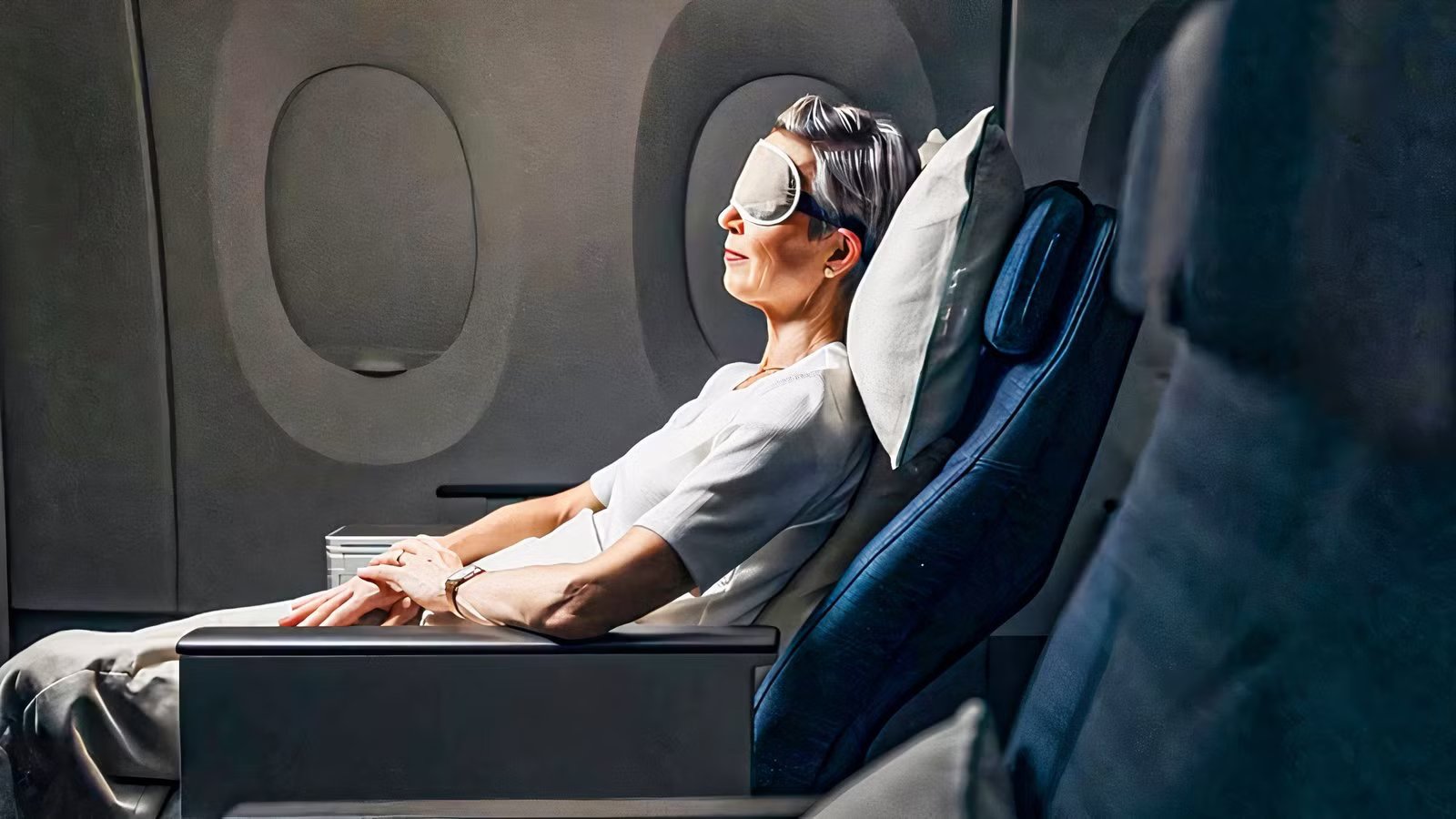
Premium Economy is rapidly becoming one of the most important cabins on commercial flights, sitting between economy affordability and business-class comfort at a time when airlines are investing heavily in upgraded onboard experiences. In 2026, carriers including  Emirates,
  Singapore Airlines, Japan Airlines(JAL), and Virgin Atlanticare expanding premium economy across aircraft such as the Airbus A350, Boeing 787 Dreamliner, and A321XLR, with wider seats, larger screens, and improved dining now standard on many long-haul routes. According to Forbes Travel Guide’s recent analysis of premium travel trends, demand for higher-quality flying experiences continues to grow as passengers become more willing to pay for comfort on longer journeys.
Using airline fleet data, seat specifications, and industry forecasts, this article examines how premium economy could evolve over the next decade and why airlines increasingly see the cabin as a key revenue driver. The guide looks at upcoming seat designs, onboard technology, route expansion, and the broader shift reshaping long-haul travel, while highlighting how US and international carriers are approaching the next generation of premium cabins.
The Revenue Engine Airlines Could No Longer Ignore

Understanding where the premium economy is going requires understanding why airlines have become so dependent on it. The financials are too compelling to downplay.  Delta Air Lines has reached the point where premium economy revenues outpace those of standard economy on the same routes and aircraft.
Business class demands enormous floor space for lie-flat beds, privacy dividers, and aisle access. Premium economy achieves a comparable revenue yield per unit of cabin space at a fraction of the footprint, and it is easier to sell. The cannibalization concern that long kept airlines away from the product has also largely dissolved: data confirms that premium economy draws passengers up from economy rather than pulling high-yield travelers down from the front.
According to KPMG’s Aviation 2030 report, the industry is entering a period of profound transformation in aircraft interiors, driven by passenger expectations and the search for configurations that maximize revenue density. Forbes Travel Guide adds a demand-side picture: premium travelers are not just flying more—they are actively investing in the journey itself. That behavioral shift is the wind in premium economy’s sails, and it is not going away.
The Seat Of 2036: A New Engineering Floor

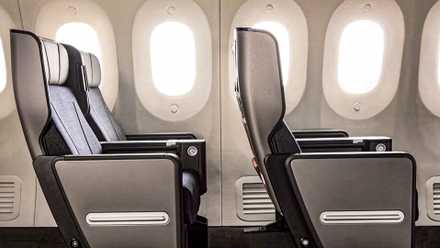
The most concrete way to answer the headline is to look at what today’s best premium economy seat already does — and then recognize that this represents the floor, not the ceiling, for 2036. The current benchmark is JAL’s Sky Premium: a fixed-shell design at 42 inches (107 centimeters) of pitch and 19 inches (48 centimeters) of width, with a three-step adjustable footrest, leg rest, and recline that does not compress the space of the passenger behind. Singapore Airlines pairs 38 inches (97 centimeters) of pitch with 19.5 inches (50 centimeters) of width, a six-way adjustable headrest, and two-tone leather upholstery that rivals regional business-class hardware.
By 2036, what JAL offers today will be the minimum expected for any new widebody delivery from a full-service carrier. Seat suppliers including Collins Aerospace,  RECARO Aircraft Seating, and Safran are investing in lighter composite structures and more sophisticated pneumatic lumbar systems that can achieve greater recline ranges, approaching 40 to 45 degrees, without adding meaningful weight.
The Aviation 2030 report demonstrates that the interior sector is being reshaped by converging passenger expectations and new manufacturing capabilities, with particular emphasis on delivering greater adjustability and personalized support within structures that are light enough to meet next-generation fuel-efficiency targets. The result for passengers: a seat that moves in more directions, holds those positions more precisely, and does so without the mechanical compromises of today’s recliner designs.
|
The Top Premium Economy Seat Specifications |
||||
|
Airline |
Pitch |
Width |
Design Type |
Aircraft |
|
Japan Airlines (Sky Premium) |
42 inches (107 centimeters) |
19 inches (48 centimeters) |
Fixed-shell, 3-step footrest + leg rest |
Boeing 777-300ER, 787 Dreamliner |
|
Singapore Airlines |
38 inches (97 centimeters) |
19.5 inches (50 centimeters) |
JPA Design, foldable footrest, 6-way headrest |
Airbus A350-900, Boeing 777-300ER |
|
Air New Zealand |
41–42 inches (104–107 centimeters) |
Varies |
Dedicated cabin, 21–54 seats by config |
Boeing 787-9 Dreaminer, 777-300ER |
|
Emirates |
40 inches (102 centimeters) |
19 inches (48 centimeters) |
Leather, calf rest + footrest |
Airbus A380, Boeing 777-300ER, A350-900 |
|
Virgin Atlantic |
38 inches (97 centimeters) |
19 inches (48 centimeters) |
Wander Wall, real crockery, 2 checked bags |
Airbus A350, A330, Boeing 787-9 Dreamliner |
|
Cathay Pacific |
38–40 inches(97-102 centimeters) |
18.5–19.5 inches (46–50 centimeters) |
Collins MiQ / Recaro R5 (varies by aircraft) |
Airbus A350-900, Boeing 777-300ER |
Aisle access configurations will also shift. The current 2-4-2 and 2-3-2 layout norms give window-seat passengers no direct aisle access, a friction point seat manufacturers are actively working to resolve through smarter row geometries. Semi-direct aisle access for every premium economy passenger on new-build widebodies is a realistic expectation for 2036, not an aspirational one. It is the kind of change that does not make headlines but fundamentally reshapes how the cabin feels on an 11-hour flight.
6 Airlines With The World’s Most Superior Premium Economy Dining In 2026
These 6 airlines are redefining premium economy dining in 2026 with chef-led menus, Champagne service, and restaurant-quality inflight meals.
Inside The Cabin: Connectivity, IFE, And The Personalization Layer

The seat is only part of what a passenger experiences on a long-haul flight. The technology surrounding it includes the screen, connectivity, and how the cabin knows who you are and what you prefer. That is where the 2036 premium economy experience will diverge most sharply from what exists today. The inflight entertainment (IFE) screen is the most visible battleground. Premium economy passengers in 2026 are, on the best products, looking at 13-to-15-inch (33-to-38-centimeter) screens.
By 2036, the investment case for 16-to-18-inch (41-to-46-centimeter) high-resolution displays in premium economy is already well established on new widebody deliveries, where the infrastructure cost of upgrading screen size across a cabin is far lower than retrofitting an existing system. The screen that passengers encounter in premium economy in ten years will be closer to an iPad Pro in resolution and closer to a laptop in size.
Connectivity is a more transformative shift. Satellite-based broadband, already delivering speeds that make streaming viable at cruising altitude, will have matured considerably by 2036. The IFE screen becomes a secondary device; passengers stream their own content, video call, or work at speeds that no longer require airline-managed compression. Premium economy, given its revenue profile, will be the first cabin after business class to see the full benefit of that infrastructure investment, with wireless charging integrated into the seat arm and dedicated USB-C ports at every position rather than shared per row.
The personalization layer is the least visible but potentially most significant development. According to Aviation 2030, airlines are investing in cabin management systems that use passenger data aggregated from loyalty profiles to preconfigure elements of the onboard experience before departure. A premium economy seat that already knows your preferred headrest position, your meal selection, and your ambient lighting preference when you sit down is not science fiction: the data infrastructure exists today in airline loyalty systems. The missing piece is cabin hardware capable of responding to it, and that hardware is arriving on new widebody orders across the decade.
The Route Map Rewrites: Where Premium Economy Will Fly That It Can’t Today

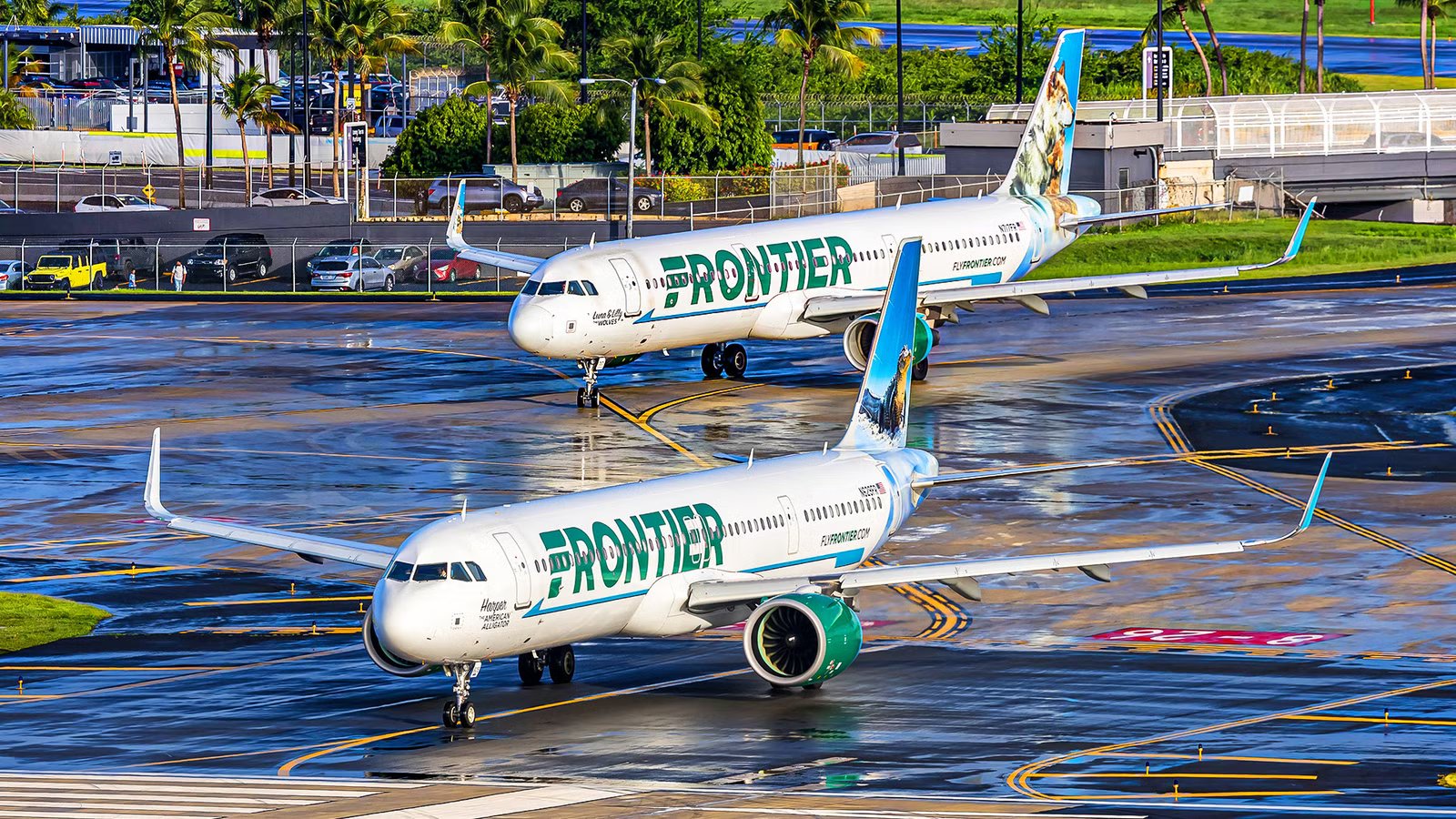
The product improvement story is only half of what changes by 2036. The other half is geographic: where premium economy actually exists as a bookable option will look significantly different from today’s map, and the agent of that change is the narrowbody. The A321LR and A321XLR are now being outfitted with premium cabin configurations previously exclusive to widebody flagships — and the implications for premium economy’s reach are significant.
In December,  American Airlines took delivery of its first A321XLR, complete with an upgraded premium economy cabin, with 50 of these aircraft eventually joining its fleet. United Airlines and Delta are both expected to deploy equivalent jets on premium-heavy routes by 2027.
  Alaska Airlines’ 787-9 long-haul cabin launch illustrates how rapidly even carriers without traditional transatlantic history are committing to premium economy as a cornerstone of their international product.
|
Airline |
Product / Seat |
Aircraft |
Timeline |
|
LATAM Airlines |
Premium Comfort (RECARO PL3530) |
Boeing 787-8, 787-9 Dreamliner |
2027 |
|
Emirates |
Premium Economy network expansion |
Airbus A380, Boeing 777-300ER, Airbus A350-900 |
2026 onward |
|
Alaska Airlines |
International Premium Economy |
Boeing 787-9 Dreamliner |
2026 |
|
United Airlines |
Premium Plus expansion + Relax Row |
Boeing 787-8, 787-9, 787-10 Dreamliner, Boeing 777-200, 777-200ER, 777-300ER |
2026–2027 |
|
American Airlines |
Upgraded Premium Economy cabin (50-aircraft order) |
Airbus A321XLR |
2026 onward |
The narrowbody angle matters because of what these aircraft make commercially viable. The A321XLR’s range opens transatlantic routes between city pairs, such as Raleigh-Durham to London or Austin to Madrid, where a widebody cannot be economically justified. Before the XLR, a premium economy passenger from those cities to Europe had to connect through a hub and board a widebody.
By the mid-2030s, they may board a narrowbody directly. According to Aerospace Global News, LATAM Airlines’ upcoming Premium Comfort launch signals the same dynamic in South America — a region where premium economy barely existed as a product category five years ago. The cabin’s geographic footprint in 2036 will dwarf what it covers today.
Why Premium Economy Isn’t Always Worth It
The poor value proposition behind many premium economy tickets, and why this is the case.
Beyond The Seat: Dining, Amenities, And The Soft Product Race

By 2036, the differences in soft products will narrow as competition forces convergence toward a higher minimum standard. Simple Flying previously explored that the best-value cabins are not the ones with the lowest fares — they are the ones where the soft product is genuinely calibrated to the cabin. JAL delivers fine dining, amenity kits, and priority airport services in premium economy. Virgin Atlantic serves real meals in proper crockery with upgraded glassware. These are deliberate investments designed to give the cabin a distinct identity.
The defining characteristics of premium economy’s soft product evolution toward 2036 are likely to include:
- Multi-course dining with chef-partner menus: airlines are already extending the culinary storytelling previously reserved for business class to premium economy, with Qatar Airways, Air France, and Singapore Airlines leading the way.
- Amenity kits matching or exceeding current business class standards, driven by social media visibility and the outsized marketing value of a well-executed unboxing moment at the seat.
- IFE screens of 15 inches (38 centimeters) and above, with noise-canceling headphones supplied as standard, and content libraries no longer shared with the economy cabin.
- Dedicated premium economy cabin crew on full-service carriers: a standard Japan Airlines and Singapore Airlines already apply, and one that more airlines will adopt as the cabin’s revenue contribution justifies the staffing cost.
- Priority services end-to-end: dedicated check-in, priority boarding, and separate baggage delivery, with lounge access remaining the clearest hard differentiator from business class.
That lounge gap is worth dwelling on. Airlines have a strong financial incentive to preserve the hierarchy between premium economy and business class, and lounge access is one of the cleanest ways to do it. It is likely to remain a hard differentiator well into the 2030s — but in every other dimension, the gap will continue closing.
The Premium Economy Passenger In 2036: What to Actually Expect

Projecting a decade ahead in aviation is always imprecise, but the structural drivers at work in 2026 are strong enough to make a reasonable projection. By 2036, premium economy will be, for most long-haul travelers not flying on corporate expense accounts, the default meaningful upgrade: the cabin where the value calculation is clearest, and where airlines are investing most aggressively. The shift from marginally wider economy to purpose-engineered comfort is precisely the shift that will continue, applied now to the soft product, the IFE, and eventually, the airport experience as well.
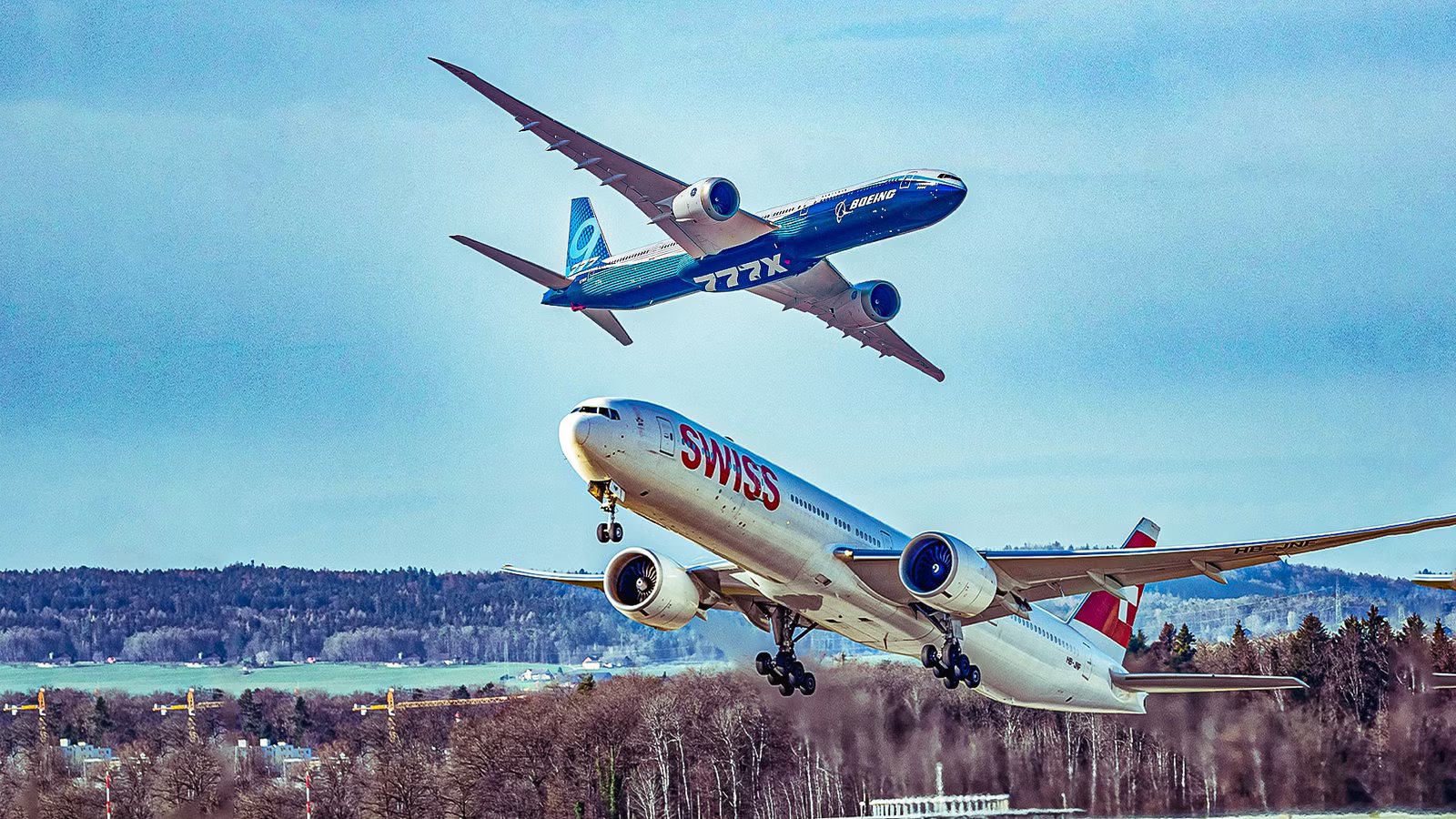
The fleet delivery data reinforces that outlook. Boeing is targeting 84 to 96 Boeing 787 deliveries in 2026, while Airbus is working toward nine A350 deliveries per month — both types configured with premium economy as standard on the vast majority of orders. United is projected to increase its domestic premium seat count by 75% versus pre-pandemic levels by the end of 2026 alone.
The A321XLR is carrying premium economy onto new routes, such as thinner transatlantic city pairs, and regional long-haul markets, where a dedicated premium economy seat simply did not exist before. The product’s geographic reach will expand as significantly as the product itself. What passengers should not expect is the cabin to blur entirely into business class. The lie-flat distinction, lounge access, and elite frequent flyer benefits will remain meaningful separators — airlines have every incentive to preserve that hierarchy. But within those limits, the premium economy of 2036 will be categorically superior to today’s best products: fixed-shell seats approaching a near-flat recline, large-format IFE, chef-designed meals served on real crockery, and dedicated cabin crew attention that feels genuinely personalized. The only question is which carriers get there first.